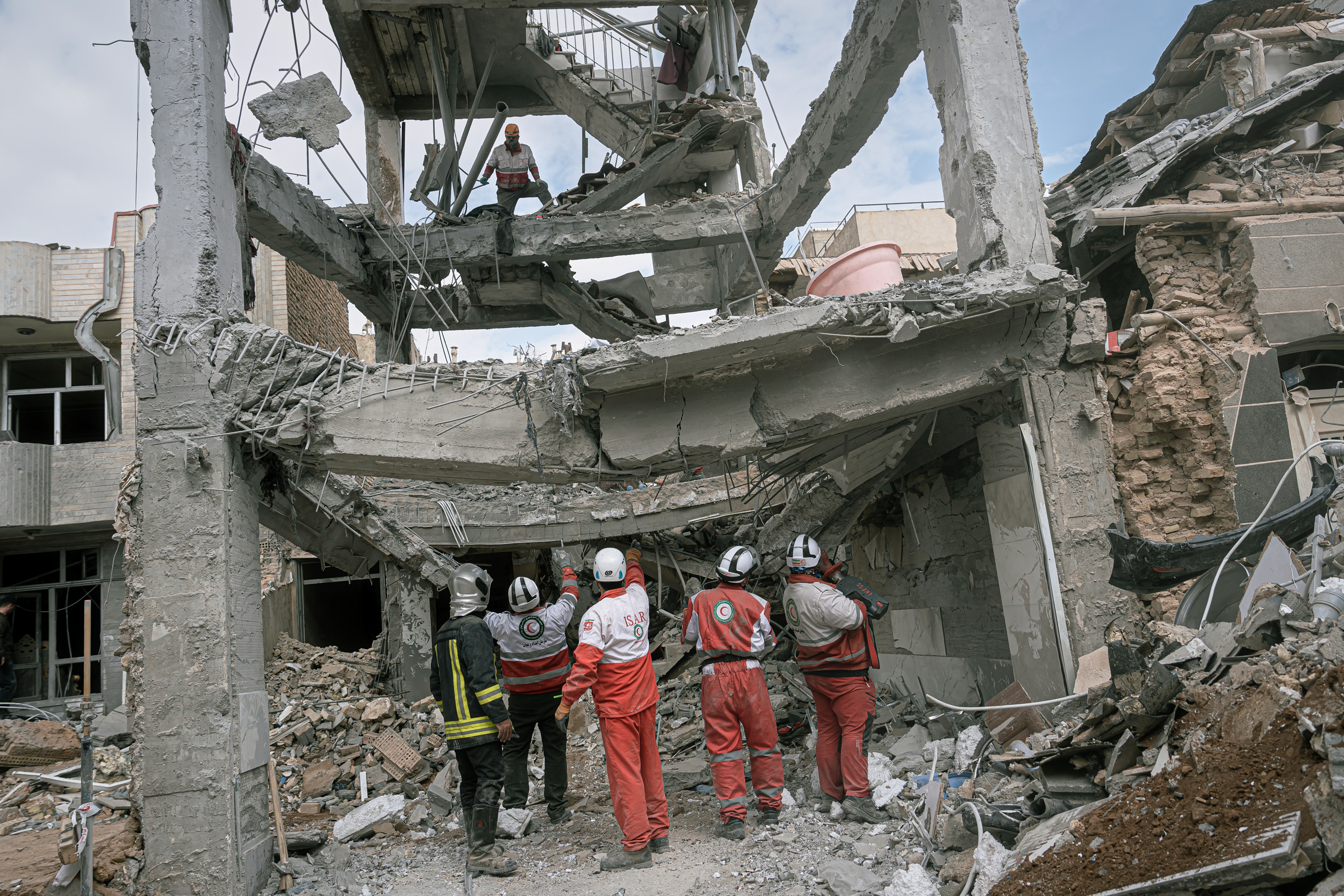
The White House is calling it a "15-point plan" for peace, but in the ruins of Tehran and the fire-swept terminals of Kuwait International Airport, it looks like a fantasy. Washington claims that productive back-channel talks are underway via Pakistani intermediaries, yet the Iranian state broadcaster, Press TV, dismissed the entire proposal as "unreasonable" within hours of its arrival. This disconnect highlights a dangerous gamble: the Trump administration is attempting to sell a diplomatic breakthrough to global markets while simultaneously intensifying an air campaign, dubbed Operation Epic Fury, that has already claimed over 1,500 lives in Iran.
The proposal itself is less of a negotiation and more of a demand for total capitulation. It requires Iran to dismantle its nuclear infrastructure at Natanz, Fordow, and Isfahan, ship its entire enriched uranium stockpile out of the country, and permanently shutter its ballistic missile program. In exchange, the U.S. offers "partial" sanctions relief and a civilian nuclear program where the fuel is kept strictly under foreign control. For a regime that has spent decades building a "forward defense" strategy through regional proxies, the demand to abandon its "proxy" network is a non-starter. Read more on a similar issue: this related article.
The Strategy of Negotiation by Bombing
While diplomats in Islamabad trade papers, the military reality on the ground is dictated by fire. The U.S. and Israel have shifted their targeting from purely military installations to the "production sites" of Iran’s arms industry. The goal is clear: destroy Iran’s ability to replenish its arsenal before any ceasefire can be signed. On Tuesday, massive blasts rocked northern and central Tehran, while Iranian retaliatory strikes managed to penetrate Israeli air defenses near the Dimona nuclear facility for the first time.
This is not a traditional conflict. It is a high-stakes race where the U.S. is using a five-day pause on striking power plants as a "diplomatic window" to force a signature. If the deadline passes without an agreement, the next phase of the air campaign targets the very grid that keeps Iranian cities functioning. More reporting by NPR delves into related views on this issue.
- The 15-Point Framework: Modeled after a collapsed 2025 proposal, it seeks a one-month interim ceasefire.
- The Hormuz Factor: Iran has allowed limited "non-hostile" transit through the Strait of Hormuz, but the waterway remains effectively closed to most commercial shipping, strangling global energy supplies.
- The Kuwait Strike: A drone attack on a fuel tank at Kuwait International Airport on Wednesday proved that Iran’s reach remains lethal despite the bombardment of its home soil.
The Lebanon Buffer and the Proxy Collapse
The war is not contained within Iranian borders. In Lebanon, the situation has spiraled into a separate but deeply connected crisis. Israeli Prime Minister Benjamin Netanyahu confirmed on Wednesday that the IDF is expanding a "buffer zone" 30 kilometers into southern Lebanon, effectively aiming to push Hezbollah back to the Litani River. This is an attempt to physically decouple Hezbollah from the Iranian "mother ship" while the latter is under fire.
Hezbollah leader Naim Qassem has characterized the Lebanese government’s attempt to negotiate as "surrender." The Lebanese state, increasingly desperate and fractured, has taken the unprecedented step of banning Hezbollah’s military activities and expelling the Iranian ambassador. This has created a "war within a war" in Beirut, where the government is trying to reclaim sovereignty while Israeli jets strike the southern suburbs.
The human cost is staggering. More than one million people—nearly a fifth of Lebanon's population—are displaced. In Iran, the death toll continues to climb as residential buildings in southern Tehran are caught in the crossfire of "precision" strikes.
Markets vs. Munitions
There is a cynical layer to the current diplomatic flurry. Analysts suggest the Trump administration’s insistence that "talks continue" is a strategic move to stabilize volatile energy markets. By claiming a "present" from Iran—reportedly the safe passage of several fuel tankers—the White House is trying to prevent a total global economic meltdown.
However, the Iranian leadership sees this as a transparent tactic to buy time. Tehran’s own counterproposal demands war reparations and full sovereignty over the Strait of Hormuz, conditions the U.S. will never meet. The gap between the "15 points" and the reality of the IRGC's defiance is a chasm that cannot be bridged by Pakistani messengers alone.
The Ground Game Uncertainty
The most ominous development is the movement of U.S. hardware. The Pentagon is deploying 5,000 additional Marines and paratroopers to the region, supplementing the 50,000 troops already stationed there. While the White House talks of peace, the military is positioning for "maximum flexibility," a term that usually precedes ground operations.
If the air campaign fails to force a political collapse in Tehran, the temptation to move from the sky to the sand will grow. The current "ceasefire proposal" may be less of a bridge to peace and more of a final legal checklist before a massive escalation.
Would you like me to monitor the upcoming five-day deadline for strikes on Iran's power grid and provide an update if the "diplomatic window" closes?