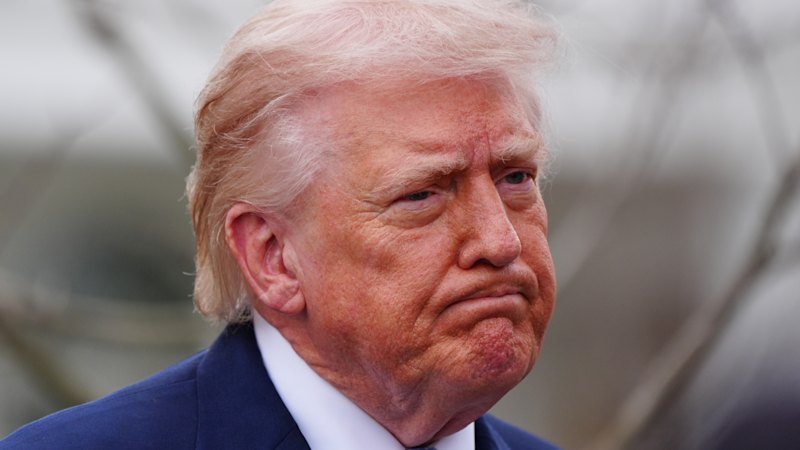
The ultimatum arrived not through a formal diplomatic cable or a televised Oval Office address, but via a Saturday night post on Truth Social. President Donald Trump has given Tehran exactly 48 hours to "fully open, without threat" the Strait of Hormuz. If the deadline passes at 23:44 GMT on Monday without a total cessation of Iranian maritime interference, the United States has pledged to "hit and obliterate" Iran’s domestic power grid, starting with its largest plants.
This is no longer a localized skirmish over shipping lanes. We are witnessing the birth of a doctrine that treats a nation’s civilian energy infrastructure as a direct ransom for global trade flow. While the White House frames this as a necessary move to break a month-long maritime chokehold, the reality is a high-stakes gamble that could leave tens of millions of people in the dark while simultaneously inviting a scorched-earth retaliation against U.S. assets across the Middle East.
The Chokepoint Crisis
Since the outbreak of hostilities on February 28, the Strait of Hormuz has transformed from the world’s most vital energy artery into a graveyard of merchant shipping. Iran’s strategy has been brutally effective. By utilizing a mix of sea mines, drone swarms, and land-based anti-ship missiles, the Islamic Revolutionary Guard Corps (IRGC) has made the 21-mile-wide waterway functionally impassable for Western-linked vessels.
The economic toll is staggering. Global oil prices have spiked by over 40%, with West Texas Intermediate hovering near $95 a barrel. This isn't just a number on a screen; it has translated into a 50-cent-per-gallon jump at American pumps in less than three weeks. Despite the United States being a leading energy producer, the global nature of the Brent and WTI benchmarks means the American consumer is subsidizing the cost of this conflict every time they fill their tank.
Why the Grid is the New Target
For three weeks, U.S. and Israeli strikes focused on "traditional" military targets: missile silos, IRGC command centers, and nuclear enrichment sites like Natanz. These strikes degraded Iran’s conventional navy—sending the frigate IRIS Dena to the bottom of the Indian Ocean—but they failed to stop the "insurance blockade."
Iran doesn't need a navy to close the Strait. It only needs the threat of a single lucky missile hit to make insurance premiums so high that no commercial tanker will dare enter.
By pivoting to the power grid, the Trump administration is attempting to move the pain from the sea to the streets of Tehran. The logic is simple: if the world can't have energy, neither can Iran. Targeting the Bushehr nuclear power plant or the massive gas-fired stations near Damavand represents a shift toward total economic warfare. It is an admission that surgical strikes on missile launchers have hit a wall of diminishing returns.
The Long Range Escalation
The timing of this 48-hour clock is not accidental. It follows a terrifying demonstration of Iranian reach. Over the weekend, the IDF confirmed that Iran deployed long-range ballistic missiles with a 4,000-kilometer reach for the first time. Two of these projectiles were aimed at the U.S.-UK military base on Diego Garcia in the Indian Ocean.
More alarmingly, Israeli military chief Eyal Zamir noted that these missiles put European capitals like Berlin, Paris, and Rome within direct range. This is no longer a Persian Gulf problem. Iran is signaling that if its domestic survival is threatened by the "obliteration" of its power plants, it has the capacity to reach out and touch the heart of the West.
The Shadow Economy of the Strait
While Western tankers sit idle, a shadow transit regime has emerged. Investigative reports indicate the IRGC has established a "safe" corridor through Iranian territorial waters. At least nine ships have reportedly paid "protection fees" of approximately $2 million each to pass unmolested.
Even more provocative is the "Yuan for Oil" proposal. Tehran has signaled that tankers may pass if their cargo is traded in Chinese currency, a move clearly designed to undermine the U.S. dollar’s dominance in the energy sector. This complicates the geopolitical math significantly. If Trump strikes the power plants, he isn't just hitting Iran; he is potentially disrupting a burgeoning energy liferaft for Beijing.
A Two Sided Ransom
Tehran’s response to the 48-hour warning was swift and predictable. The Khatam Al-Anbiya military command announced that any strike on Iranian energy infrastructure would trigger immediate retaliatory hits on all U.S.-linked energy, information technology, and water desalination plants in the region.
In the arid landscapes of the Gulf, desalination plants are the difference between life and death. If Iran follows through, the ensuing humanitarian crisis would dwarf the current economic one. We are looking at a potential scenario where the lights go out in Tehran, and the water stops running in Dubai or Manama.
The Logistics of the Deadline
Can the U.S. actually "open" the Strait in 48 hours? Military analysts are skeptical.
- Mine Clearance: Clearing the Strait of submerged mines is a painstaking process that usually takes weeks, not days. The U.S. Navy’s mine countermeasures (MCM) assets are limited and would be operating under constant threat from shore-based batteries.
- The Drone Problem: Small, cheap, one-way attack UAVs can be launched from the back of a pickup truck anywhere along Iran’s 1,300-mile coastline. You cannot "open" a waterway if the threat is mobile and ubiquitous.
- The Insurance Factor: Even if the U.S. declares the Strait open, commercial ship owners will not move until their insurers give the green light. Insurers require a sustained period of "zero incidents," something a 48-hour ultimatum cannot guarantee.
The Market Braces for Black Monday
As the clock ticks toward Monday night, financial markets are in a state of paralysis. Analysts are already warning of a "Black Monday" opening for global equities if the deadline remains in place. The uncertainty is compounded by the administration's "General License U," a temporary waiver allowing the sale of 140 million barrels of Iranian oil already at sea.
This move—essentially allowing Iran to cash out its current inventory—seems like an attempt to flood the market and dampen the price spike before the real fireworks begin. However, critics argue it provides the regime with the very cash it needs to sustain its maritime insurgency.
The next 48 hours will determine if this conflict settles into a long, grinding war of attrition or explodes into a regional conflagration that fundamentally reshapes the global energy map. The President has laid his cards on the table. Tehran’s next move will decide if the lights stay on.
Would you like me to track the specific movements of U.S. carrier strike groups currently heading toward the Gulf?