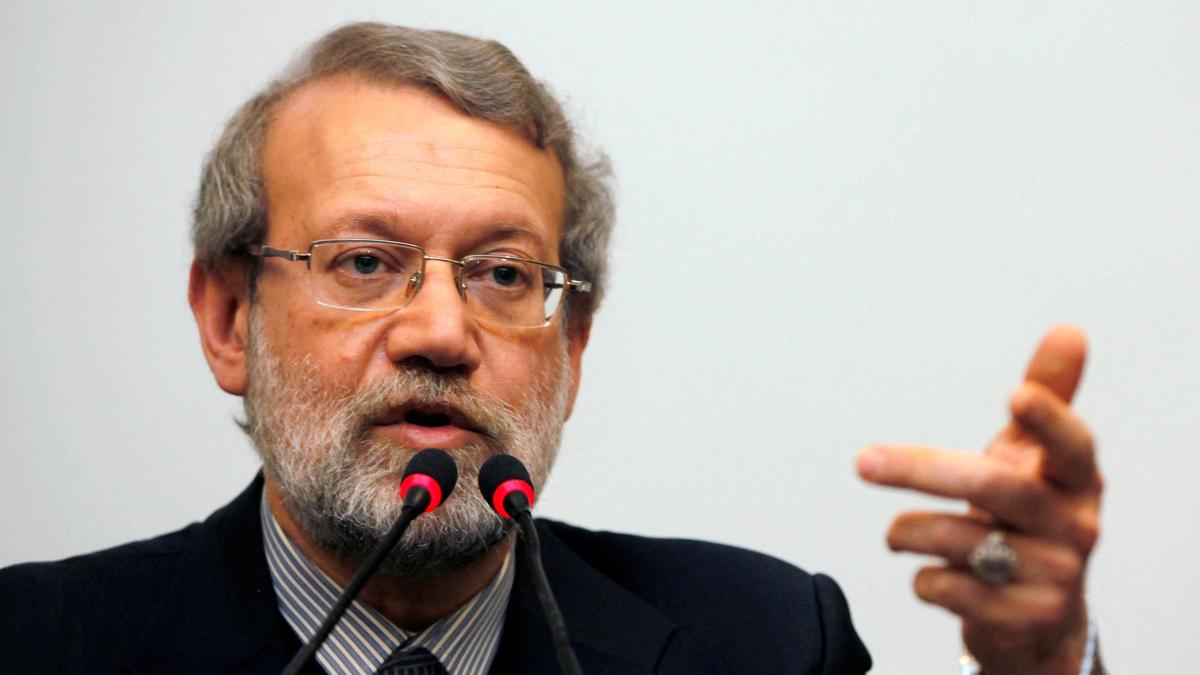
Ali Larijani shouldn't be a political powerhouse in 2026. He’s a philosopher by training and a conservative by pedigree. In a country where the political pendulum usually swings between fiery hardliners and sidelined reformists, Larijani occupies a gray space that many find frustrating. Yet, he remains the most durable operator in the Islamic Republic. If you want to understand how power actually moves in Tehran, you have to look at the man who spent twelve years running the Parliament and decades whisper-quiet in the halls of the Supreme National Security Council.
He is the ultimate insider. While others shout from podiums, Larijani works the phones. He understands a fundamental truth about Iranian governance that outsiders often miss: formal titles matter less than the network of trust you build with the Office of the Supreme Leader.
The philosopher with a pragmatic streak
Most people see a stern bureaucrat when they look at Larijani. They’re not entirely wrong, but they’re missing the intellectual foundation. He holds a PhD in Western Philosophy from Tehran University. He’s spent as much time reading Kant and Popper as he has studying Islamic jurisprudence. This academic background gives him a detached, almost clinical approach to crisis management.
When he ran the Islamic Republic of Iran Broadcasting (IRIB) in the nineties, he wasn't just a media manager. He was a gatekeeper. He learned how to shape public perception while keeping the traditionalist core of the regime happy. It was a balancing act he’d spend the next thirty years perfecting. You don’t survive that long in the upper echelons of Iranian power without knowing exactly where the "red lines" are drawn.
The Western media often struggles to categorize him. Is he a moderate? A hardliner? Those labels are mostly useless here. Larijani is a "Principlist," but he’s a rational one. He believes in the system of Velayat-e Faqih, but he also understands that the system must adapt to survive. That survivalist instinct is why he backed the 2015 nuclear deal (JCPOA) when many in his own camp were calling it a betrayal. He saw the math. He knew the economy couldn't sustain the pressure forever.
Why the 2021 disqualification didn't kill his career
The biggest shock to the Iranian political system came during the 2021 presidential election. The Guardian Council disqualified Larijani. It was a move that stunned observers. Here was a man who had been the Speaker of Parliament for over a decade, a former chief nuclear negotiator, and a trusted advisor to Ayatollah Ali Khamenei, being told he wasn't "qualified" to run for president.
Many thought that was the end. In Iran, once you're out of the inner circle, you usually stay out. Just look at Mahmoud Ahmadinejad or the late Akbar Hashemi Rafsanjani in his final years. But Larijani didn't go away. He didn't start an insurgency or record angry videos for social media. He handled it with a calculated, public dignity that forced the system to reckon with its own excesses.
He wrote letters. He demanded transparency. He stayed in the room. By 2024 and 2025, as the political climate shifted again following the death of Ebrahim Raisi, Larijani was right back in the mix. His resilience comes from the fact that he represents a "center-right" stability that the establishment desperately needs when things get chaotic. When the street protests of recent years shook the foundation of the state, the leadership realized they needed sophisticated negotiators, not just ideologues.
The Larijani family dynasty
You can't talk about Ali without talking about his brothers. It’s a literal power bloc. For years, the Larijani family held the speakership of the Parliament (Ali) and the head of the Judiciary (Sadeq). Another brother, Mohammad Javad, has been a long-term human rights official and diplomat. This isn't just a family; it’s a political infrastructure.
Critics call them a "thousand-family" remnant, a term used for the old elites. They’ve faced accusations of corruption and nepotism from both the left and the radical right. Yet, this familial network provides Ali with a level of intelligence and influence that no solo politician can match. They have eyes in the courts, the seminaries of Qom, and the diplomatic corps.
- Sadeq Larijani: Former Chief Justice, currently on the Expediency Council.
- Mohammad Javad Larijani: The intellectual architect of "Islamic human rights."
- Baqer Larijani: A high-ranking medical official.
This network means that even when Ali is "out" of an official job, he’s never actually out of power. He’s the person people call when they need a bridge between the military and the civilian government.
How he handles the West
Larijani is perhaps the most sophisticated diplomat Iran has produced since the revolution. Unlike the reformists who often seemed too eager for Western approval, Larijani approaches negotiations like a chess match. He’s cold. He’s precise. He’s notoriously difficult to pin down.
During his time as the Secretary of the Supreme National Security Council, he dealt with Javier Solana and other European leaders. They found him frustrating because he wouldn't give an inch without getting something tangible in return. He doesn't believe in "grand bargains" based on goodwill. He believes in leverage.
If you're watching Iranian foreign policy today, you'll see his fingerprints on the "Look to the East" strategy. While he’s open to talking to Washington, he was one of the early proponents of the 25-year strategic partnership with China. He’s a realist. He knows the U.S. political system is too volatile to rely on. To Larijani, a deal with Beijing is worth more than a handshake in Geneva because Beijing doesn't change its foreign policy every four years.
The bridge between Qom and Tehran
One of his most underrated strengths is his deep connection to the clerical establishment in Qom. Most politicians in Tehran are increasingly disconnected from the senior Grand Ayatollahs. Larijani isn't. He’s the son of a Grand Ayatollah (Mirza Hashem Amoli) and the son-in-law of another (Morteza Motahhari).
This gives him a religious "street cred" that the younger generation of technocrats lacks. When there’s a dispute between the government and the clergy over social issues or economic policy, Larijani is often the one sent to Qom to smooth things over. He speaks their language. He knows the etiquette. In a system where the Supreme Leader is the final arbiter, having the backing of the high clergy is a massive shield.
What to watch for next
The political landscape in Tehran is currently a battleground between the "neo-conservatives"—younger, more radical figures who want a total break from the West—and the "traditionalists" like Larijani. The radicals see him as a relic of a failed era of diplomacy. He sees them as dangerous amateurs who don't understand the complexities of the state.
If the system decides it needs a steady hand to navigate another round of sanctions or a potential transition in leadership, Larijani is the first name on the list. He’s the "emergency break" for the Islamic Republic.
Watch his movements in the Expediency Council. Look at his occasional op-eds in Iranian newspapers. He doesn't waste words. If he’s speaking, it’s because he’s been cleared to send a message. He’s not looking for popularity; he’s looking for utility. In the brutal world of Iranian politics, being useful is much safer than being liked.
Keep an eye on his interactions with the current administration. Even if he doesn't hold a cabinet post, his role as a "special advisor" on key files—like the China deal or sensitive regional negotiations—tells you everything you need to know about his standing. He is the personification of the "Deep State" in the Iranian context.
To truly track his influence, look at the legislation that passes through the Majlis. Even now, many of the committee heads and influential deputies are "Larijani men." They were mentored by him during his twelve-year tenure as Speaker. This legislative footprint allows him to block or facilitate the president's agenda from the shadows. He’s not a backroom powerbroker because he’s hiding; he’s a backroom powerbroker because that’s where the real decisions are made.
If you're betting on the future of Iranian stability, don't count out the philosopher-bureaucrat. He’s survived every purge, every electoral setback, and every shifting tide of the revolution. He is the ultimate political survivor.
Start by following the official statements from the Office of the Supreme Leader regarding the Expediency Council's recent rulings. You'll find Larijani's influence in the language of compromise and "national expediency" that often follows his consultations. If you want to dive deeper into how he thinks, find a translation of his critiques of Western political thought; it explains more about his governing style than any campaign speech ever could.