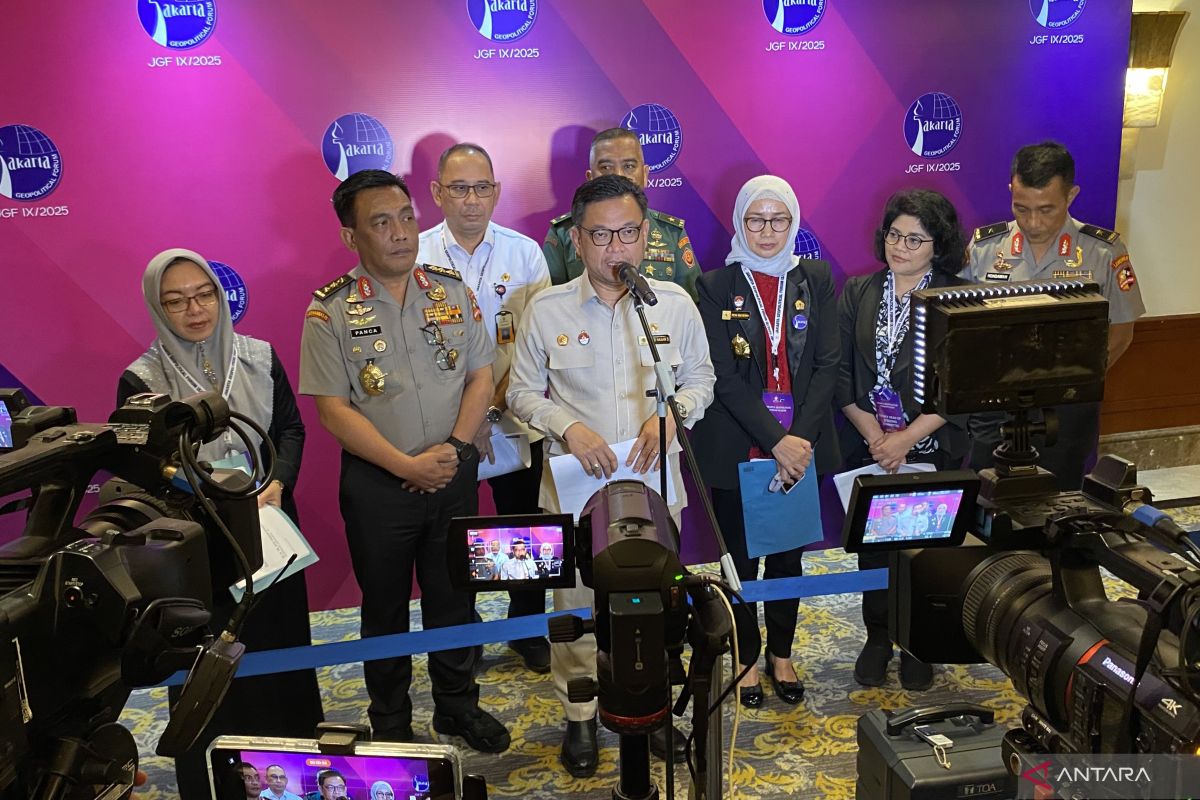
The air inside a diplomatic briefing room rarely smells like history. It usually smells of floor wax, stale coffee, and the faint, ozone scent of high-end air purifiers. But when a superpower tells another to stop speaking in the "language of ultimatums," the atmosphere shifts. It becomes heavy. You can almost feel the invisible lines being drawn across a map of the world, vibrating with the tension of a tripwire.
Moscow’s recent message to Washington regarding the Iranian nuclear deal—the Joint Comprehensive Plan of Action (JCPOA)—wasn’t just a dry piece of bureaucratic pushback. It was a warning about the physics of human nature. When you corner a person, a dog, or a sovereign nation, they don't usually become more reasonable. They bite.
Russia is essentially arguing that the global community has forgotten how to talk. We have replaced the difficult, grinding work of diplomacy with the digital equivalent of a "demand" button. The Kremlin’s stance is that the United States needs to stop holding a stopwatch to Iran’s head and start looking for the keys to the room.
The Man in the Tehran Bazaar
To understand why a "language of ultimatums" fails, we have to look past the satellite photos of centrifuges and into the streets of Tehran. Consider a hypothetical merchant named Abbas. He sells intricately woven rugs.
For Abbas, the nuclear deal wasn't about isotopes; it was about bread. When the JCPOA was signed in 2015, the world felt like it was expanding. He could imagine his children studying abroad. He could see a path where his country wasn't a pariah, but a partner. Then the door slammed shut. The sanctions returned. The "ultimatum" became his daily reality.
When a superpower issues a threat, it doesn't just hit a government building. It ripples down to the man trying to buy imported medicine for his mother. It hardens the heart. If the world tells Abbas and his neighbors that they are nothing more than a problem to be solved with pressure, they stop wanting to solve the problem. They want to survive. They want to resist.
Diplomacy is often treated like a math equation: $Pressure + Sanctions = Compliance$. But human history suggests the formula is actually closer to $Disrespect + Isolation = Defiance$.
The Architecture of the Deal
The JCPOA was a masterpiece of compromise, a fragile glass sculpture built in a room full of people throwing stones. It required Iran to limit its uranium enrichment and open its doors to international inspectors. In exchange, the world would stop strangling its economy.
It worked. For a while.
The International Atomic Energy Agency (IAEA) verified time and again that the seals were intact. The cameras were rolling. The uranium was being shipped out. Then, the United States walked away, citing the need for a "better deal." This is where the language shifted from negotiation to ultimatum.
Imagine you sign a contract for a house. You pay your mortgage every month. Suddenly, the bank decides they want a different contract—one where you pay double and they get to sleep in your guest room whenever they want. If you don't sign, they'll turn off your electricity. That isn't a negotiation. It's a hostage situation.
Russia’s point is that you cannot build a lasting security framework on a foundation of broken promises. If the goal is to prevent a nuclear-armed Middle East, the most effective tool isn't a threat; it’s a reason for everyone to stay at the table.
The Invisible Stakes of Enrichment
What are we actually talking about when we talk about nuclear enrichment? To the average person, it sounds like science fiction.
Technically, it's a matter of percentages. Low-enriched uranium (around 3% to 5%) powers a city. High-enriched uranium (90%) destroys one. The JCPOA kept Iran well within the "powering a city" range. Since the deal began to crumble, those percentages have crept upward.
Every time an ultimatum is issued and ignored, a centrifuge spins a little faster. These machines are elegant, terrifying cylinders of carbon fiber and steel, spinning at supersonic speeds to separate atoms. They are the physical manifestation of political failure.
The tragedy is that the technology itself is neutral. It can provide carbon-free energy to millions or it can become the ultimate deterrent. The difference between those two outcomes isn't found in a laboratory. It is found in the tone of a letter sent from the State Department or the Kremlin.
The Psychology of the Pariah
There is a specific kind of pride that grows in the shade of a blockade. Nations, like people, have egos.
When Russia tells the U.S. to abandon ultimatums, they are speaking from experience. They know that a nation told it has no choice will often choose the most dangerous path just to prove it still has agency. By demanding "everything or nothing," the West often ends up with nothing.
The Iranian leadership is not a monolith, but the hardliners thrive on American threats. Every time a Western leader goes on television to talk about "all options being on the table," the radicals in Tehran get to say, "See? We told you they couldn't be trusted."
We are effectively feeding the very forces we claim to want to diminish.
Consider the alternative. Diplomacy is slow. It is boring. It involves sitting in rooms for eighteen hours eating cold sandwiches and arguing over the placement of a comma. It requires acknowledging that your opponent has legitimate interests. It is the opposite of a "game-changer" or a "robust" show of force. It is the humble admission that we share a planet with people we don't like, and we have to find a way to live anyway.
The Ghost of 2015
The year 2015 feels like a different century. It was a moment when the world believed that even the most bitter enemies could find a common language. The JCPOA was the evidence.
When Russia calls for a return to that spirit, they aren't doing it out of pure altruism. They have their own strategic interests, their own desire for regional stability, and their own complicated relationship with the West. But their assessment of the current trajectory is hauntingly accurate.
We are currently watching a slow-motion car crash. We see the glass shattering, the metal bending, and we are arguing about who had the right of way while the passengers are still inside.
The "language of ultimatums" is the sound of the brakes failing. It is a one-way street that leads to a wall. To turn the wheel, both sides have to be willing to stop shouting long enough to hear the other person's fear.
The Weight of the Silence
What happens if the ultimatums continue?
The cameras at the nuclear sites go dark. The inspectors are sent home. The diplomatic channels, already clogged with dust, are boarded up. In that silence, suspicion grows like mold. Without eyes on the ground, the worst-case scenario becomes the only scenario that military planners consider.
We have been here before. We have seen how "certainty" about weapons of mass destruction can lead to decades of fire and blood. The tragedy of the current moment is that we have a map to avoid the minefield, but we are choosing to set the map on fire because we don't like the person who drew it.
Russia’s insistence on a return to the original deal is a plea for predictability. In the world of nuclear weapons, predictability is the only thing keeping us safe. We don't need "strong" leaders who can make the most noise. We need patient leaders who can handle the silence.
The Cost of Being Right
There is a hollow satisfaction in being right while the world burns.
The U.S. can maintain that Iran violated the "spirit" of the deal. Iran can maintain that the U.S. violated the "letter" of the deal. Both can be true, and both can be utterly irrelevant if the end result is a conflict that consumes the region.
The people who pay for these linguistic standoffs aren't the ones in the briefing rooms. They are the students in Isfahan who can’t get visas. They are the sailors in the Strait of Hormuz wondering if today is the day a mistake starts a war. They are the families in the West who don't realize how much their safety depends on a few sheets of paper signed in Vienna.
The language we use matters. "Ultimatum" sounds like strength, but it is often a mask for a lack of ideas. It is the final resort of the unimaginative.
If we want a different outcome, we have to use different words. We have to move past the desire to win the argument and focus on the desire to survive the century.
The door to the negotiation room is still there. It’s heavy, and the hinges are rusted from disuse. Russia is pointing at it. The rest of the world is watching. The question is no longer about who is right or who is wrong. It’s about who is brave enough to walk through the door first, without a weapon in their hand.
The centrifuges are still spinning. The clock is still ticking. Somewhere in Tehran, a man named Abbas is waiting to see if his children have a future, or if they are just pawns in a game of words they never asked to play.
The silence that follows an ultimatum is never empty. It is filled with the sound of a world holding its breath.