The HK$2 Public Transport Fare Concession Scheme is currently a victim of its own success and a demographic reality that Hong Kong’s treasury can no longer ignore. What began as a socially progressive tool to keep the elderly active has transformed into a fiscal weight that threatens to buckle under the pressure of a rapidly aging population and rampant systematic abuse. While the government hesitates to pull the plug, the numbers suggest that the current model is unsustainable without a radical structural overhaul.
In the fiscal year 2023-24, the cost of the scheme surged to roughly HK$4 billion. That is not a static figure. Projections indicate it could easily double within the decade as the "silver tsunami" hits its peak. The problem isn't just that people are getting older; it's that the gap between the flat HK$2 fare and the actual cost of a journey—which the taxpayer covers—is widening as transport operators hike prices to combat inflation.
The Flaw in the Open Ended Subsidy
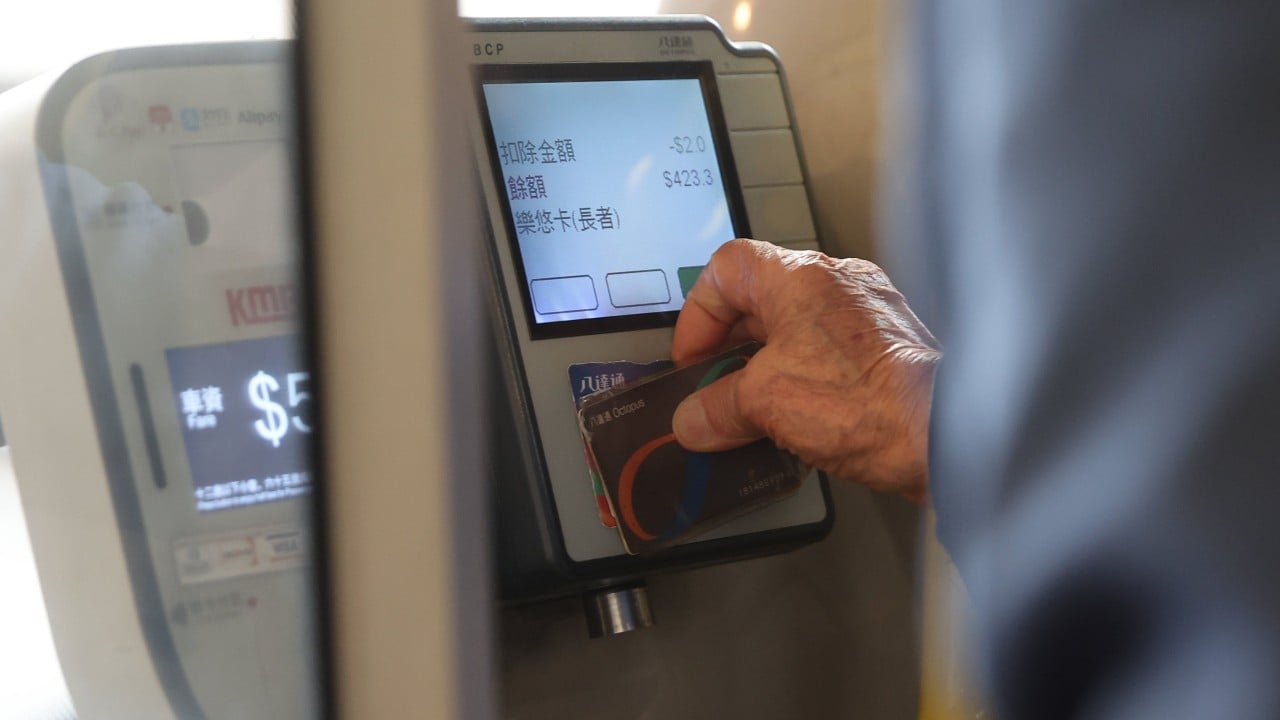
The fundamental mechanics of the scheme are built on a dangerous premise. Unlike most social welfare programs that have a capped budget or a means-tested entry point, the HK$2 scheme is an open-ended liability. Every time a senior taps their JoyYou card on a long-haul bus for a short two-stop trip, the government pays the difference. This practice, known as "short-hopping," turns a HK$25 bus ride into a massive drain on public funds for a journey that should have cost the treasury pennies.
Bus companies have little incentive to stop this. They receive the full fare regardless of whether the seat is occupied by a full-paying professional or a subsidized retiree. This creates a perverse economic cycle where the government is effectively subsidizing the revenue streams of private transport franchisors without any cap on the distance traveled or the frequency of use.
The Cost of Short Hopping
To understand the scale, consider a hypothetical scenario where a senior boards a cross-harbor bus in Wan Chai to travel three blocks. The full fare might be HK$21. The senior pays HK$2. The government pays HK$19. If that same senior took a local shorter-route bus, the subsidy might only be HK$3. Across millions of trips monthly, these "invisible" overpayments stack up into the hundreds of millions.
- Fiscal 2019-20: HK$1.3 Billion
- Fiscal 2023-24: HK$4.0 Billion (Estimated)
- The Trend: A nearly 300% increase in five years.
This isn't just a matter of "doing good." It’s a matter of solvency.
The Shadow of Systematic Abuse
Beyond the legal but inefficient use of the scheme, a darker reality exists in the form of outright fraud. The transition to the JoyYou card was meant to curb the use of anonymous elder Octopus cards by younger commuters. It hasn't solved the problem entirely. Task forces have conducted thousands of inspections, yet the incentive to cheat remains high when the price difference between a standard fare and the concession is nearly 90%.
The enforcement is often performative. A few high-profile stings at MTR turnstiles do not address the systemic lack of verification on buses and minibuses where drivers are often too busy or too indifferent to challenge a passenger. The result is a leakage of public funds into the pockets of those who don't qualify, further bloating a budget that was already under fire.
The Population Trap
Hong Kong is aging faster than almost any other developed city. By 2046, more than one in three residents will be aged 65 or older. If the HK$2 flat rate remains untouched, the city is essentially writing a blank check to a demographic that will soon represent its largest voting block and its greatest social expenditure.
Political cowardice is the main barrier to reform. No lawmaker wants to be the one to tell the elderly that their "freedom of the city" is being curtailed. However, failing to act now ensures that when the correction eventually comes, it will have to be far more painful. We are looking at a future where the youth, already squeezed by housing costs and stagnant wages, are footing a bill for a transport scheme that offers them no benefit and depletes the reserves meant for their own future infrastructure.
Structural Fixes Over Cosmetic Changes
The government's current strategy involves "encouraging" people not to short-hop and increasing inspections. This is like trying to plug a dam with a toothpick. Real change requires a departure from the flat-rate model.
One viable alternative is a percentage-based discount. If seniors paid 20% or 30% of the fare, the incentive to choose the most expensive long-haul bus for a short trip would return. A HK$25 trip would suddenly cost the user HK$5 or HK$7.50, while a HK$5 trip would stay near the HK$2 mark. This aligns user behavior with fiscal reality.
Another option is a monthly cap. Once a user exceeds a certain amount of subsidy—say HK$500 a month—the fare reverts to a standard discount or full price. This protects the "necessary" travel for medical appointments and family visits while curbing the "aimless riding" that has become a common sight on Hong Kong’s air-conditioned bus routes during sweltering afternoons.
Why the Status Quo is a Choice
The decision to maintain the HK$2 rate is a political choice, not an economic one. The administration is using the scheme as a form of "social harmony" insurance. After years of social unrest, providing cheap mobility to the elderly is seen as a way to maintain stability within a loyal demographic. But social harmony built on an unsustainable debt is an illusion.
We must ask if this money is being spent in the right place. Could those billions be better used to reduce the ten-year wait times for elderly care homes? Could they be used to subsidize the skyrocketing costs of medicine for chronic illnesses? Currently, Hong Kong is prioritizing the journey over the destination of its social welfare policy.
The Transportation Industry’s Quiet Profit
We cannot ignore the role of the transport operators. They are the silent beneficiaries of this arrangement. In every negotiation for fare increases, the HK$2 scheme acts as a buffer. The companies know that the government will cover a significant portion of the increase for a large segment of the population, softening the public outcry.
This creates a cozy, yet toxic, relationship between the private sector and the public purse. The transport companies have become reliant on the "government top-up." It is a guaranteed revenue stream that doesn't fluctuate with the economy, as the government is a reliable payer. Any reform to the HK$2 scheme must also include a renegotiation of how transport providers are compensated. Perhaps the government should only reimburse the operator at a bulk-discounted rate rather than the full retail fare.
A Hard Choice for a New Era
Hong Kong prides itself on fiscal discipline. It is the bedrock of the city’s economic reputation. Yet, the HK$2 scheme is a glaring exception to the rule of "living within our means." The argument that we "must not undo the good work" is a sentimental trap. Good work is only good if it can survive the long term.
The current trajectory points toward a fiscal cliff. To save the scheme, the government must be willing to break it. This means moving away from the "magic number" of two dollars and toward a system that recognizes the actual cost of movement in a modern city.
The most compassionate thing the government can do is to ensure the scheme exists ten years from now. At the current rate of spend and with the current lack of oversight, that is a statistical impossibility. The "good work" is already being undone by the math. If the administration continues to prioritize optics over spreadsheets, they won't just be failing the taxpayers; they will eventually be forced to strip away the mobility of the very seniors they claim to protect.
Total reform is the only way to prevent a total collapse. The city needs to stop treating the HK$2 fare as a sacred cow and start treating it as the high-stakes budgetary crisis it has become.
Eliminate the flat rate. Implement a sliding scale. Cap the monthly usage. If these steps aren't taken, the "silver tsunami" won't just be a demographic shift—it will be the wave that washes away the city's fiscal credibility for good.