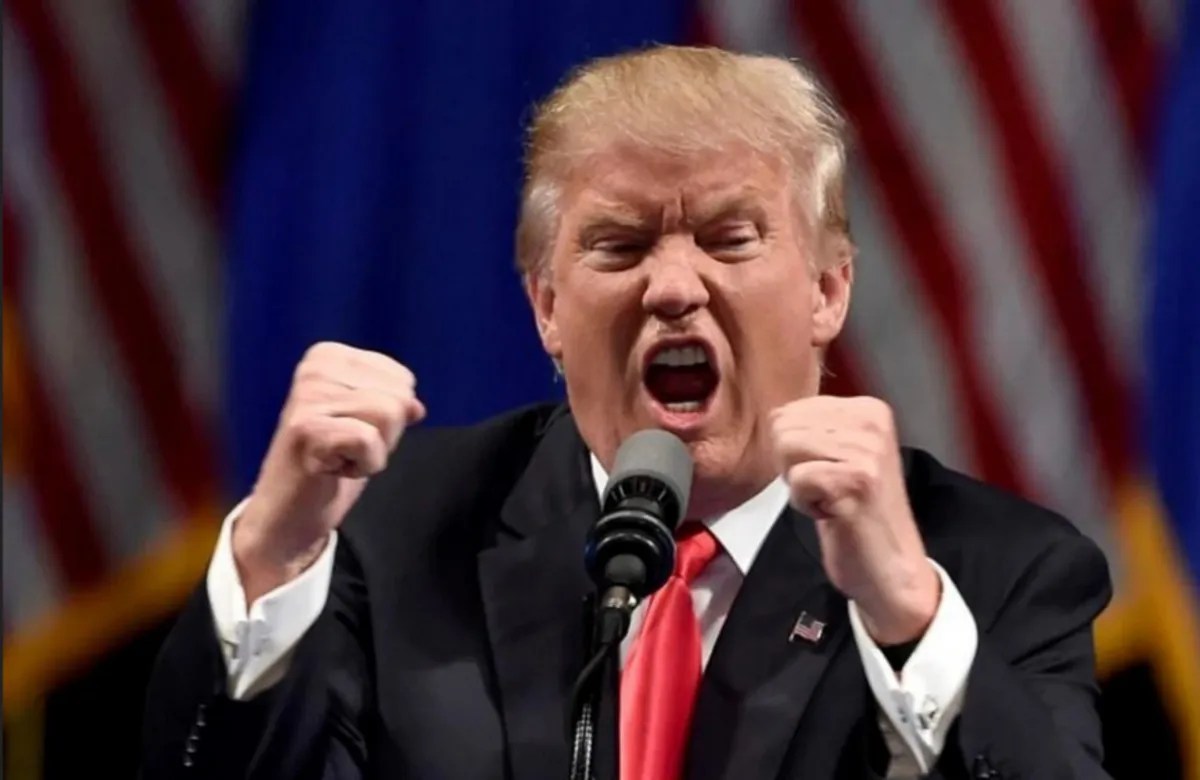
The era of the American security blanket is over. While headlines focus on Donald Trump’s fiery rhetoric regarding NATO and his insistence that "we don't need help," the reality is far more dangerous than a simple dispute over membership dues. This isn’t just about 2% of GDP or a billionaire's transactional view of foreign policy. It is a fundamental shift in the global power structure that has existed since 1949. The United States is signaling a pivot from being the world’s primary protector to a solo superpower that views its traditional allies as economic competitors rather than strategic partners.
For decades, the North Atlantic Treaty Organization functioned on a simple, unspoken agreement. Europe provided the geography and political legitimacy for American influence, and in exchange, Washington provided the nuclear umbrella and the conventional muscle to keep Moscow at bay. Trump has effectively shredded that contract. His stance suggests that the mutual defense pact, specifically Article 5, is no longer an automatic guarantee but a conditional service subject to an audit.
The Cold Math of Transactional Diplomacy
The frustration currently boiling over in Washington isn’t new, but the delivery is unprecedented. To understand why the "help" from NATO is being rejected, one must look at the Pentagon's internal shift toward the Indo-Pacific. American strategists have long complained that European capitals have effectively outsourced their national security to the American taxpayer. By spending less than the agreed-upon amounts on their own militaries, countries like Germany and Italy have been able to fund expansive social safety nets—luxury items that the U.S. debt-laden budget can no longer subsidize.
This is the "how" behind the anger. Trump views the $860 billion annual U.S. defense budget as a tool for American interests alone. If an alliance doesn't provide a direct, measurable return on investment, it is viewed as a liability. The "we don't need help" narrative is a psychological play to tell Europe that the U.S. is prepared to walk away from the table if the terms don't change. It is a high-stakes gamble that assumes Europe needs the U.S. far more than the U.S. needs Europe.
The Military Industrial Gap
The technical reality of modern warfare makes this friction even worse. The U.S. military has moved into a tier of technological sophistication—specifically in hypersonic missiles, AI-driven drone swarms, and space-based surveillance—that most European nations cannot match. When Trump claims the U.S. doesn't need help, he is partially referencing this widening capability gap.
- Interoperability issues: European armies are a patchwork of different tank models, radio frequencies, and ammunition types.
- Logistical dependence: Without American heavy-lift aircraft and satellite intelligence, a unified European force would struggle to move a single division across its own borders.
- Nuclear deterrence: Only France and the UK possess nuclear weapons, and their stockpiles are a fraction of the American and Russian arsenals.
The hard truth is that NATO’s "help" in a high-intensity conflict would currently consist of small, specialized units that require American logistics to function. From a purely cynical military perspective, the U.S. command sees this as more of a management burden than a force multiplier.
Why the European Response is Failing
Europe’s reaction to this pressure has been a mix of panic and procrastination. For years, the phrase "Strategic Autonomy" has been tossed around the halls of Brussels. It is a nice idea on paper. It suggests a Europe that can defend itself without waiting for a phone call from the White House. But the execution has been a disaster.
Building a sovereign defense takes trillions of dollars and decades of planning. You cannot simply buy "security" off the shelf when your industrial base has been hollowed out by years of peace-time complacency. The European defense industry is fragmented. France wants to build French planes; Germany wants to build German tanks. This internal protectionism prevents the continent from achieving the scale necessary to compete with the American or Chinese defense machines.
While Trump’s rhetoric is abrasive, it exposes this core weakness. If the U.S. pulls the plug on intelligence sharing or maintenance for F-35 fighter jets, the European air defenses would essentially go dark within weeks. This is the leverage being used to demand more than just money—it is a demand for total alignment with American economic and geopolitical goals, particularly regarding the containment of China.
The China Factor
The overlooked factor in this divorce is the Pacific. The U.S. no longer views the North Atlantic as the primary theater of the 21st century. Washington wants NATO to help confront Beijing, but European nations—heavily dependent on Chinese trade—are hesitant to sign up for a new Cold War.
When the U.S. says "we don't need help," they are specifically talking about the kind of help Europe is currently offering: a focus on old-school land borders in the East. Washington wants help in the South China Sea. If Europe won't provide that, the U.S. sees no reason to continue paying the lion's share for Europe's local security.
The Technology Trap
The shift toward an "America First" security posture is also a play for technological dominance. Modern defense is no longer just about boots on the ground; it’s about who owns the algorithms and the semiconductor supply chains.
By threatening to withdraw from NATO, the U.S. puts immense pressure on European nations to buy American hardware. If you want to stay in the "club," you must buy the American-made F-35, the American-made Patriot missiles, and use American-made cloud computing for your military data. This creates a cycle of dependency. Once a nation integrates American tech into its core defense infrastructure, "leaving" NATO becomes a technical impossibility.
The anger directed at NATO is a tool to force these sales. It is an aggressive form of industrial policy disguised as a diplomatic tantrum. The U.S. is telling its allies that if they want protection, they must not only pay more but they must also remain captive customers of the American tech sector.
The Risk of a Multipolar Collapse
There is a grave danger in this approach that the current administration seems to ignore. NATO was never just about defense; it was about preventing the "renationalization" of European security. Before NATO, European powers spent centuries fighting each other. The alliance suppressed these old rivalries by putting everyone under a single command structure.
If the U.S. truly retreats, we won't see a unified Europe. We will see a fractured Europe where Poland, the Baltic states, and France all pursue separate, potentially conflicting security paths. A world where the U.S. "doesn't need help" is a world where the U.S. loses its seat at every important table in the Eastern Hemisphere.
The U.S. currently enjoys the "exorbitant privilege" of the dollar being the world’s reserve currency. That privilege is backed by the fact that the U.S. military is the ultimate guarantor of global trade routes. If Washington abandons its alliances, it eventually abandons that economic dominance. You cannot be an isolationist and the world's banker at the same time.
The Intelligence Gap
One specific area where the U.S. actually does need help is human intelligence (HUMINT). While the U.S. leads in satellite and electronic surveillance, European agencies have deep, historical networks in the Middle East, Africa, and Eastern Europe that the CIA cannot replicate. Cutting ties or degrading trust with NATO partners means losing those "eyes on the ground." This is a quiet, invisible cost of the current rhetoric that doesn't show up on a balance sheet but costs lives in the long run.
The End of the Post-War Order
The shift we are witnessing is not a temporary fluke of one presidency. It is the result of a long-term exhaustion within the American body politic. The American public is tired of "forever wars" and tired of feeling like the world's policeman while their own infrastructure crumbles.
Trump has simply tapped into this resentment and turned it into a weapon. The message to NATO is clear: the era of the free ride is over, and the era of the mercenary alliance has begun. If Europe cannot provide a compelling, modern reason for the U.S. to stay—one that involves more than just "thanks for the help"—then the Atlantic will continue to grow wider every year.
This isn't a drill. The U.S. is actively preparing for a world where it operates as a unilateral force, choosing its battles and its partners on a case-by-case basis. For Europe, the choice is no longer about whether to pay the 2%. It is about whether they can survive in a world where the most powerful nation on earth has decided it is better off alone.
The next step is for European leaders to stop waiting for a change in the White House and start building a defense industry that doesn't rely on an American permission slip.