China's not just building more tracks. They're literally boring through the bottom of the ocean to shave minutes off travel times. If you've ever wondered why a country would spend billions to dig 80 meters below a moving riverbed instead of just building a bridge, the answer's simple: speed and geography. Bridges are vulnerable to typhoons and limit ship traffic. Tunnels? They're the silent, high-speed backbone of the world's most ambitious transit network.
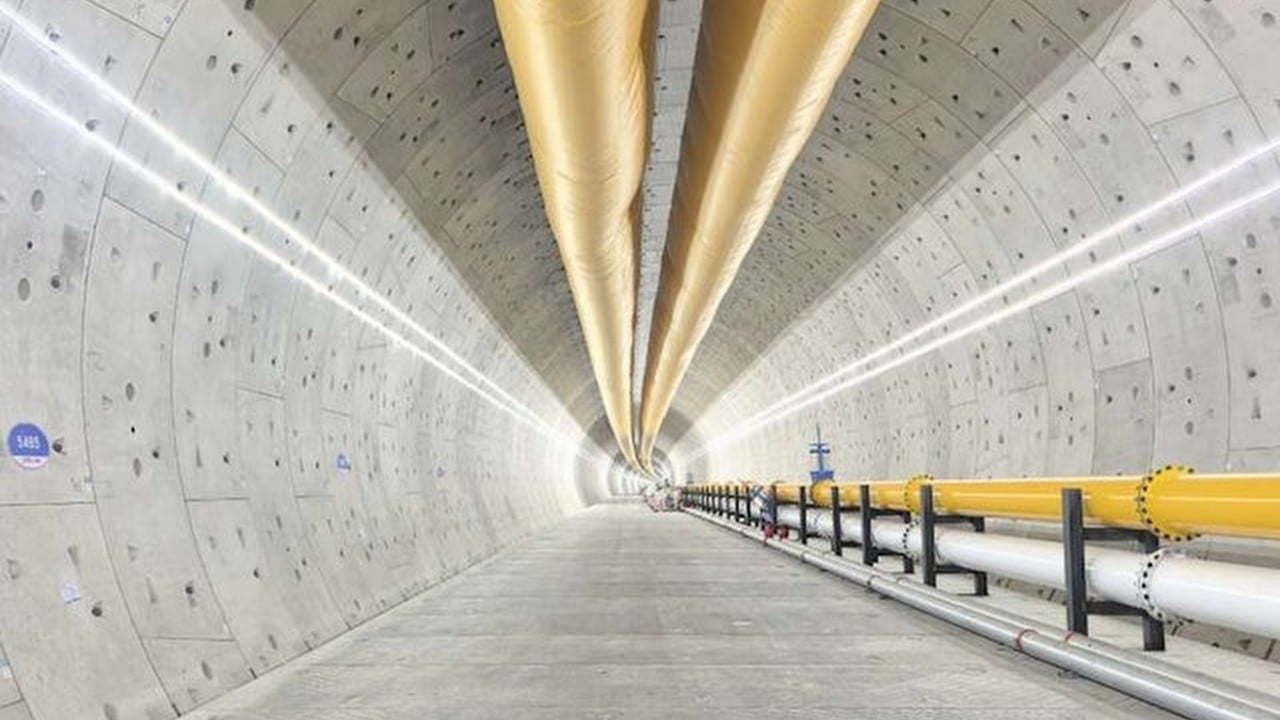
Right now, the heavy lifter in this space is a 4,000-ton beast named Linghang. On March 29, 2026, this domestically developed shield-tunneling machine hit a massive milestone. It finished the underwater section of the Chongtai Yangtze River Tunnel, a 14-kilometer stretch that sits 89 meters below the surface. This isn't just a hole in the ground. It’s a 350 km/h corridor designed to connect Shanghai with the hinterland without the trains ever having to tap the brakes.
The Engineering Nightmare of Drilling Through Tofu
You can't just point a drill and hope for the best. The geology under the Yangtze River is basically "tofu"—soft, unpredictable silt and sand. Above that tofu is a massive volume of water pressing down with ten times the atmospheric pressure.
To handle this, the Linghang machine uses an "attended but unmanned" system. I’m talking about 500 sensors feeding 80,000 threads of live data every single meter to an AI brain. It adjusts its own torque and pressure in real-time. This isn't science fiction; it’s how they managed to bore 11,000 meters straight without a single major structural failure.
Why Bridges Aren't Enough Anymore
- Weather resilience: High-speed trains on bridges have to slow down or stop during high winds. Tunnels don't care about typhoons.
- Shipping lanes: The Yangtze is the busiest waterway on earth. Huge container ships need clear paths. A bridge pier is just a target; a tunnel stays out of the way.
- Noise pollution: 350 km/h creates a massive sonic footprint. Burying that noise underground makes urban integration much easier.
The World Record Chaser at Jintang
While Linghang is grabbing headlines at the Yangtze, another project is quietly breaking records in Zhejiang Province. The Jintang Undersea Tunnel is part of the Ningbo-Zhoushan Railway. When it’s finished around 2028, it’ll be the longest undersea high-speed rail tunnel on the planet at 16.18 kilometers.
Think about the pressure for a second. At its deepest point—78 meters below the seabed—the water pressure hits 8.4 bars. That’s roughly equivalent to a ton of weight sitting on the palm of your hand. To fight this, engineers are using two TBMs (Tunnel Boring Machines), the Yongzhou and the Dinghai, starting from opposite ends. They’re scheduled to meet in the middle with millimeter precision. Honestly, the logistics of keeping those machines aligned while grinding through rock that has a compressive strength of 200 MPa—harder than some concretes—is mind-blowing.
What This Means for the Global Economy
This isn't just about cool machines. It’s about the Shanghai-Chongqing-Chengdu High-Speed Railway. This line creates a 2,000-kilometer economic corridor. We're talking about linking 40% of China's state labs and a quarter of its advanced manufacturing.
When you can move people and high-value freight at 350 km/h from the coast to the interior, you change how cities function. You’re not just connecting two points; you’re creating a "one-hour economic circle" where someone can live in a rural province and work in a global tech hub.
The Technical Specs That Actually Matter
If you’re a nerd for the details, here’s what makes these new tunnels different from the ones built five years ago:
- Diameter: These machines are over 15 meters wide. That’s a five-story building moving horizontally.
- Sealing Systems: They use a dual-shell design with four layers of tail brushes to keep the ocean out.
- Speed: Most underwater tunnels require trains to slow down to 200 km/h or less. These are the first designed for 350 km/h sustained speeds.
The Reality Check
Don't get it twisted—this is incredibly expensive. The Ningbo-Zhoushan project alone is sucking up about 27 billion yuan (over $4 billion). There are huge risks, too. They’re navigating around active oil pipelines and busy shipping channels. One wrong move and you don't just lose a machine; you flood an entire transit artery.
But China has decided the trade-off is worth it. By mastering the "tofu" geology and the high-pressure rock of the seabed, they’re effectively building a toolkit they can export. We're already seeing Chinese TBMs breaking through in places like Sicily, Italy.
If you want to track where the next big breakthrough is happening, keep your eyes on the Yongzhou machine's progress. As of early 2026, it’s already cleared 3,000 meters of its subsea journey. The engineering learned here will likely dictate how we connect coastal cities globally for the next fifty years.
Stop thinking of these as just "tunnels." They’re pressurized, AI-controlled glass-smooth tubes that make the ocean irrelevant to land travel. That's the real shift.