The Middle East is back in the crosshairs, and this time, the global energy market isn't just flinching—it's breaking. Since the Iran war escalated in February 2026, the Strait of Hormuz has essentially become a no-go zone. With nearly 20% of the world’s oil supply effectively trapped or under threat, the "war premium" on a barrel of crude has sent prices screaming past $100. Most analysts are busy staring at Strategic Petroleum Reserves (SPRs), but they’re looking at the wrong safety net.
While the U.S. and Europe scramble to release millions of barrels of oil to keep the lights on for another few days, China’s massive exports of energy storage tech are doing the heavy lifting for the long haul. It's not just about surviving a price spike anymore. It’s about who has the hardware to decouple from oil entirely. Expanding on this topic, you can also read: The Invisible Cord That Holds Your World Together.
The storage surge that actually matters
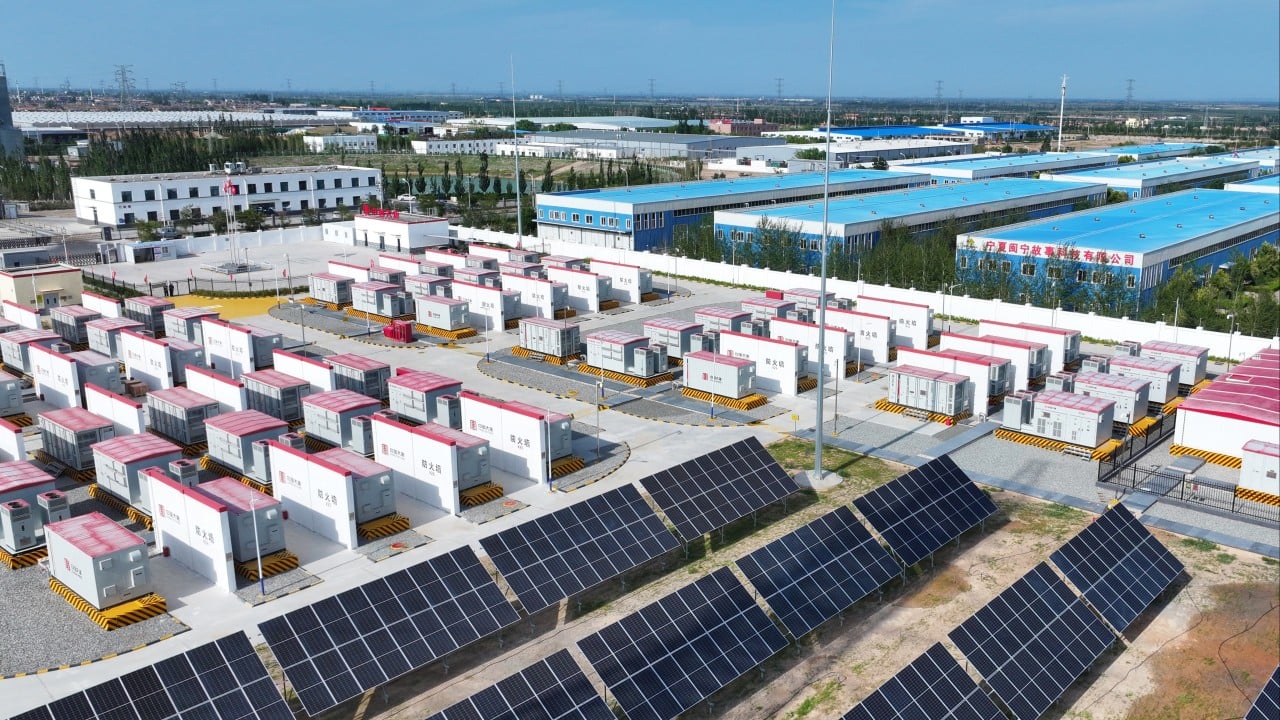
You've probably heard that China dominates the battery market, but the scale of what's happening right now is hard to wrap your head around. In the first two months of 2026 alone, Chinese battery exports didn't just grow; they evolved. We aren't just talking about smartphone batteries. We're talking about massive, utility-scale Energy Storage Systems (ESS) that can stabilize an entire city's grid when the gas plants run dry.
According to recent data from the China International Battery Fair, lithium-ion battery exports hit over $76 billion in 2025, a 25% jump from the year before. Now that the Iran conflict has choked off oil lanes, that growth is hitting a vertical line. Companies like CATL and BYD aren't just manufacturers; they're the new "central banks" of energy. Observers at The Next Web have provided expertise on this situation.
Here's why this matters for you: when oil gets expensive, everything gets expensive. But if you're a country like Indonesia or Brazil, and you've spent the last two years installing Chinese-made grid storage, you're not as worried about the Strait of Hormuz. You're charging your batteries with solar during the day and discharging them at night. You're essentially "buffering" the war shock.
Why traditional oil reserves are failing the test
The old-school move was always to dump the SPR. The U.S. tried that again in March 2026, releasing 400 million barrels. It sounds like a lot until you realize that only covers about four days of global production. It’s a band-aid on a gunshot wound.
Energy storage technology offers something oil never could: permanence. Once you install a 500 MW storage project—like the Gushanliang project in Inner Mongolia that went live recently—that capacity stays there. It doesn't get "consumed" like a barrel of oil. It sits on the grid, ready to catch every bit of renewable energy that would otherwise go to waste.
I’ve seen how this plays out in the private sector too. Shippers and logistics firms are getting crushed by diesel prices right now. The ones who invested in electric fleets and on-site storage are the only ones not hiking their surcharges by 30%. They’ve built their own "private SPR" using Chinese lithium-iron phosphate (LFP) cells.
The absolute competitiveness of Chinese tech
It’s easy to say "just buy batteries," but it’s not that simple. China has what Xiamen University researchers call "absolute competitiveness." They’ve spent a decade subsidizing and refining the "new three" industries: solar, batteries, and EVs.
- Cost advantage: Chinese LFP batteries are significantly cheaper than Western nickel-manganese-cobalt (NMC) alternatives.
- Supply chain grip: They control over 80% of the processing for battery minerals.
- Scale: In 2025, the world produced twice as many solar panels as it needed. That "overcapacity" people complained about? It’s now the world's only hope for a quick pivot away from Middle Eastern oil.
If you’re trying to build a grid-scale storage site in 2026, you basically have two choices: wait three years for a domestic factory to spin up in the West, or call a Chinese supplier and have containers arriving in months. In a war-driven energy crisis, speed isn't just a preference—it’s survival.
The hidden risk of the trade war
It’s not all sunshine and lithium. There's a massive tug-of-war happening between energy security and national security. The U.S. administration has been pushing to end tax support for "green energy" that relies on foreign adversaries.
This creates a brutal paradox. Do you keep your economy tethered to the volatile oil prices of a literal war zone, or do you "depend" on Chinese battery tech to go green? Honestly, most of the world is choosing the batteries. They’d rather owe their energy tech to a manufacturer than their daily survival to a shipping lane that can be closed by a few sea mines.
What you should be doing right now
If you’re running a business or managing a portfolio, sitting around waiting for oil to "go back to normal" is a losing game. The Middle East isn't getting quieter, and the "war premium" is the new floor for energy costs.
- Stop looking at crude prices as the only indicator. Watch the export volumes of Chinese ESS. That's the real metric for how much "buffer" the world is building against future shocks.
- Audit your energy storage. If you’re a high-energy consumer, look at LFP-based storage systems now. The prices are temporarily stable because of China’s high production capacity, but that won't last as every country on earth tries to buy in at once.
- Ignore the "overcapacity" headlines. What the West calls "overcapacity" is actually the world's only significant reserve of decarbonization hardware.
The 2026 oil shock isn't just a repeat of the 1970s. We have an out this time. It just happens to be made in China. If you want to insulate your operations from the next geopolitical flare-up, you need to stop thinking about where your oil comes from and start thinking about where your electrons are stored.
Invest in storage capacity while the supply chains are still moving. The Strait of Hormuz might be blocked, but the flow of Chinese battery tech is the only thing keeping the global energy transition from a total collapse.