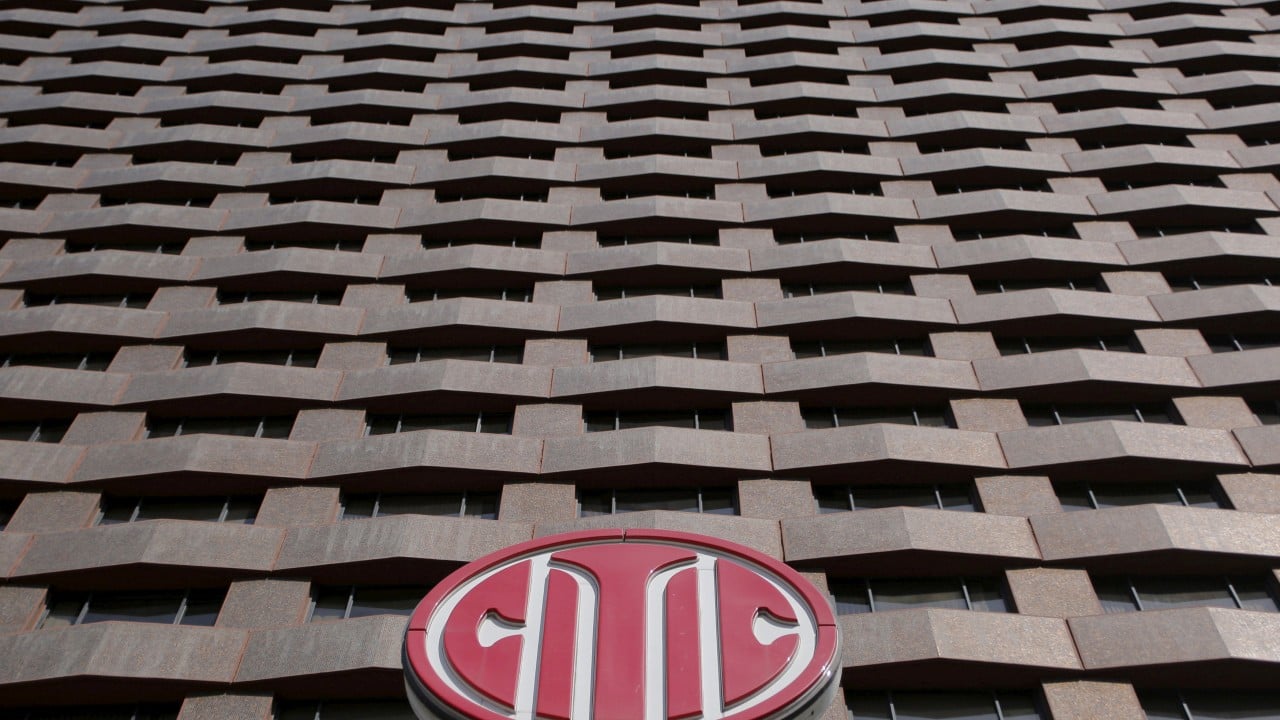
Wall Street's long-standing grip on Asian capital markets isn't just slipping—it's being pried open by domestic giants. If you've been watching the league tables lately, you'll see one name consistently sitting at the peak. Citic Securities hasn't just topped the charts; it's rewritten the playbook for how investment banking works in a multipolar world.
By the end of 2025, Citic pulled in a staggering $1.45 billion in investment banking fees across Asia Pacific (excluding Japan). That's not just a "good year." It’s a 5.8% share of the entire regional fee pool, leaving global heavyweights like Morgan Stanley and Goldman Sachs fighting for the leftovers in the sixth spot or lower.
Why does this matter to you? Because the flow of capital has fundamentally shifted. The days when a New York or London pedigree was required to take a Chinese company public are over. Today, local expertise, deep regulatory ties, and the ability to navigate the "dual circulation" economy are the only currencies that count.
The numbers behind the shift
The data from the London Stock Exchange Group (LSEG) paints a clear picture of a domestic takeover. While the total APAC investment banking fee pool jumped 19% to $24.9 billion in 2025, the winners weren't the usual suspects from lower Manhattan.
- Citic Securities: $1.45 billion (5.8% market share)
- China Securities: Ranked 2nd
- Bank of China: Ranked 3rd
- CICC: Ranked 4th
- Guotai Haitong Securities: Ranked 5th
Notice something? The entire top five is a Chinese lockout. Morgan Stanley, the highest-ranking Western bank, barely scraped into sixth place. This isn't a temporary blip; it’s a structural realignment. The surge in fees was largely driven by a massive recovery in the Hong Kong IPO market and a wave of offshore bond issuances.
What's actually driving the Hong Kong comeback
If you thought Hong Kong was "over" in 2024, you've missed the biggest comeback story of the decade. In 2025, Hong Kong regained its title as the world's top IPO bourse. We're talking about nearly HKD 286 billion raised.
It wasn't just small-cap tech. Major players like CATL and Zijin Mining drew massive interest from both overseas and mainland investors. The "Southbound" flow—money coming from mainland China into Hong Kong—hit record levels, often exceeding HKD 200 billion per day.
Faster approvals and regulatory shifts
The regulators didn't just sit on their hands. The Securities and Futures Commission (SFC) and the Hong Kong Stock Exchange (SEHK) streamlined the approval process. If an application is clean, they now aim to finish the regulatory comment phase within 40 business days. That kind of speed is a magnet for companies that don't want to be stuck in "listing purgatory" for eighteen months.
The rise of A+H listings
More than half of the total IPO fundraising in 2025 came from A+H listings—companies listing simultaneously in mainland China and Hong Kong. This is Citic's home turf. They understand the nuances of the China Securities Regulatory Commission (CSRC) while maintaining the infrastructure to handle international investors in Hong Kong.
The dim sum bond explosion
Investment banking isn't just about IPOs. Debt capital markets (DCM) provided a massive cushion for Citic's fee income. While equity capital markets (ECM) fees rose 45% in 2025, debt fees still made up a huge chunk of the total wallet, reaching $13.5 billion regionally.
Chinese banks have dominated the issuance of "dim sum" bonds—yuan-denominated bonds issued in Hong Kong. As interest rate environments fluctuated globally, the stability and strategic importance of yuan-denominated debt became a vital tool for Chinese firms expanding globally. Citic and its domestic peers are the primary gatekeepers for this capital.
Why Wall Street is struggling to keep up
It’s tempting to say it’s just "home-field advantage," but that’s an oversimplification. Western banks are facing a "squeeze play."
On one side, they’re dealing with increased compliance costs and geopolitical friction that makes it harder to participate in certain mainland sectors. On the other, domestic firms like Citic have matured. They’ve spent the last decade poaching top-tier talent from the very Western banks they’re now beating.
Citic Securities has evolved into what many call a "cross-border super-connector." They can handle a complex buy-side mandate for a Chinese firm in Europe just as easily as they can run a retail-heavy IPO in Hong Kong. They’ve localized the global investment banking model and stripped away the "Western premium" that issuers are no longer willing to pay.
What this means for your portfolio
If you’re an investor or a corporate treasurer, the takeaway is simple: the center of gravity has moved. Relying solely on global bulge-bracket banks for Asia exposure is a mistake.
- Watch the Southbound flows: This is the real liquidity engine for Hong Kong now. If mainland retail and institutional money is moving, the market moves.
- Follow the "Dual Circulation" trail: Companies that align with Beijing’s strategy—clean energy, AI, and advanced manufacturing—are the ones getting the fast-track listing approvals.
- Don't ignore the DCM side: The growth in yuan-denominated debt is a sign of a maturing, more independent financial ecosystem.
The reality is that Citic's dominance isn't a fluke of a single high-growth year. It’s the result of a multi-year consolidation of power. In the 2025-2026 cycle, being "local" became the ultimate competitive advantage. While global banks still have a role in complex cross-border M&A, the "bread and butter" of Asian finance—the big IPOs and the massive bond tranches—now belongs to the houses that speak the local language of both business and regulation.
Stop looking for a return to the "old normal" where New York dictated the terms. The new giants are already here, and they're based in Beijing and Hong Kong. If you aren't dealing with the likes of Citic or CICC, you aren't really in the game anymore. Use this shift to your advantage by identifying the sectors they're championing, as those are where the next wave of liquidity will land.