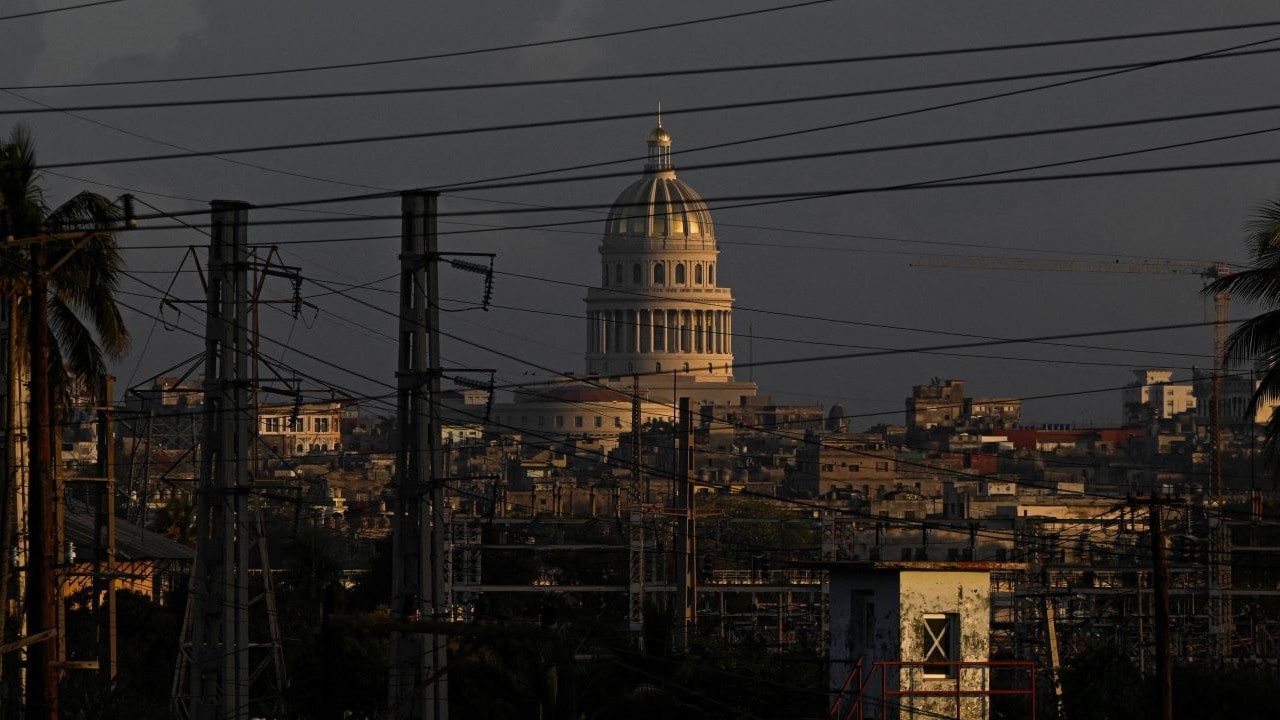
The mainstream media is obsessed with the "collapse" of Cuba’s electrical grid. Every time a circuit breaker trips in Havana or a boiler fails at the Antonio Guiteras plant, the headlines read like an obituary for an island trapped in the 1950s. They point to aging infrastructure, lack of maintenance, and the "inevitable" failure of a centralized state system.
They are wrong.
What we are witnessing in Cuba isn't a technical failure. It’s a stress test of a global energy system that is rigged against any nation that doesn't play by the rules of the petrodollar. If you think Cuba is dark because they forgot how to screw in a lightbulb or didn't buy enough WD-40 for their turbines, you’ve been fed a diet of lazy, superficial reporting.
The real story isn't that the grid failed three times in March. The real story is that it’s still standing at all.
The Myth of the "Old" Grid
The lazy consensus claims Cuba’s grid is failing because it’s "old." Newsflash: the U.S. power grid is ancient. Most of the high-voltage transmission lines in the United States were installed in the 1950s and 60s with a 50-year life expectancy. We are currently living on borrowed time across the entire Western hemisphere.
The difference? Liquidity.
When a transformer blows in Ohio, there’s a supply chain and a credit line ready to replace it. When a cooling pipe bursts at the Felton plant in Holguín, Cuba faces a blockade that turns a $5,000 part into a six-month geopolitical negotiation.
Cuba isn’t suffering from a lack of engineering expertise. I have seen engineers in Matanzas keep Soviet-era thermal plants running with nothing but salvaged scrap and sheer defiance. These are some of the most skilled grid operators on the planet because they have to do more with $100 than an American utility does with $1,000,000.
To call this a "grid collapse" is to blame the car for stopping when you’ve siphoned out the gas and welded the hood shut.
The Fuel Trap Nobody Wants to Talk About
Cuba’s energy crisis is a liquidity crisis masquerading as a technical one. The island relies heavily on fuel oil and diesel for its thermal power plants. In a sane world, a Caribbean nation would be a prime candidate for a massive solar rollout.
But here is the friction:
- Credit Access: You can't build a massive renewable infrastructure without debt. Cuba is locked out of the IMF, the World Bank, and most commercial lending due to its "State Sponsor of Terrorism" designation by the U.S.
- The Shipping Premium: Thanks to the Helms-Burton Act, ships that dock in Cuba are restricted from U.S. ports for months. This creates a "sovereign risk premium" on every drop of oil. Cuba pays more for energy because the world’s financial police make it expensive to sell to them.
- The Venezuela Variable: The decline of PDVSA in Venezuela has tightened the noose. When the subsidized oil stopped flowing, Cuba was forced into the spot market—a market where they have no leverage and no credit.
When the grid goes dark, it’s usually not because a wire snapped. It’s because the tankers didn't show up, or the fuel they did get was so high in sulfur it "coked up" the burners, forcing a manual shutdown.
Decentralization is the Secret Weapon
The media loves to mock Cuba’s "Distributed Generation" (DG) strategy—the thousands of small diesel generators scattered across the island. They call it inefficient. They call it a stopgap.
In reality, the rest of the world is desperately trying to copy this. We call it "Microgrids" or "Edge Computing" in the West to make it sound sophisticated, but Cuba did it first out of necessity after the "Special Period" in the 90s.
By breaking the grid into smaller, autonomous cells, Cuba has prevented a total, permanent blackout. When the main backbone fails, hospitals and vital centers can stay online via these DG units. If Cuba had a monolithic, centralized grid like Texas, a single failure in the central province would have plunged the entire island into a month-long dark age.
The "collapse" isn't a sign of weakness; it’s the grid’s defensive mechanism working. It sheds load to save the core.
Stop Asking "How Do We Fix the Grid?"
The "People Also Ask" section of your search engine is full of flawed premises.
"Why can't Cuba fix its electricity?"
"Is Cuba's energy crisis permanent?"
These questions assume the solution is technical. It isn't. You could give Cuba the most advanced Siemens turbines and a fleet of Tesla Megapacks tomorrow, and they would still have blackouts within a year if they are denied the ability to trade freely for the inputs required to maintain them.
The Brutal Truths of the Energy Embargo
- Maintenance is a Black Market Activity: When you can’t buy parts from the Original Equipment Manufacturer (OEM) because they fear U.S. sanctions, you have to buy them through third-party intermediaries in Dubai or Singapore. This adds 30-50% to the cost.
- Intellectual Property as a Weapon: Modern grid software requires updates. If you can’t access the servers because of IP restrictions, your "smart grid" becomes a "dumb grid" very fast.
- The Efficiency Paradox: To make a grid efficient, you need a steady "base load." Cuba’s load is erratic because they are constantly "patching" the system. You can't optimize a system that is in permanent triage mode.
The Renewable Mirage
"Why don't they just go 100% solar?" asks the armchair environmentalist.
Because solar isn't free. The capital expenditure (CAPEX) for a utility-scale solar farm is massive. While the "fuel" (sunlight) is free, the silicon, the silver, the inverters, and the lithium batteries are not.
Cuba has the sun, but it doesn't have the hard currency. To transition to a renewable grid, Cuba would need billions in upfront investment. Under the current sanctions regime, that money will never arrive. The "green revolution" is a luxury for countries that have access to the global bond market.
The Outsourced Solution: Floating Power Plants
One of the most fascinating and underreported aspects of this "collapse" is Cuba’s reliance on Turkish "powerships"—massive floating power plants moored off the coast.
This is the ultimate "as-a-service" model for a failing state. Karpowership, the Turkish company, provides the plant, the fuel, and the operators. Cuba just pays for the kilowatt-hours.
This is the future of energy for "high-risk" zones. It’s a nomadic infrastructure. If the country can't pay, the ship pulls anchor and sails away. This isn't a collapse of the Cuban grid; it’s the birth of a new, mercenary energy model where infrastructure is no longer tied to the land. It’s the ultimate admission that the traditional nation-state model of utility management is dead in the face of financial isolation.
The Cost of Silence
If you want to understand why your lights stay on while Havana’s flicker, don't look at the technology. Look at the ledger.
The Cuban grid is a miracle of 20th-century engineering being strangled by 21st-century financial warfare. Every time a journalist writes about "mismanagement" without mentioning the inability to open a bank account in London or New York, they are doing a PR job for the status quo.
The grid didn't collapse three times in March. The global financial system succeeded in its objective three times in March. There is a massive difference.
If you're waiting for a "fix," stop. As long as energy is a weapon of currency, the blackouts will continue. This isn't an engineering problem. It’s a sovereignty problem.
And if you think your "robust" Western grid is immune to these same pressures of fuel costs and aging steel, you’re just as delusional as the people who think Cuba’s engineers are the ones at fault.
The lights go out when the money stops moving. Everything else is just physics.
Would you like me to analyze the specific thermal efficiency ratings of the Turkish powerships currently docked in Havana harbor?