The traditional Japanese spring has hit a breaking point. For centuries, hanami—the act of viewing cherry blossoms—was a quiet, communal ritual of reflecting on the fleeting nature of life. Today, that ritual has been replaced by a logistical nightmare of human gridlock, soaring local resentment, and a crumbling infrastructure that can no longer support the weight of the world’s desire for a pink-hued selfie. Japan isn't just dealing with a surge in travelers; it is facing a fundamental collapse of the cultural etiquette that once made its tourism industry functional.
The crisis is visible in the physical destruction of the trees themselves. In parks across Tokyo and Kyoto, international visitors frequently ignore posted signs to shake branches or climb trunks for the perfect photo. These trees are fragile. When thousands of people trample the root systems daily, the soil becomes compacted, oxygen cannot reach the roots, and the trees begin a slow, silent decline. Local governments are now forced to spend millions of yen on fencing and security patrols just to keep the "nature" in nature tourism alive.
The Myth of the High Spending Tourist
There is a persistent narrative in Japanese policy circles that the solution to overtourism is simply "value over volume." The logic suggests that by raising prices and targeting wealthy travelers, the crowds will thin out while the economy stays flush.
This theory is failing on the ground.
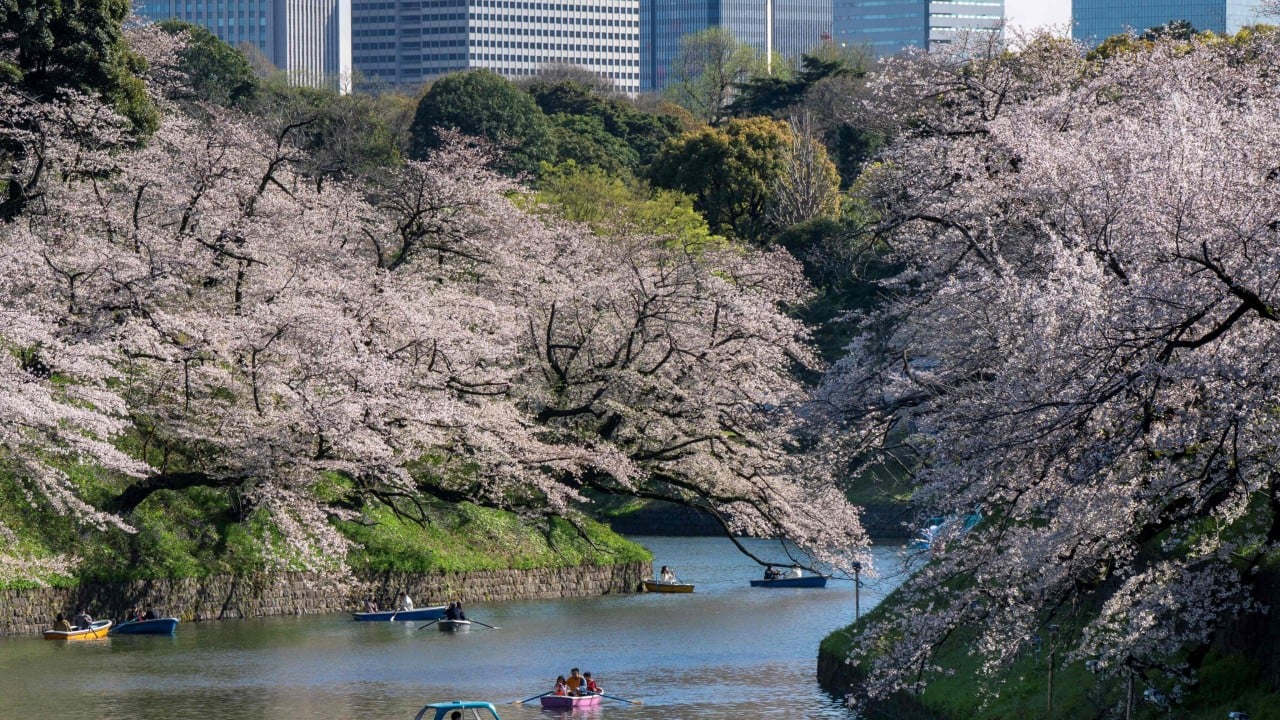
Luxury travelers still want to see the same iconic spots as budget backpackers. A wealthy tourist at the Chidorigafuchi Moat occupies the same square footage and causes the same pedestrian bottleneck as anyone else. Furthermore, the rapid inflation of hotel prices and dining costs in major hubs is effectively pricing out the Japanese middle class from their own heritage. When a local family can no longer afford a weekend in Kyoto because room rates have tripled to accommodate international demand, the social contract of tourism begins to sour.
Garbage and the Infrastructure Gap
Japan’s famous lack of public trash cans was never an issue when the population followed a strict "carry your trash home" code. That code has vanished. The sudden influx of travelers who are accustomed to municipal waste bins has led to mountains of plastic bottles, food wrappers, and beer cans piled up at the base of ancient cherry trees and outside convenience stores.
Municipalities are drowning in the cleanup costs. In neighborhoods like Gion, the sheer volume of waste has forced local associations to hire private cleaning crews, an expense that doesn't always see reimbursement from the national tax revenue generated by tourism. This is a classic case of privatized profits and socialized costs. The airlines and international hotel chains reap the rewards, while the local elderly resident has to step over a pile of trash to reach their front door.
The Rise of Tourist Only Zones
We are seeing the birth of a segregated Japan. Out of sheer desperation, local authorities are starting to wall off public life.
Kyoto’s decision to ban tourists from certain private alleys in the geisha district is only the beginning. Expect to see more "resident-only" hours for parks and "dual-pricing" models where foreigners pay significantly more for entry to shrines and museums. While critics call this discriminatory, locals call it survival. The friction is no longer about "cultural misunderstandings" over how to sit on a mat; it is about the basic right to use a sidewalk or board a city bus.
The Instagram Trap and the Erasure of Meaning
Social media has condensed the vast beauty of Japan into about five specific coordinates. This creates "honey-pot" tourism where 90% of the crowd descends on 1% of the available space.
People are no longer traveling to experience a place; they are traveling to verify that they were there. This shift has turned hanami into a performative background rather than an experience. The "unruly crowds" aren't just a nuisance—they are a symptom of a travel culture that values the digital footprint over the physical reality. When a thousand people are staring at their screens instead of the blossoms, the very essence of the tradition is extinguished.
Chasing the Dragon of 60 Million Visitors
The Japanese government has set an ambitious goal of 60 million annual visitors by 2030. Given the current state of the nation's railways and hospitality staffing, this target looks less like a goal and more like a threat. The labor shortage in Japan is acute. Hotels are leaving rooms empty not because they aren't booked, but because they don't have enough staff to clean them.
The industry is running on fumes.
Drivers for tour buses are aging out of the workforce, and the younger generation is increasingly reluctant to work in high-stress, low-wage tourism jobs that involve managing frustrated crowds. Without a massive pivot toward automation or a radical change in immigration policy to bring in service workers, the quality of the Japanese travel experience will continue to plummet.
Moving Beyond the Pink Petals
To save the cherry blossom season, Japan must decentralize. The focus needs to shift from the "Golden Route" (Tokyo-Kyoto-Osaka) to the northern regions like Tohoku or the rural stretches of Shikoku. However, this requires more than just a marketing campaign. It requires high-speed rail subsidies, multilingual support in deep rural areas, and a willingness from travelers to step away from the viral locations.
If the current trajectory holds, the future of hanami will be a heavily gated, ticketed, and sanitized version of its former self. The "clashes" we see today are the early warning signs of a system that has exceeded its carrying capacity.
Stop treating Japan as a theme park. It is a functioning society, and if the visitors continue to ignore that fact, they shouldn't be surprised when the gates eventually lock for good. The solution isn't more "awareness" or better brochures; it is a hard cap on numbers at sensitive sites and an immediate, aggressive implementation of high-occupancy taxes that go directly to the local neighborhoods being impacted. Without these measures, the cherry blossoms will bloom for a world that has forgotten how to look at them.