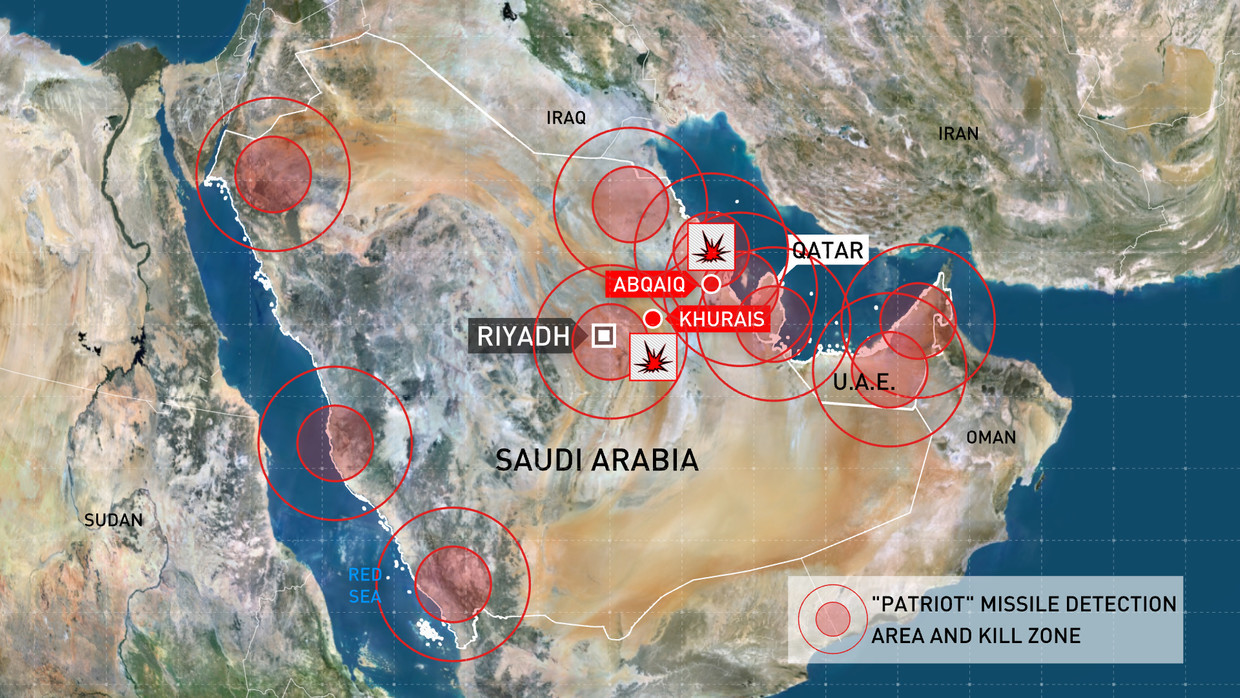
The sirens in Arad aren't a prelude to Armageddon. They are the background noise of a highly calibrated, multi-billion dollar negotiation. While mainstream outlets scramble to live-update every "fresh blast" near Dimona, they are missing the forest for the firecrackers. They want you to believe we are on the precipice of a global nuclear exchange. The reality is far more cynical: we are watching a violent form of industrial communication.
The "US-Iran War" isn't a war in the traditional sense. It’s a stress test for defensive architectures and a massive subsidy for the aerospace lobby. If you’re waiting for the "big one," you’ve already been sold a narrative that ignores how modern nation-states actually preserve power. If you found value in this article, you should look at: this related article.
The Myth of the "Accidental" Escalation
The loudest voices in the room claim that a single stray missile could spark a regional conflagration. This is the "lazy consensus" of the fearful. It assumes that the actors involved—the IRGC, the IDF, and the Pentagon—are impulsive gamblers. They aren't. They are accountants with kinetic tools.
Look at the geography of the strikes. Arad. Dimona. These aren't random coordinates. They are the most sensitive psychological pressure points in the Levant. When Iran launches a drone swarm toward Dimona, they aren't trying to trigger a meltdown; they are sending a high-resolution invoice. They are proving they can penetrate the most defended airspace on earth, knowing full well that 99% of those threats will be intercepted. For another perspective on this event, refer to the recent coverage from NPR.
In my years analyzing supply chain risks for defense contractors, I’ve seen this play out repeatedly. The goal isn't destruction; it's the demonstration of capability. Destruction is expensive. It ruins trade routes, spikes insurance premiums, and ends the very regimes that started the fight. Demonstration, however, is a marketing masterclass.
Why Your "Live Update" Feed is Lying to You
The Hindustan Times and its peers survive on "breaking" news that doesn't actually break anything. They report on "fresh blasts" without explaining the physics of an interception. When an Arrow-3 missile hits an Iranian ballistic target in the exoatmosphere, the resulting flash looks like a "blast" to a civilian on the ground in the Negev.
- Misconception: A flash over Dimona means the reactor was hit.
- Reality: A flash over Dimona means the defense system worked exactly as designed, likely 50 miles above the ground.
The media treats every explosion as a step toward the end of the world. In the boardrooms of Lockheed Martin and Israel Aerospace Industries, those explosions are viewed as successful product demonstrations. Every time an Iron Dome battery fires, $50,000 evaporates into the sky. Every time a ballistic missile is intercepted, that's $3 million in taxpayer money being converted into kinetic energy.
The Logistics of a "Fake" War
If Iran truly wanted to disable the Israeli state, they wouldn't use telegraphed drone launches that take six hours to arrive. They would use their proximity assets—Hezbollah's 150,000 rockets—to saturate the Iron Dome until it hit a "saturation failure" point.
Let’s look at the math. If you have 100 interceptors and I fire 101 missiles, the 101st missile hits. This is the fundamental law of attrition.
$$P(success) = 1 - (1 - p)^n$$
Where $p$ is the probability of a single interceptor failing and $n$ is the number of interceptors deployed. When Iran sends a wave of 300 slow-moving targets, they are providing Israel with a "target-rich environment" that is statistically easy to manage. It allows Israel to show off its tech, it allows the US to justify its presence in the Mediterranean, and it allows Iran to claim it "struck the heart of the Zionist entity" for its domestic audience.
It is a theatrical production where the special effects are real, but the script is pre-approved.
The Petrodollar and the Permanent Threat
The most counter-intuitive truth about the US-Iran tension is that neither side wants the other to disappear.
For the US, a "rogue" Iran is the perfect boogeyman to keep the Gulf monarchies buying American hardware. Without the Iranian threat, why would Saudi Arabia or the UAE need to spend $70 billion a year on US defense contracts?
For Iran, the "Great Satan" is the only thing keeping a disgruntled, young population from completely overthrowing the clerical establishment. Fear is the ultimate social glue.
The Financial Fallout of Peace
Imagine a scenario where the US and Iran actually signed a lasting peace treaty tomorrow.
- Oil markets would collapse: Iranian crude would flood the market, crashing prices and hurting US shale producers.
- Defense stocks would crater: Raytheon, Boeing, and Northrop Grumman would lose their most reliable "urgent operational need" justifications.
- Diplomatic irrelevance: The UN and various middle-men would lose their primary reason for existing in the region.
Peace is a financial catastrophe for the people currently "managing" the war.
Stop Asking "When Will It Start?"
The "People Also Ask" section of your search engine is filled with queries like "Will US-Iran war lead to WW3?" and "Is Israel safe tonight?"
You’re asking the wrong questions. You should be asking: "Who is profiting from this specific level of controlled instability?"
The instability is the product. We are in a state of "Permawar," a term that describes a conflict designed never to be won, only maintained. It’s like a subscription service for geopolitical relevance.
I’ve sat in rooms where the "unconventional" advice was to ignore the headlines and watch the shipping lanes. If the Strait of Hormuz isn't actually closed—and I mean actually mined and blocked—the war isn't happening. Everything else is just a flare in the night.
The Dimona Diversion
Why mention Dimona specifically? Because the word "nuclear" triggers a primal fear response. It’s the ultimate clickbait. By reporting on strikes near the Dimona reactor, the media ensures maximum engagement.
But the reactor is one of the most hardened structures on the planet. It is protected by a multi-layered Aegis of sensors and physical barriers. Even a direct hit from a conventional warhead would likely result in nothing more than a localized cleanup. The "threat" to Dimona is a psychological weapon, not a military one.
The Failure of the "Expert" Class
The talking heads on your screen are relics of a Cold War mindset. They think in terms of "victory" and "defeat." They don't understand that in the 21st century, the goal is "managed friction."
They will tell you that the US is "sending a message" by moving a carrier strike group. The real message is to the investors: "The status quo is being protected. Your tankers will keep moving. Our contracts will be renewed."
The downside to this contrarian view? It’s boring. It robs the viewer of the excitement of a Hollywood-style apocalypse. It suggests that the world isn't ending; it’s just being expertly grifted.
The Mechanics of De-escalation Through Fire
Every "blast" you hear is a pressure valve releasing. When Iran fires, they vent domestic pressure. When Israel intercepts, they reinforce their image of invincibility. When the US "warns" both sides, they assert their role as the global supervisor.
This isn't an escalation. It's a choreographed dance in the dark.
The next time you see a "LIVE" update about missiles over Arad, don't check your basement. Check the price of Brent Crude and the quarterly earnings of the Top 5 defense firms. That’s where the real war is being fought.
Stop waiting for the world to end. It’s far too profitable to keep it exactly as it is.