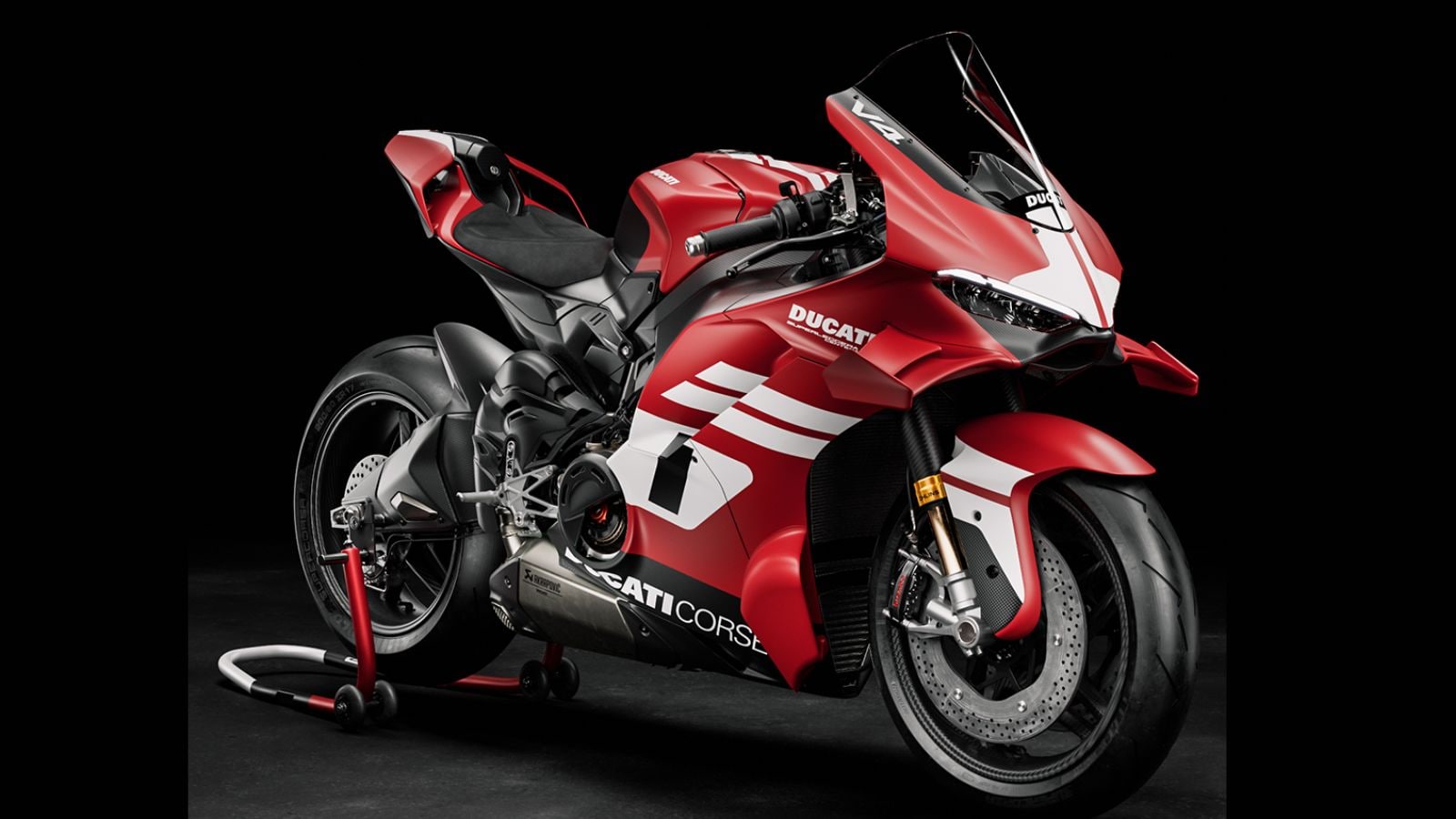
Ducati doesn't do "subtle" when there’s an anniversary on the line. To celebrate a century of Borgo Panigale excellence, they've dropped the Ducati Superleggera V4 Centenario, and it makes the standard V4 look like a budget commuter bike. This isn't just a paint job or a fancy badge. We’re looking at a machine where every single gram was debated, every bolt was scrutinized, and the braking system belongs on a spaceship rather than a street-legal vehicle.
If you’re wondering why people are losing their minds over another red bike, it’s the numbers. It’s always the numbers with Ducati. They’re only building 500 of these. That’s it. Once they’re gone, they’re gone, and they’ll likely spend the rest of their lives in climate-controlled garages, which is a crying shame because this bike was built to scream.
Carbon fiber everything and those wild brakes
The headline feature that’s got the track-day purists talking is the move to carbon-ceramic brakes. Most high-end sportbikes use high-grade steel or perhaps some fancy Brembo Stylema calipers, which are great. But carbon brakes are a different beast. They handle heat in a way that makes steel feel like wet cardboard. You can hammer these things into a hairpin at 180 mph lap after lap, and the lever feel won't budge an inch.
Weight is the enemy of speed. Ducati knows this better than anyone. By using a full carbon fiber chassis, subframe, swingarm, and wheels, they’ve managed to bring the dry weight down to a point that defies logic for a four-cylinder liter bike. When you shave weight off the wheels specifically, you reduce unsprung mass and rotational inertia. Translation? The bike tips into corners so fast it feels like it’s reading your mind.
You've probably seen the "biplane" wings on the fairings. They aren't there to look cool, though they definitely do. At high speeds, these wings generate massive downforce, pinning the front tire to the tarmac. This keeps the electronic wheelie control from having to cut power as often, which means you're actually putting all that Italian horsepower to the ground instead of just fighting the physics of a backflip.
More than just a spec sheet
I've seen plenty of "special editions" that are just $10,000 worth of stickers and a numbered plaque. This isn't that. The Centenario feels like the engineers were given a blank check and told to make the marketing team nervous. The Desmosedici Stradale R engine inside this frame is a masterpiece of mechanical violence. It’s high-revving, it’s loud, and it’s unapologetically aggressive.
- Limited Production: 500 units worldwide.
- Chassis: Full structural carbon fiber.
- Braking: Specialized carbon-ceramic setup for zero fade.
- Aero: Advanced GP-derived winglets.
People often ask if a regular rider can even tell the difference between this and a standard Panigale V4 S. Honestly? On a public road, you’re mostly feeling the prestige and the lighter flickability. But on a track, the difference is night and day. The way a carbon-framed bike communicates what the tires are doing is more direct. It's stiffer, harsher, and much more demanding. It’s not a bike for a Sunday cruise to get coffee. It’s a bike that wants to hurt your feelings if you don't respect it.
The investment trap vs the track reality
There's a weird tension with bikes like the Superleggera V4 Centenario. Because it's a 100th-anniversary model, collectors are going to snap them up and hide them. That’s the "investment" side of the brain. They see a rising price curve on an auction site five years from now.
But the "enthusiast" side of the brain sees those carbon brakes and the racing exhaust and wants to hear that engine bounce off the rev limiter. It’s a tragedy of the modern era that the most capable performance machines are often the ones that see the least amount of actual use. If you’re one of the lucky 500, don't just let it sit. These engines need to run. The seals need oil. The tires need heat.
Why the Centenario matters right now
We’re in a transition period for the industry. Emissions regulations are getting tighter, and the "pure" internal combustion engine is under siege. This Centenario feels like a defiant shout from Ducati. They’re saying that as long as they can still build a fire-breathing V4, they’re going to make it the most extreme version possible.
It’s also a flex of their manufacturing muscle. Building a carbon swingarm that can handle over 230 horsepower without snapping or flexing in the wrong way is a massive technical challenge. It requires autoclaves, specialized resins, and a level of quality control that most manufacturers can't be bothered with. Ducati is using the Centenario to prove they're still the kings of the heavyweight sportbike class.
What to do if you actually want one
First, check your bank account, because this thing costs more than a decent house in many parts of the world. Second, get on the phone with your dealer immediately. Ducati usually offers these to their "preferred" customers first—the guys who already have a garage full of red bikes.
If you can't get on the list, don't worry. The technology developed for the Superleggera always trickles down. The aero work, the engine mapping, and the weight-saving techniques will eventually find their way into the standard Panigale lineup in a couple of years. You might not get the carbon frame, but you’ll get the soul of the machine.
Stop looking at the pictures and go find a way to see one in person. Even standing still, it looks like it’s breaking the speed limit. If you’re looking for a piece of motorcycling history that actually delivers on the hype, this is the one. Just make sure you know how to ride before you twist that throttle.
Find a local Ducati flagship dealer and ask about their allocation status for the Centenario. Even if they're sold out, getting on a waiting list for the next high-performance "R" model is the only way to ensure you don't miss out on the next leap in Italian engineering.