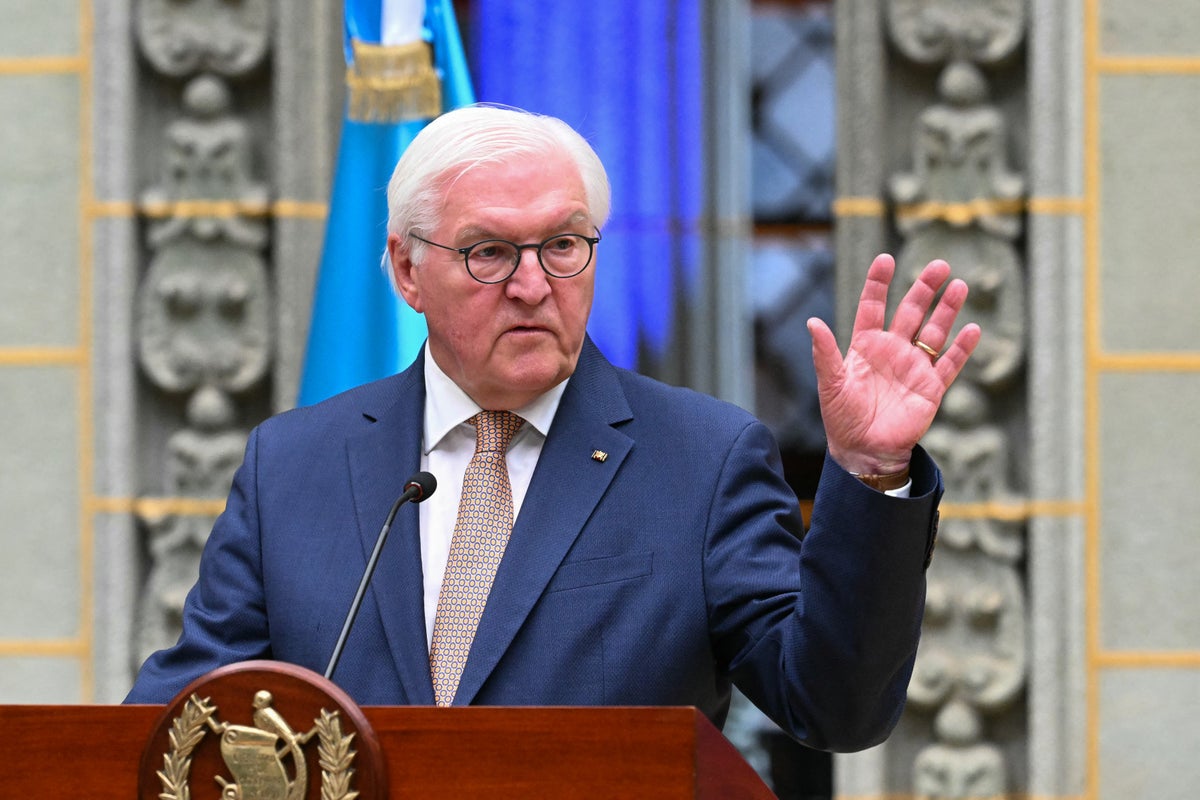
German President Frank-Walter Steinmeier just shattered the carefully maintained facade of Western unity. In a speech delivered at the Foreign Ministry in Berlin, Steinmeier did not merely disagree with the American-led military campaign against Iran; he declared it a criminal enterprise. By branding Donald Trump’s war "illegal" and a "breach of international law," the veteran diplomat has signaled that the post-1945 relationship between Washington and Berlin is effectively over.
This was not a slip of the tongue. Steinmeier, a former foreign minister who helped broker the 2015 nuclear deal (JCPOA), characterized the current conflict as a "politically disastrous mistake" built on a "baseless" justification. While the White House continues to cite Article 51 of the UN Charter—claiming an "imminent threat" to American forces—Steinmeier bluntly informed the world that this legal defense "does not hold water."
The significance of this moment lies in the speaker's position. The German presidency is a ceremonial role designed to serve as the nation’s moral compass. When Steinmeier speaks, he isn't playing the short-term tactical game of a Chancellor. He is defining the historical record.
Beyond Policy Disagreements
For decades, the United States and Germany have weathered storms over trade, defense spending, and energy. This is different. Steinmeier compared the current rupture in transatlantic ties to the tectonic shift caused by the 2022 Russian invasion of Ukraine. He explicitly stated that there will be "no going back" to the relationship as it existed before the second Trump inauguration on January 20, 2025.
This is a public divorce. Germany is the economic engine of Europe and the primary staging ground for American military power on the continent. By delegitimizing the war, Steinmeier is placing a massive obstacle in the path of Chancellor Friedrich Merz, who has attempted to maintain a delicate balance by supporting the war’s "objectives" while refusing to commit German troops.
- Legal Standing: Steinmeier argues that because no armed attack by Iran was imminent at the start of the February 28 offensive, the "self-defense" argument is a fiction.
- Diplomatic Fallout: The President noted that the loss of trust in "American great power politics" is now so deep that the U.S. can no longer be viewed as a "friendly dominant power."
- Strategic Autonomy: The speech called for Germany to treat its dependence on the U.S. with the same urgency it used to decouple from Russian gas.
The Ramstein Conflict
While the rhetoric in Berlin is fiery, the reality on the ground is more complicated. The United States still operates the Ramstein Air Base, a critical hub for the very drone strikes and logistics that Steinmeier is calling illegal. This creates an unsustainable paradox. If the German head of state believes the war is a crime, the continued use of German soil to facilitate that crime becomes a domestic legal nightmare.
Legal scholars have already begun circulating statements urging the Federal Government to reconsider the use of military bases on German territory. They argue that the German Basic Law's alignment with international law prohibits the country from being an accomplice to a "war of choice."
Economic Realities and Tech Sovereignty
Steinmeier’s critique extended beyond the battlefield. He pointed to the shifting economic landscape, noting that China has reclaimed its spot as Germany's top trading partner as American tariffs weigh on German exports. This economic pivot provides the material backing for his diplomatic defiance.
He also targeted the American monopoly on technology. Mentioning the recent friction between the Pentagon and AI firms like Anthropic, Steinmeier argued that Europe must build its own "technological hub" based on ethical standards rather than military utility. He is framing a future where Europe is not just a customer of Silicon Valley, but a sovereign competitor.
A Legacy of Diplomacy vs. Force
There is a personal edge to this attack. Steinmeier was a chief architect of the JCPOA, the deal Trump famously exited in 2018. To Steinmeier, the war is a failure of imagination—a rejection of a diplomatic path that was working. He reminded his audience that the 2015 agreement had successfully curtailed Iran’s nuclear ambitions without a single shot being fired.
The current conflict, involving both U.S. and Israeli forces, is seen by Berlin not as a necessary defense, but as an avoidable tragedy. By calling it out, Steinmeier is attempting to preserve Germany’s own credibility. He argued that German foreign policy loses all weight if it ignores "breaches of international law" committed by its friends while condemning those committed by its enemies.
The era of the "friendly dominant power" has ended. Berlin is no longer waiting for Washington to return to normalcy; it is preparing for a world where Germany must stand alone.
Would you like me to analyze the specific legal challenges this creates for the Merz administration's use of the Ramstein Air Base?