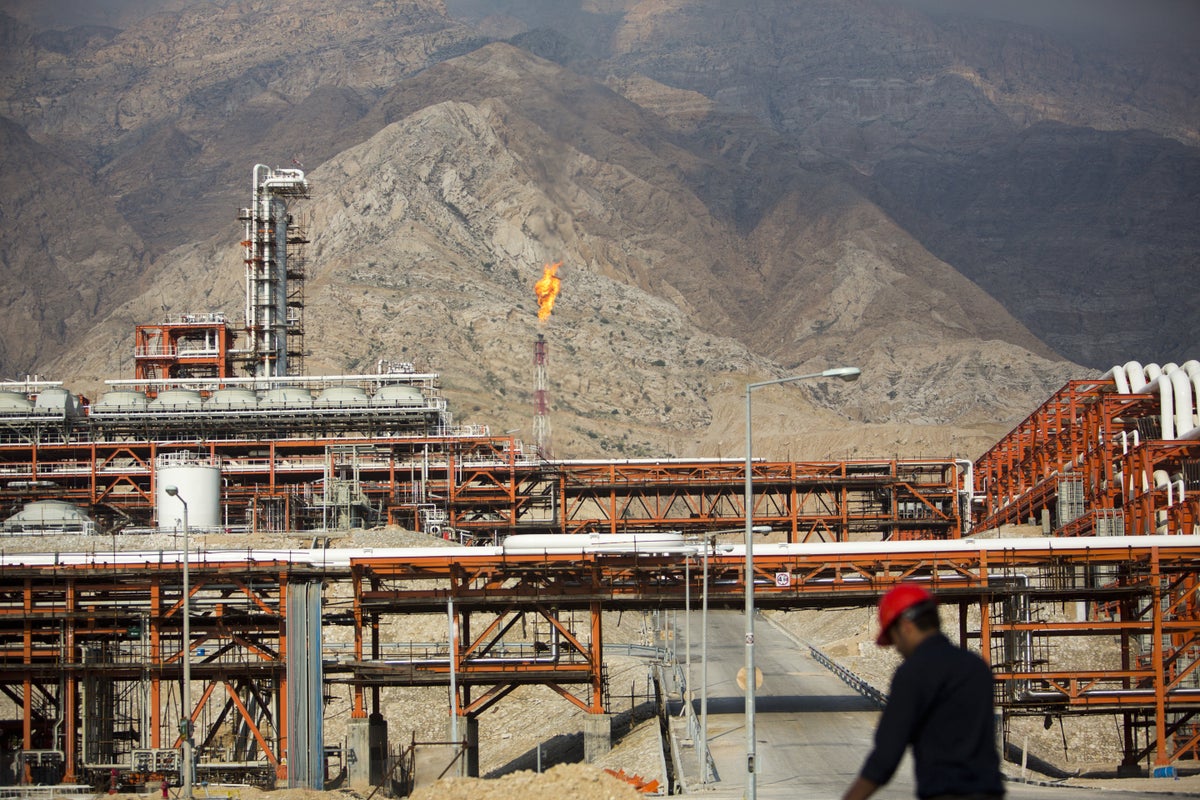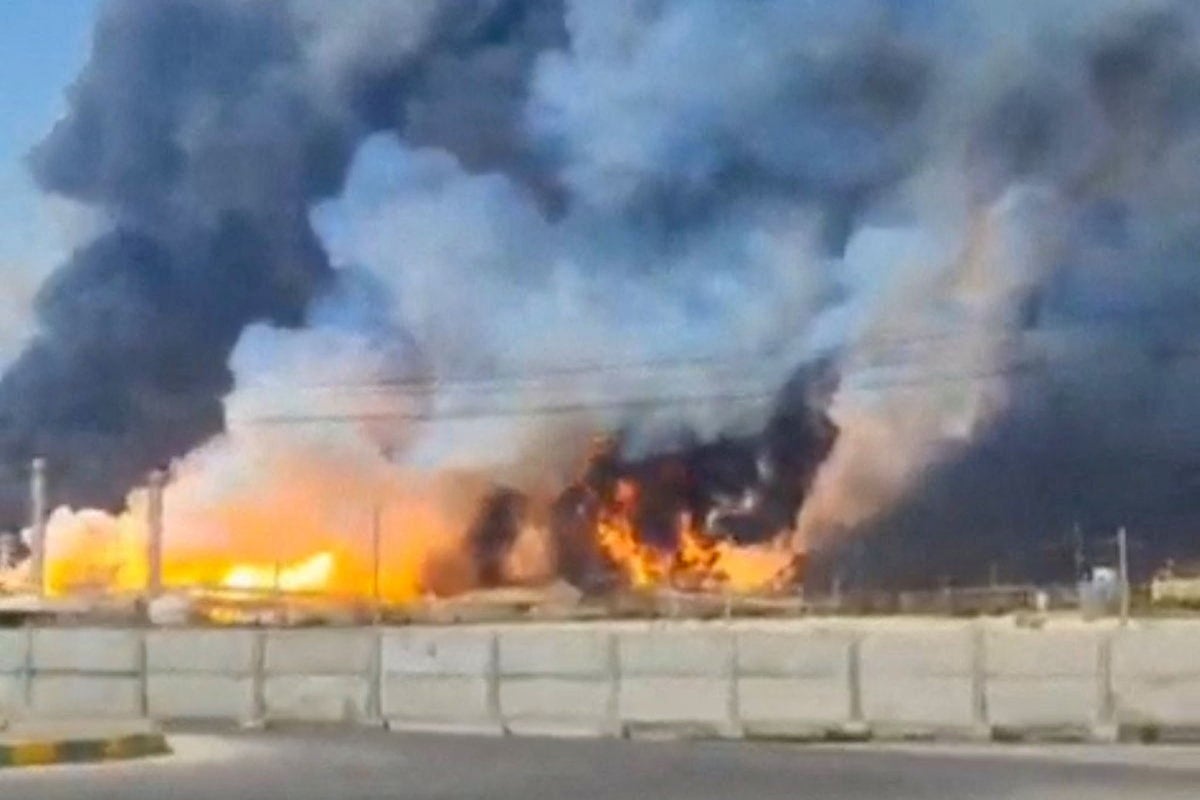
The 35% surge in natural gas prices following kinetic interference with Iranian energy infrastructure is not a localized commodity fluctuation; it is a systemic shock to the global cost of capital. When the marginal cost of energy accelerates at this velocity, it forces a fundamental repricing of risk across every tier of the economy. The immediate impact on consumer price indices (CPI) is the visible symptom, but the structural danger lies in the "second-round effects" where inflation expectations become unanchored, compelling central banks to maintain restrictive monetary policies despite slowing industrial output.
The Mechanics of the Supply-Side Shock
The global energy market operates on a razor-thin margin of spare capacity. Iranian output, while frequently subject to sanctions, remains a critical component of the global balance, particularly for Asian markets that indirectly alleviate pressure on European supplies.
The 35% price spike is driven by three distinct transmission vectors:
- The Risk Premium Delta: Physical damage to extraction or transport infrastructure introduces a "permanence" factor to price increases. Unlike speculative volatility, infrastructure degradation requires a capital-expenditure-heavy recovery period, often spanning months or years.
- The Liquefied Natural Gas (LNG) Arbitrage: As regional pipeline gas becomes compromised, the reliance on the global LNG fleet intensifies. This creates a bidding war between European and Asian hubs, effectively "globalizing" a local supply disruption and raising the floor price for energy worldwide.
- The Insurance and Logistics Surcharge: Beyond the raw commodity cost, the maritime insurance premiums for the Strait of Hormuz and surrounding waters scale exponentially during periods of active kinetic engagement. These costs are passed through the supply chain as a "security tax" on every barrel or cubic meter moved.
The Cost Function of Industrial Output
Energy is the primary input for almost all industrial processes. A 35% increase in the cost of gas does not result in a linear 35% increase in the price of finished goods; it creates a non-linear cascade of margin compression and price hikes.
The Fertilizer-Food Linkage
Natural gas is the primary feedstock for ammonia production via the Haber-Bosch process. High gas prices lead to the immediate idling of fertilizer plants. This reduces global nitrogen supply, which manifests as lower crop yields and higher food prices two to three quarters later. This "lagged inflation" is particularly difficult for central banks to manage because it persists even if energy prices stabilize.
The Power Generation Feed-In
In many power grids, natural gas acts as the "marginal" fuel—the one that sets the price for the entire market. Even if a country utilizes significant renewables or nuclear power, the price of the last kilowatt-green-lit to meet peak demand often comes from a gas turbine. Consequently, a localized gas spike inflates the electricity bills of every factory and household in the grid, regardless of their specific energy mix.
The Monetary Policy Paradox
Central banks typically "look through" volatile food and energy prices, focusing instead on "Core CPI." However, the magnitude of a 35% spike makes this separation impossible.
The logic of the current interest rate warning follows a specific sequence of causality:
- Cost-Push Inflation: The direct increase in energy costs pushes the "Headline CPI" significantly above target.
- Wage-Price Spirals: As workers see their real purchasing power eroded by heating and transport costs, they demand higher nominal wages. If labor markets remain tight, firms grant these increases and pass the costs back to consumers.
- The Credibility Gap: If the Federal Reserve or the European Central Bank (ECB) ignores energy-driven inflation, they risk losing the "anchor" of inflation expectations. Once the public believes inflation will remain high, it becomes self-fulfilling.
The terminal rate—the peak of the interest rate cycle—must therefore move higher to suppress demand enough to offset the supply-side price pressure. This creates a "Double Squeeze": businesses face higher input costs (energy) and higher financing costs (interest rates) simultaneously.
The Three Pillars of Geopolitical Energy Fragility
To understand why this specific attack triggered such a violent market reaction, we must analyze the structural vulnerabilities of the current global energy architecture.
1. Just-in-Time Energy Stocks
The shift toward lean inventory management has extended to the energy sector. Many nations have reduced their strategic reserves or rely on "floating storage" that is susceptible to maritime disruptions. When a shock occurs, there is no buffer to absorb the impact, leading to vertical price moves.
2. Lack of Fuel-Switching Capability
In previous decades, many power plants could switch between oil and gas depending on price. Modern environmental regulations and specialized turbine designs have reduced this flexibility. Demand has become "inelastic"—consumers must pay the higher price because they have no immediate technical alternative.
3. The Sanction-Risk Duality
The global market has bifurcated into "Western-aligned" and "Shadow" markets. Attacks on Iranian infrastructure disrupt the shadow market, forcing those buyers into the transparent, regulated market. This sudden influx of demand into the "legal" market spikes prices for everyone, demonstrating that the global energy pool is still fundamentally interconnected despite geopolitical attempts at decoupling.
Quantifying the Downstream Risk
The primary risk is not a short-term recession, but "Stagflationary Entropy." This occurs when the economy loses the ability to grow because the cost of the basic energy required for growth exceeds the value created by that growth.
Analysis of previous shocks suggests that for every 10% sustained increase in energy prices, global GDP growth is shaved by roughly 0.15% to 0.3% over the following year. A 35% spike, if sustained for a single quarter, represents a potential 1% drag on global output. For economies already teetering on the edge of zero growth, such as Germany or Japan, this is the catalyst for a formal contraction.
The second-order risk involves the "Credit Wall." Many corporations took on debt during the low-interest-rate era. As energy costs eat into their EBITDA (Earnings Before Interest, Taxes, Depreciation, and Amortization), their ability to service that debt at now-higher interest rates diminishes. We are likely to see a spike in credit defaults in energy-intensive sectors like chemicals, glass manufacturing, and heavy logistics.
The Strategic Play for Capital Allocators
In this environment, the traditional "60/40" portfolio fails because both stocks and bonds are negatively correlated with energy shocks. Higher energy prices hurt corporate earnings (stocks) and drive up interest rates (lowering bond prices).
The necessary strategic adjustment requires a shift toward "Real Yield" and "Operational Flexibility":
- Energy-Efficiency Arbitrage: Companies with the lowest energy intensity per unit of revenue will outperform their peers. This is no longer a "green" initiative; it is a survival metric.
- Geographic Diversification of Supply: The premium on North American and Australian energy assets will increase, as they offer "geopolitical carry"—a lower risk of kinetic disruption compared to Middle Eastern or Eurasian supplies.
- Fixed-Rate Debt Hedging: For firms, the window to hedge against further interest rate rises is closing. The priority must be on securing long-term, fixed-rate financing before the "second-round effects" of this gas spike are fully baked into the bond market.
The market is currently pricing in the "shock," but it has not yet priced in the "duration." If the infrastructure damage in Iran is significant enough to remove capacity for more than one fiscal quarter, the current 35% spike will serve as the new floor for energy prices, necessitating a permanent upward shift in the global interest rate regime. The era of cheap energy and cheap money has been functionally terminated by the return of high-intensity geopolitical friction.