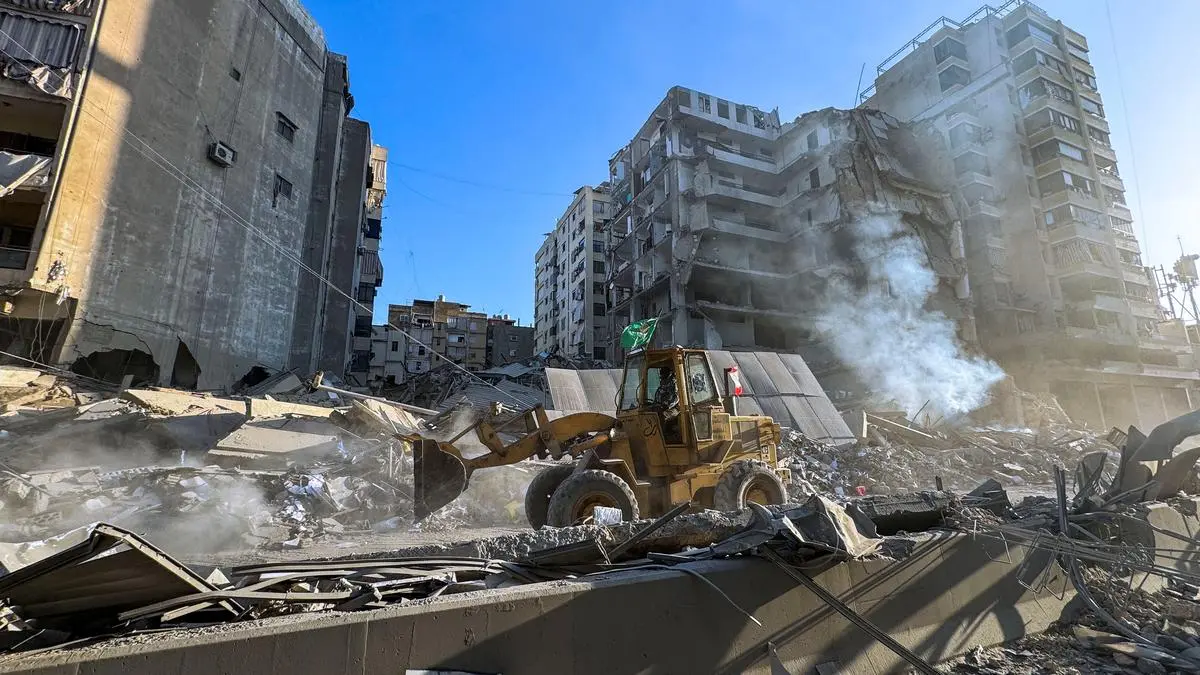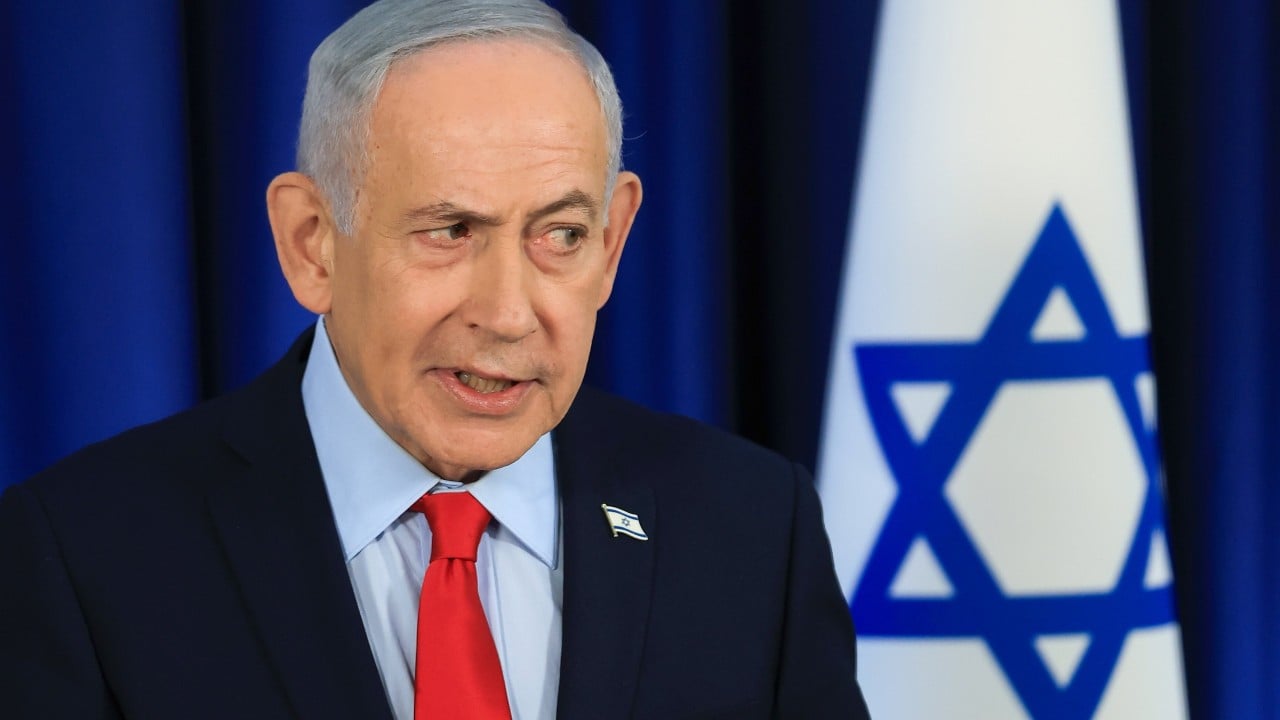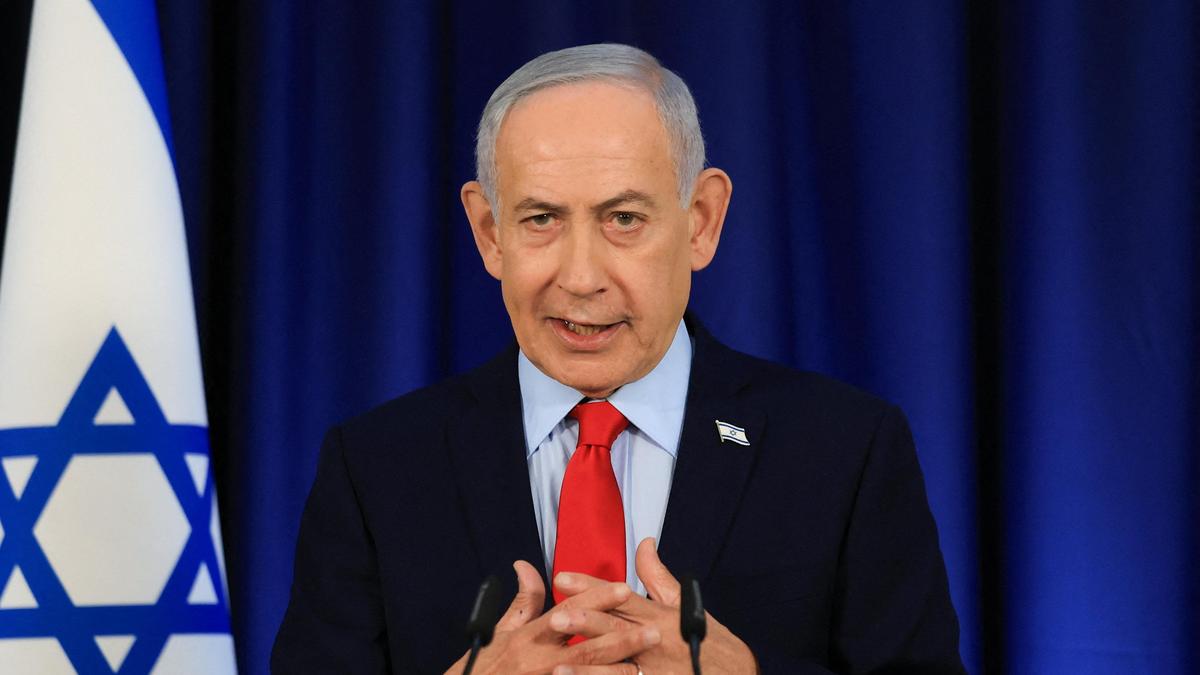
Geopolitical stability in the Persian Gulf is currently governed by two intersecting thresholds: the operational cost of maritime energy transit and the technical latency of nuclear breakout. When Iran intensifies kinetic pressure on energy infrastructure, it creates a feedback loop that forces regional adversaries to reassess their tolerance for Iranian nuclear advancement. Prime Minister Netanyahu’s recent declaration that Iran "can no longer enrich uranium" is not merely a rhetorical escalation; it represents a strategic shift toward a policy of "zero-percent enrichment" as the only viable counterweight to regional asymmetric warfare.
The Kinetic-Nuclear Interdependency Framework
To understand the current escalation, one must map the relationship between Iranian regional proxies and the central nuclear program. This is not a series of isolated incidents but a dual-track strategy designed to maximize leverage while minimizing direct state-on-state attribution.
- The Energy Attrition Variable: By targeting tankers and refineries, Tehran signals that the global economy’s dependence on the Strait of Hormuz is a hostage to Iranian security interests. This is a cost-imposition strategy. Every percentage point increase in maritime insurance premiums acts as a tax on Western interventionism.
- The Enrichment Latency Variable: Simultaneous to maritime pressure, the expansion of IR-6 centrifuge cascades shortens the "breakout time"—the interval required to produce enough Weapons Grade Uranium (WGU) for a single nuclear device.
The intersection of these variables creates a "pincer effect." If the international community focuses on de-escalating energy markets, they often grant concessions on nuclear monitoring. Conversely, if they tighten nuclear sanctions, Iran increases the kinetic cost in the Gulf. Netanyahu’s stance seeks to break this cycle by decoupling the two issues and asserting that nuclear enrichment is now an intolerable risk, regardless of the status of energy transit.
The Physics of the Redline: Why 60 Percent Matters
Public discourse often treats uranium enrichment as a linear progression. In reality, the effort required to move from natural uranium to 90% $U^{235}$ is heavily front-loaded.
- Natural to 5%: This stage requires approximately 75% of the total Separative Work Units (SWU) needed to reach weapons grade.
- 5% to 20%: This stage covers a significant portion of the remaining work.
- 20% to 60%: Once at 60%, the material is technically "highly enriched" (HEU).
- 60% to 90%: The leap from 60% to 90% is mathematically trivial.
Because the enrichment process follows a non-linear work curve, a stockpile of 60% enriched uranium represents a state of "virtual breakout." The technical barrier has been effectively cleared; only a political decision remains. Netanyahu’s insistence on a total halt to enrichment stems from the recognition that a 60% threshold leaves zero margin for intelligence errors or diplomatic delays.
The Cost Function of Gulf Energy Sabotage
Iran’s strategy in the Gulf operates on a principle of "Asymmetric Denial." It does not require a superior navy to disrupt global trade; it only requires the ability to make the environment unpredictable.
The Logistics of Disruption
The deployment of one-way attack drones (OWADs) and limpet mines targets the vulnerability of Very Large Crude Carriers (VLCCs). These vessels are slow, have massive radar cross-sections, and possess limited defensive capabilities. The cost-to-kill ratio is heavily skewed in favor of the aggressor. A drone costing $20,000 can cause millions in damage and disrupt a cargo worth over $100 million.
Insurance and Risk Premia
The primary weapon is not the explosion itself but the reaction of the London insurance markets. When the Joint War Committee (JWC) widens the "listed areas" for hull war, kidnapping, and piracy, the operational expenditure (OPEX) for shipping companies spikes. This creates an inflationary pressure on global energy prices that Iran uses as a shield against further sanctions.
Strategic Asymmetry: The Israeli Doctrine vs. The Iranian Strategy
The Israeli defense establishment operates under the "Begin Doctrine," which dictates that no enemy state in the Middle East shall be permitted to acquire weapons of mass destruction. This doctrine is now colliding with Iran's "Forward Defense" policy.
Iran utilizes its "Ring of Fire"—a network of proxies in Lebanon, Syria, Iraq, and Yemen—to ensure that any strike on its nuclear facilities results in a multi-front regional war. This creates a deterrent balance. Israel must weigh the surgical benefit of neutralizing a centrifuge hall against the systemic risk of a prolonged conflict that involves thousands of rockets targeting its civilian and industrial heartland.
Netanyahu’s current rhetoric suggests a recalibration of this weight. By stating that enrichment must end, he is signaling that the risk of a nuclear-armed Iran has finally eclipsed the risk of a multi-front regional war. This is a transition from a containment strategy to a "denial of capability" strategy.
The Infrastructure of Enrichment: Technical Constraints and Targets
If an ultimatum is to be backed by force, the targets are well-defined but geologically complex.
- Natanz: The primary site, featuring both above-ground pilot plants and deeply buried commercial-scale halls.
- Fordo: Built inside a mountain to withstand conventional aerial bombardment. The enrichment here using IR-6 centrifuges is particularly concerning due to the site's hardened nature.
Neutralizing these sites requires more than just kinetic impact; it requires the destruction of the power grids, the specialized cooling systems, and the sophisticated vibration-monitoring equipment that keeps centrifuges operational at tens of thousands of RPMs. A "zero enrichment" policy necessitates either a total diplomatic surrender or a catastrophic failure of this infrastructure.
The Intelligence Gap and the "Sneak Out" Scenario
A critical limitation in the current geopolitical assessment is the reliance on IAEA (International Atomic Energy Agency) monitoring. While the IAEA provides high-quality data on declared sites, it cannot account for "clandestine" facilities.
The "Sneak Out" scenario involves Iran diverting its 60% stockpile to a small, hidden facility to perform the final 90% enrichment. Because the final stage requires so few centrifuges and such a small footprint, it is nearly impossible to detect via satellite imagery alone. This technical reality is what drives the Israeli argument that no level of enrichment is safe. If you have the feed material (60%) and the expertise, the physical location of the final enrichment becomes a secondary concern.
Economic Levers and the Failure of Maximum Pressure
The assumption that economic collapse would force a cessation of the nuclear program has proven flawed. Iran has demonstrated a high "pain tolerance" and has developed a "resistance economy" characterized by:
- Dark Fleet Operations: Utilizing a fleet of aging tankers with obscured ownership to sell oil to Asian markets, bypassing Western banking systems.
- Barter and Non-USD Trade: Reducing the efficacy of SWIFT-based sanctions.
- Regional Integration: Strengthening land corridors through Iraq and Syria to maintain supply lines.
Because the economic lever is failing to produce a nuclear halt, the probability of a kinetic solution increases. The "energy attacks" in the Gulf are Iran's way of proving that they can export their economic pain to the rest of the world.
Tactical Repercussions for Global Supply Chains
For businesses and state actors, the "Zero Enrichment" ultimatum signals a period of heightened volatility. We are moving away from a period of managed tension into a phase of structural confrontation.
- Diversification of Transit: There will be increased investment in pipelines that bypass the Strait of Hormuz, such as the East-West Pipeline in Saudi Arabia and the Habshan–Fujairah pipeline in the UAE.
- Hardening of Assets: Maritime security will shift toward active defense, including the integration of directed-energy weapons on commercial escorts to counter low-cost drone swarms.
- Nuclear Proliferation Contagion: If Iran's enrichment is not zeroed out, Riyadh has signaled its intent to match Tehran’s capabilities. This would end the era of nuclear exceptionalism in the Middle East and lead to a multipolar nuclear environment.
The tactical move for regional players is no longer about seeking a return to the JCPOA (Joint Comprehensive Plan of Action). That framework was designed for a 3.67% enrichment world. We are now in a 60% enrichment world. The strategic play is the establishment of a "credible military threat" that targets the enrichment infrastructure directly, combined with a maritime coalition that provides a permanent, high-intensity presence in the Gulf. This dual-track approach is the only mechanism capable of altering Tehran's current cost-benefit analysis.
The redline has been redrawn. The focus is no longer on the intent of the Iranian regime, but on its physical capacity to spin a centrifuge. In this framework, diplomacy is a secondary tool used only to codify a shift in power that has already been established through economic or kinetic means.
Monitor the deployment of heavy bunker-busting munitions to the region and the movement of the U.S. Fifth Fleet's carrier strike groups as the primary indicators of whether the "zero enrichment" policy is transitioning from a rhetorical stance to an operational reality.