The air in Palm Beach has a specific weight. It is thick with salt, expensive jasmine, and the pressurized silence of people who have everything to lose. For decades, this sliver of Florida coastline served as the backdrop for a series of events that would eventually shake the foundations of American justice. Now, years after the world learned the name Jeffrey Epstein, the echoes of those coastal nights have reached the marble halls of Washington D.C.
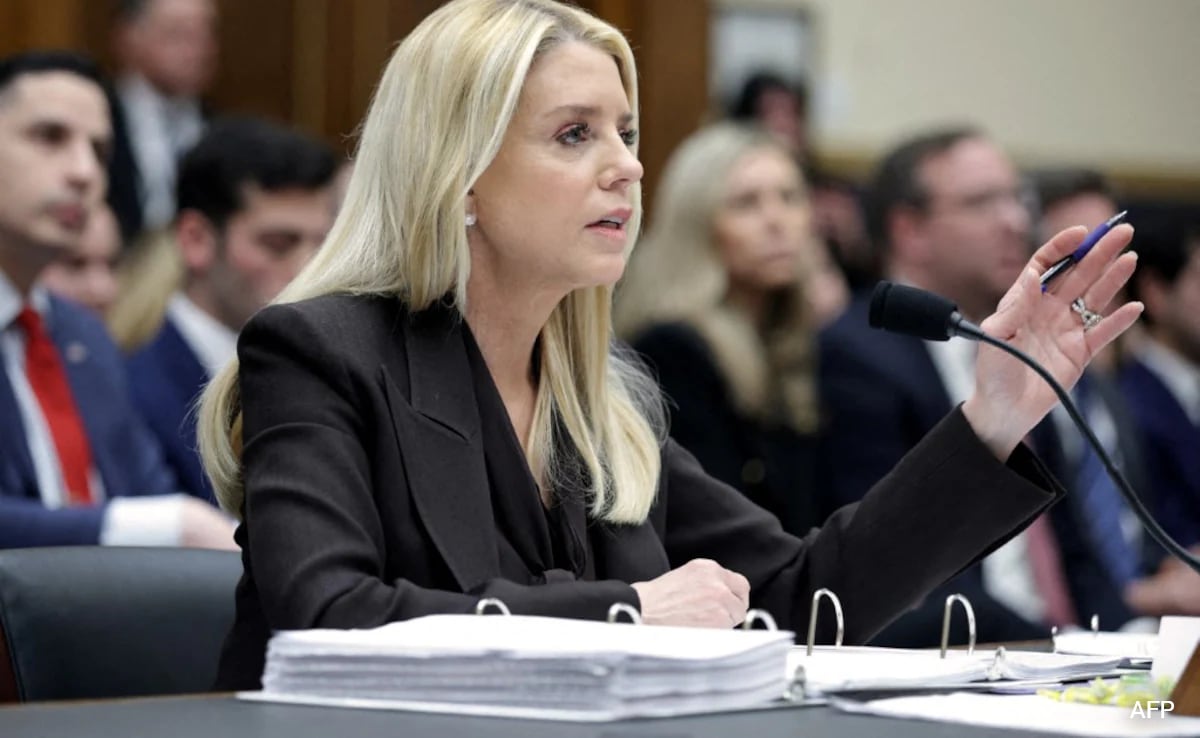
The U.S. House Judiciary Committee recently issued a subpoena that felt less like a legal request and more like a long-delayed collision. They want answers from Pam Bondi.
To understand why a former Florida Attorney General is being hauled before a congressional panel, you have to look past the dry legal filings. You have to look at the mechanics of power and how it chooses to protect itself—or look the away.
The Deal in the Dark
Imagine a prosecutor’s office. It should be a place where the law is a blunt instrument used to protect the vulnerable. But in 2008, the legal machinery in Florida produced something else entirely: a non-prosecution agreement that defies standard logic.
Jeffrey Epstein, a man accused of orchestrating a massive, predatory network involving dozens of underage girls, was allowed to plead guilty to two state prostitution charges. He served thirteen months in a county jail. He was allowed to leave for work nearly every day. The federal government agreed not to prosecute him. Most devastatingly, the victims were kept in the dark about the deal until it was already done.
This is the "ghost" that haunts Pam Bondi’s career.
Bondi didn’t sign that 2008 deal; that was the work of others before her tenure. However, the House panel isn't interested in the ink on the original contract. They are interested in the years that followed. They are asking a fundamental question: When the opportunity arose to reopen the box, who sat on the lid?
The Weight of a Phone Call
Justice is often depicted as a blindfolded woman holding scales, but in reality, justice is a series of human choices made in quiet rooms.
The House Judiciary Committee is digging into whether Bondi, during her time as Florida’s top law enforcement officer, used her influence to shield the investigation from further scrutiny. They are looking at the intersections of social circles and political donations. In the ecosystem of Florida power, the lines between a billionaire’s dinner party and a policy meeting can become dangerously blurred.
Consider the perspective of a survivor—let's call her Sarah, a composite of the many voices that have come forward. For Sarah, the legal technicalities of a non-prosecution agreement aren't abstract concepts. They are the reason she had to see her abuser driving his convertible down the same streets where she walked to work. Every time a high-ranking official declined to "re-examine" the case, it wasn't just a legal decision. It was a message to Sarah that her trauma was a secondary concern to the social stability of the elite.
When the House orders a testimony, they are trying to strip away the veneer of "standard procedure." They want to know why, despite a mountain of evidence and a growing chorus of shattered lives, the Florida Attorney General’s office didn't push harder. Was it a lack of resources? Or was it the gravitational pull of Epstein’s wealth, which seemed to bend the light around anyone who got too close?
The Interrogation of Memory
Pam Bondi has never been one to shy away from a fight. She is a veteran of the spotlight, a woman who rose through the ranks of the Florida legal system with a combination of sharp intellect and telegenic confidence. But the halls of Congress offer a different kind of stage.
The subpoena asks for more than just dates and times. It asks for a justification of silence.
The committee’s interest intensified after reports surfaced regarding Bondi’s interactions with Epstein’s legal team and the perceived lack of movement on state-level investigations during her eight-year term. The stakes are invisible but massive. If a state’s highest legal officer can be influenced by the social or financial status of a target, then the entire concept of "equal justice" is a myth we tell ourselves to sleep better at night.
Logic dictates that if the system worked as intended, the 2008 deal would have been an anomaly quickly corrected. Instead, it became a fortress. The House panel is now trying to find the cracks in that fortress.
The Coastal Ecosystem
There is a specific kind of atmospheric pressure that exists in high-stakes politics. It’s the feeling of being in a room where everyone knows a secret, but no one is allowed to speak it.
The Epstein investigation was treated for years like a radioactive isotope—something everyone knew was dangerous, so they handled it with lead gloves or simply left it in the corner, hoping the half-life would eventually render it inert. But trauma doesn't have a half-life. It stays potent.
Bondi’s defenders argue that she was following the law, that her office didn't have the jurisdiction to upend a federal agreement, and that the criticism is politically motivated. They see a dedicated public servant being dragged into a partisan circus.
The committee sees something else. They see a pattern of proximity. They see the donations. They see the photographs of the same faces appearing in the same elite circles. They see a map of Florida power where all roads eventually lead back to a few key estates in Palm Beach.
The Cost of Looking Away
We often think of corruption as a suitcase full of cash passed under a table. True power is much more subtle. It’s the decision not to return a phone call. It’s the choice to prioritize a different case because this one is "complicated." It’s the polite suggestion at a fundraiser that maybe some stones are better left unturned.
The House panel is investigating whether the Florida Attorney General’s office became a place where justice went to be quiet.
The human element here isn't just Bondi, and it isn't just Epstein. It is the collective loss of faith in the institutions that are supposed to protect us. Every time a headline like "House Orders Bondi to Testify" appears, it reminds the public that the "truth" is often something that has to be pried out of the hands of the powerful with a crowbar.
The committee is looking for the "why." Why did the state of Florida allow a predator to operate in plain sight for so long? Why were the warnings of victims treated like static on a radio?
A Collision of Worlds
As the date for the testimony approaches, the tension in Washington and Tallahassee is palpable. This isn't just about one woman or one billionaire. It’s a referendum on a decade of Florida politics.
The narrative we’ve been told for years is that Epstein was a singular monster who tricked everyone. The House panel is exploring a darker possibility: that he didn't trick anyone, but rather, he simply understood the currency of the world he lived in. He knew who to court, who to fund, and who to make feel important.
Pam Bondi now finds herself as the primary witness to that era. She is the person who held the keys to the state's legal vault while the world began to realize what was hidden inside.
The testimony won't just be about Epstein’s crimes. It will be about the culture of the Florida legal establishment. It will be about whether the "tough on crime" rhetoric that defines Florida politics applies to the man in the mansion as much as it does to the man on the street corner.
The Silence Breaks
The subpoena is a physical manifestation of a breaking point.
For years, the victims of Jeffrey Epstein were told to wait. Wait for the investigation. Wait for the appeal. Wait for the "right time." The House Judiciary Committee is signaling that the time for waiting has ended. By calling Bondi, they are signaling that no amount of political capital or social standing provides a permanent shield against inquiry.
There is a visceral discomfort in watching this unfold. It forces us to confront the reality that our legal systems are run by people—people with friendships, ambitions, and vulnerabilities. It reminds us that the law is only as strong as the courage of the people sworn to uphold it.
The questions Bondi will face are simple on the surface but deeply complex underneath. They are questions about meetings, about emails, and about the internal memos that never saw the light of day. But the question the public is asking is much more personal: Whose side were you on?
The long shadow of Palm Beach is finally being chased by the fluorescent lights of a congressional hearing room. The salt air and the jasmine are being replaced by the dry, sterile scent of old paper and legal transcripts.
In the end, this isn't a story about a subpoena. It’s a story about the slow, agonizing process of holding power accountable to the truth. It’s about the moment when the people who thought they were the architects of the narrative realize they are just characters in a story they no longer control.
The gavel will fall, the microphones will be turned on, and for the first time in a long time, the silence of the Florida coast will be forced to speak.
The victims are no longer the ones hiding in the shadows. The shadows have moved.


