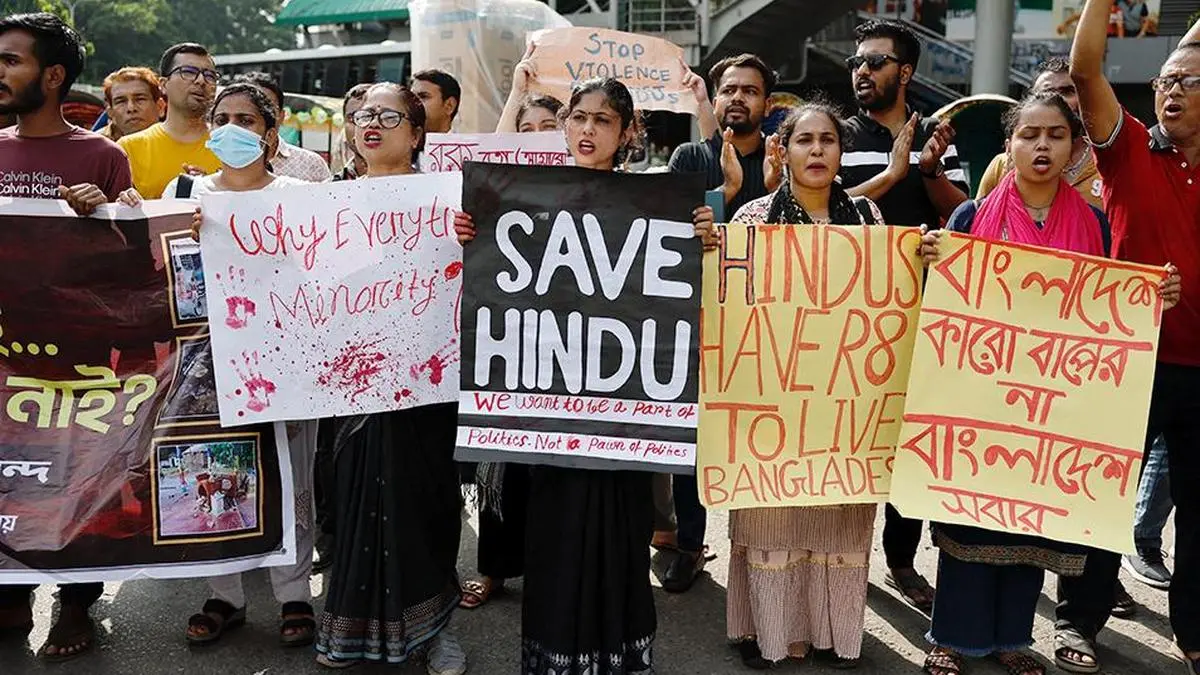
The push on Capitol Hill to formally label the 1971 atrocities in Bangladesh as genocide is not merely a historical correction. It is a calculated strike against a decades-long silence that has warped South Asian geopolitics. When a US lawmaker introduces a resolution to recognize the systematic slaughter of millions—specifically targeting Bengali Hindus—they are pulling at a thread that connects the Cold War to current security interests. For over fifty years, the ghosts of 1971 have been buried under the floorboards of international diplomacy to avoid offending a strategic partner in Islamabad. That era of looking away is hitting a wall.
The 1971 conflict was one of the most concentrated bursts of state-sponsored violence in the 20th century. While the world remembers the Vietnam War or the Prague Spring, the scale of death in what was then East Pakistan remains a statistical blur to most Westerners. Estimates of the dead range from 300,000 to 3 million. Ten million people fled across the border into India. At the heart of this carnage was "Operation Searchlight," a military crackdown that evolved into an ethnic cleansing campaign against the Bengali intellectual elite and the Hindu minority.
The Architecture of a Scapegoat
The tragedy began when the West Pakistani establishment refused to hand over power to the Awami League, the Bengali party that had won a clear democratic mandate. The response was not just a police action; it was a total war against a culture. The Pakistani military leadership at the time viewed the Bengali population as "polluted" by Hindu influence. To them, the Bengali language and its associated traditions were an existential threat to the concept of a unified, Urdu-speaking Islamic state.
Soldiers were given lists. They targeted professors at Dhaka University. They targeted doctors and lawyers. But the most consistent violence was reserved for the Hindu population. By labeling Hindus as "internal enemies" and agents of India, the military leadership created a moral vacuum where any level of brutality was permissible. This was not accidental collateral damage. It was a deliberate attempt to alter the demographic and political fabric of the region forever.
The Blood Telegram and the Great American Silence
To understand why a 2026 push for recognition is so volatile, one must look at the 1971 dissent within the US State Department. Archer Blood, the US Consul General in Dhaka, sent what became known as the "Blood Telegram." It was one of the most blistering internal protests in the history of American diplomacy. Blood and his staff accused the US government of "moral bankruptcy" for refusing to denounce the genocide.
The reason for the silence was simple and cynical: the "Opening to China." President Richard Nixon and National Security Advisor Henry Kissinger were using Pakistan as a secret backchannel to communicate with Beijing. They believed that criticizing the Pakistani leadership for a domestic massacre would jeopardize the larger Cold War objective of splitting the communist bloc. Consequently, the US continued to ship arms to the perpetrators while the victims were buried in mass graves.
The current legislative effort is a direct confrontation with this legacy. By acknowledging the genocide now, the US Congress isn't just correcting a history book; it is acknowledging that the "Nixon-Kissinger Tilt" towards Pakistan was a human rights disaster of the highest order. It signals a shift in how Washington weighs moral clarity against perceived tactical convenience.
The Mechanism of Modern Accountability
Why does the word "genocide" matter more than "mass killing" or "humanitarian crisis"? The legal weight is immense. Under the 1948 Genocide Convention, the term implies a specific intent to destroy, in whole or in part, a national, ethnical, racial, or religious group. Proving this intent is the highest bar in international law.
The evidence from 1971 is overwhelming. Witness accounts describe villages being surrounded, men separated and executed, and women subjected to systematic sexual violence on a scale that defies comprehension. Conservative estimates suggest 200,000 to 400,000 women were victims of what was essentially a military policy of mass rape. This was intended to break the spirit of the Bengali resistance and "purify" the lineage.
When a US lawmaker sponsors a resolution for recognition, they are utilizing the Global Magnitsky Act framework and other human rights tools to suggest that the perpetrators who are still alive, and the institutions that supported them, must be held to a standard that has no expiration date. It also provides a legal basis for the descendants of survivors to seek reparations or, at the very least, an official apology that has been withheld for half a century.
Geopolitical Aftershocks in the Indo-Pacific
The timing of this recognition is no coincidence. The geopolitical landscape of South Asia has shifted. Bangladesh is no longer the "basket case" Kissinger once famously predicted it would be. It is a rising economic power with a strategic location on the Bay of Bengal. Meanwhile, the US-Pakistan relationship has frayed significantly over the last two decades of conflict in Afghanistan.
Recognizing the 1971 genocide serves several contemporary interests:
- Strengthening Ties with India: India intervened in 1971 to stop the refugee crisis and the slaughter. Recognizing the genocide validates India’s historical narrative and its role as a regional stabilizer.
- Countering Extremism: Acknowledging the religious nature of the 1971 violence helps highlight the dangers of state-sponsored radicalization, a recurring theme in regional security.
- Moral Leadership: For an administration or a Congress looking to reclaim the "moral high ground" on the global stage, 1971 is an overdue debt that can finally be paid.
However, there is a counter-argument that critics often whisper in the halls of the State Department. Some fear that formal recognition will push Pakistan further into the arms of China, creating a more rigid bloc in the heart of Asia. Others argue that reopening these wounds will destabilize the current government in Islamabad, which is already struggling with economic collapse and internal unrest. These are the excuses of the same "realpolitik" school that allowed the killing to happen in the first place.
The Bengali Hindu Identity Crisis
While the 1971 war was a national liberation struggle for all Bengalis, the Hindu minority bore a disproportionate burden. Even after independence, the scars remain. The Hindu population in Bangladesh has dwindled from roughly 13.5 percent in 1971 to less than 8 percent today. Much of this is due to the lingering trauma and the periodic flare-ups of communal violence that mirror the rhetoric used by the Pakistani military decades ago.
By specifically mentioning the Bengali Hindu victims, US lawmakers are addressing a specific type of erasure. For years, the narrative of 1971 was simplified into a linguistic struggle—Bengali vs. Urdu. While true, this glossed over the religious cleansing aspect. Bringing the Hindu experience to the forefront ensures that the full scope of the "intent to destroy" is documented. It prevents the genocide from being sanitized into a mere civil war or a political dispute over borders.
Evidence in the Digital Age
The push for recognition is also bolstered by new archival releases and digital forensics. Historians are now able to cross-reference declassified CIA reports with local testimonies and satellite imagery of mass grave sites that were previously inaccessible. We are seeing a "democratization of truth" where the official denials of the past are being dismantled by data.
In 1971, the Pakistani government expelled foreign journalists from Dhaka to keep the world in the dark. Today, the survivors and their children are using social media and global archives to ensure the world stays in the light. This bottom-up pressure is what gives the legislative resolution its teeth. It is no longer just one politician's hobby horse; it is a demand from a global diaspora that has found its voice.
The Limits of Recognition
We must be clear-eyed about what a resolution can and cannot do. It will not bring back the dead. It will not immediately change the curriculum in Pakistani schools, where the 1971 war is often portrayed as a "conspiracy" or a minor setback. It won't even guarantee that the US will take punitive action against those who still defend the actions of the 1971 junta.
What it does do is provide a standard of truth. It creates a benchmark for future diplomatic engagements. It tells the survivors that their suffering was seen, and it tells the perpetrators that time does not grant immunity. History is often written by the victors, but in the case of 1971, it was written by the silent. That silence is finally being broken, and the resulting noise is making the world's power brokers very uncomfortable.
If the US wants to be seen as a credible arbiter of human rights in the 21st century, it cannot afford to leave a 3-million-person-shaped hole in its historical record. The resolution isn't about looking back; it’s about deciding what kind of future the US is willing to sponsor in Asia. The blood of 1971 has dried, but the ledger remains open.
Would you like me to analyze the specific language used in the current US House resolution to see which legal definitions of genocide are being prioritized?