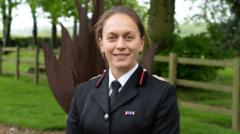
Danielle Murphy knows what it's like to perform under pressure with millions of eyes watching. Most people remember her as a tenacious defender for the Lionesses, racking up caps for England and winning major trophies with Arsenal. Now, she’s swapped the pitch for the front line of public safety. Her recent appointment as the Deputy Chief Fire Officer for the West Sussex Fire and Rescue Service isn’t just a career pivot. It's a loud statement about how elite sports skills translate into high-stakes emergency management.
If you think professional football and firefighting are worlds apart, you haven't been paying attention. Both require a specific kind of mental grit. You need the ability to make split-second decisions when your heart rate is redlining. Murphy’s move into this executive role proves that the "soft skills" athletes build—teamwork, discipline, and tactical thinking—are actually the hardest skills to find in the corporate or public sector.
Why elite athletes make the best public servants
It isn't just about being fit. Of course, Murphy has the physical stamina, but the fire service needs more than just people who can carry a ladder. They need leaders who don't blink when things go wrong. In football, if you lose your head in the 89th minute, you lose the game. In the fire service, if you lose your head, the consequences are life-altering.
Murphy spent years at the highest level of women’s football. She played in an era where the game wasn't as well-funded as it is today. That required a level of raw hustle and dedication that most modern players will never understand. She brought that same work ethic to the fire service when she joined years ago, working her way up from the bottom. She didn't just walk into a deputy chief role because of her name. She earned it through years of operational experience and by proving she could lead crews in some of the most stressful environments imaginable.
Breaking the glass ceiling in West Sussex
The fire service has historically been a bit of a boys' club. That’s changing, but it’s changing slowly. Seeing a woman who has reached the pinnacle of one male-dominated industry (football) move into the upper echelons of another is a big deal. Murphy’s presence at the top of West Sussex Fire and Rescue Service sends a clear message to young women. It says there's a seat at the table if you're willing to do the work.
But let's be real. Murphy isn't there to be a diversity statistic. She's there because she’s a tactical expert. Her background in sport gives her a unique perspective on "human factors"—the study of how people behave under stress. She knows how to motivate a team that's exhausted. She knows how to debrief a "match" (or an incident) to find every small error and fix it for next time. That kind of relentless pursuit of excellence is exactly what a modern fire service needs to stay efficient.
From the pitch to the Incident Command Unit
Imagine the transition. One day you're marking some of the best strikers in the world. The next, you're responsible for the safety of an entire county. Murphy’s journey through the ranks at various services, including her time in London, prepared her for this. She’s seen the worst of it. She’s been in the smoke. This gives her a level of "street cred" with rank-and-file firefighters that a career bureaucrat just can't buy.
When a Deputy Chief speaks, the crew needs to know that person understands what it’s like to hold the hose. Murphy has that. She also has the academic and strategic backing to handle the "big picture" stuff—budgets, community safety initiatives, and long-term planning. It's a rare combination of grit and intellect.
The grit of the 2007 Quadruple
Let’s look back for a second. Murphy was part of that legendary Arsenal side that won the "Quadruple" in 2007. That wasn't just luck. It was a season of grueling consistency and mental toughness. You don't win four major trophies in one year without an obsessed focus on the goal. This is the exact energy she brings to West Sussex.
The fire service is currently facing massive challenges. Climate change is making wildfires more frequent and intense. Urban environments are becoming more complex. Budgets are always under fire. Murphy’s experience in navigating the high-pressure world of international sports means she’s used to working with limited resources and high expectations. She’s a winner, and she expects the organizations she leads to function at that same level.
What this means for the future of emergency services
We’re seeing a shift in how public sectors recruit. It’s no longer just about who has been in the building the longest. It’s about who has the best leadership DNA. Murphy is the blueprint. She represents a move toward "performance-based leadership."
Public safety organizations are starting to realize they can learn a lot from the world of elite sports. The way athletes recover, the way they analyze film, and the way they build team culture are all directly applicable to how we run fire stations. Murphy is at the forefront of this integration.
Practical takeaways for leaders in any field
You don't have to be an England international to learn from Murphy’s career path. There are a few things anyone can take away from her rise to Deputy Chief.
First, your past experience is a tool, not a cage. Don't be afraid to take skills from one industry and apply them to something completely different. If you can lead a football team, you can lead a department.
Second, credibility is earned in the trenches. If you want to lead, you have to be willing to do the entry-level work first. Murphy didn't skip steps. She did the hard yards, and that’s why she has the respect of her peers today.
Lastly, stay calm when the heat is on. Whether it’s a penalty shootout or a four-pump fire, the person who stays the coolest wins. Murphy has spent her life practicing that calmness.
If you're looking to transition careers or step into a leadership role, start by auditing your own "high-pressure" skills. Look at where you’ve succeeded under stress and find ways to demonstrate that to your current or future employer. The fire service didn't just hire a footballer; they hired a proven leader who knows how to win when it matters most.
Keep an eye on West Sussex. With Murphy in a top spot, expect to see a shift toward a more high-performance, athlete-minded culture. It’s a bold move for the service, and honestly, it’s one that’s long overdue. Get comfortable with change, because leaders like Murphy are the ones who are going to be driving it from here on out.