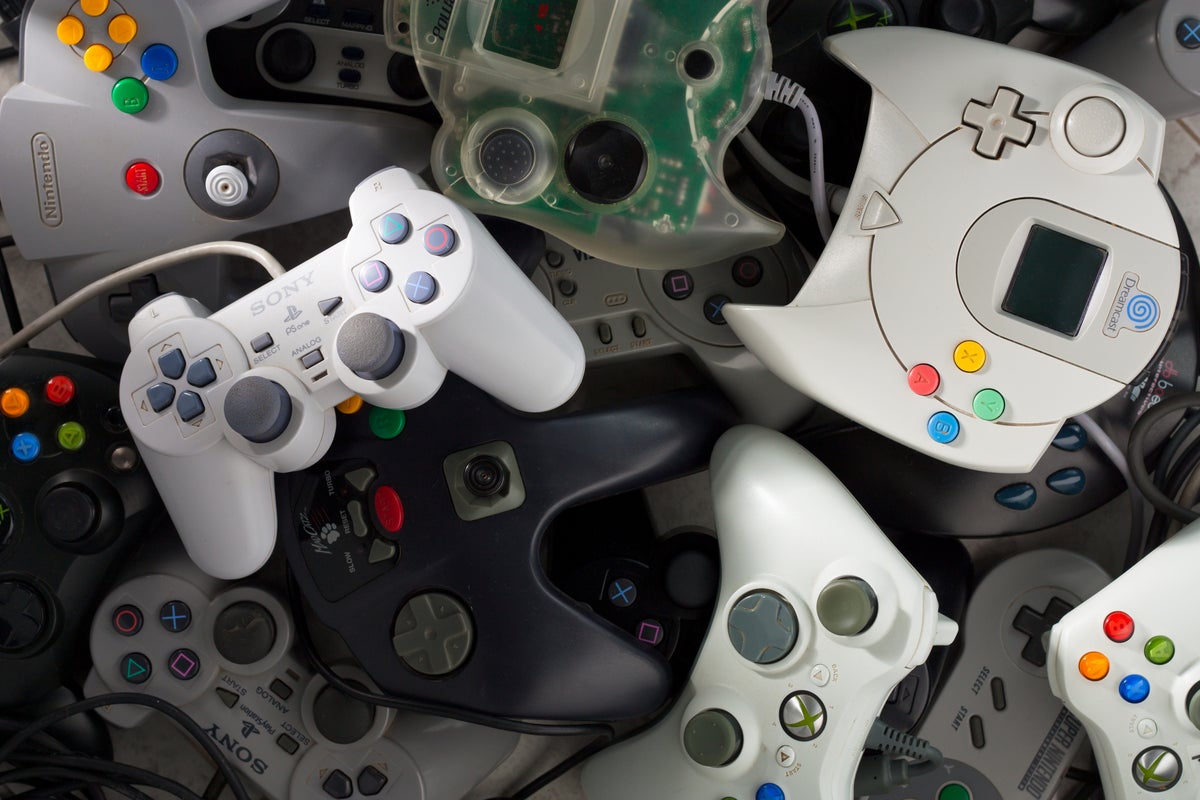
GameStop just rebranded your childhood as a "historic artifact," and the internet swallowed the bait.
By slapping a museum-grade label on the Nintendo 64, the original PlayStation, and the Sega Dreamcast, the retailer isn't honoring the medium. It’s executing a cold, calculated inventory grab. They aren't "preserving" anything. They are desperate for high-margin used hardware because selling new $70 software discs is a dying business model.
When a corporation calls a piece of plastic "historic," they are telling you two things: it belongs in a glass case, and they want to be the ones to sell you the key.
The Retro Tax Is a Scam
The "trade-in bonus" is the oldest trick in the retail playbook. GameStop is currently offering a bump in trade-in value for these specific consoles. On the surface, it looks like a win for the consumer. In reality, it’s an admission that the secondary market—eBay, Mercari, and local retro shops—is beating them at their own game.
Let’s look at the "historic" N64. A loose console in decent condition moves on the private market for roughly $80 to $100. If it’s a Funtastic color variant, you’re looking at $200 minimum. GameStop’s "increased" trade-in value usually hits about 40% to 50% of the actual market value, often paid out in "Store Credit" which forces you back into their ecosystem.
They aren't giving you more money. They are charging you a convenience fee for being too lazy to list the item yourself.
Why "Historic Artifact" is a Marketing Lie
Calling a console an artifact implies scarcity. There are nearly 33 million Nintendo 64s in existence. There are over 102 million original PlayStations. These are not Ming vases. They are mass-produced consumer electronics.
The scarcity isn't in the hardware; it's in the functional hardware.
Capacitors leak. Disc drive lasers burn out. Internal clocks die. When GameStop "refurbishes" these consoles, they aren't performing a restoration. I have seen the "battle scars" of corporate refurbishing: consoles blown out with compressed air, wiped with a generic degreaser, and tossed into a polybag.
A true "historic artifact" requires archival maintenance. GameStop provides a 30-day warranty. If they actually cared about the history of the Sega Dreamcast, they’d be replacing the ticking time-bomb capacitors on the power board. Instead, they are just flipping units before the hardware failure becomes their problem.
The Death of the Local Retro Shop
This move is a direct assault on the independent game store. For the last decade, local shops survived because GameStop abandoned everything that wasn't current-gen. These small businesses built communities, offered actual repair services, and understood the nuance of "Greatest Hits" vs. Black Label variants.
By pivoting back into retro, GameStop is trying to starve these independents of their supply. They have the marketing budget to convince the average person that the "safe" place to dump their old attic find is the mall.
When you trade a console into a massive chain, you are helping them monopolize the supply of a finite resource. Once the independent shops are gone, GameStop can set whatever price they want for a used GameCube. They aren't "opening up access" to retro gaming; they are building a wall around it.
The Emulation Elephant in the Room
The premise that you need "historic hardware" to play these games is a fundamental misunderstanding of technology.
If you want to experience The Legend of Zelda: Ocarina of Time, you have three paths:
- Pay the "Retro Tax" for a console, a cartridge, and a modern TV adapter that doesn't lag (Total: $200+).
- Use a modern official port on the Switch.
- Use open-source emulation that offers $4K$ resolution, save states, and better frame rates than the original hardware.
GameStop wants you to choose Option 1 because it’s the only one they can monetize. They are selling nostalgia as a physical commodity while ignoring the fact that the software is what actually matters.
The "artifact" status is a distraction from the fact that these consoles look terrible on modern 4K OLED screens without expensive upscalers like a Retrotink. Does GameStop mention that your "historic" PS1 will look like a smeared mess on your 65-inch TV? Of course not. They just want the trade-in.
The Collector’s Trap
"People Also Ask" if retro games are a good investment. The answer is a brutal "no" for anyone entering the market now. We are currently in a speculative bubble fueled by grading companies and corporate FOMO.
By labeling these consoles as artifacts, GameStop is legitimizing the "investor" mindset over the "player" mindset. When games become assets, they stop being fun. They become boxes on a shelf that you're afraid to touch because a smudge reduces the ROI.
If you actually love these games, the best thing you can do is avoid the corporate "artifact" hype. Buy from individuals. Learn to solder. Replace your own capacitors.
The Reality of the "Historic" Label
The true irony is that GameStop spent years telling us these consoles were "junk." They were the ones who stopped taking trade-ins for "legacy" systems the second a new generation launched. They threw away thousands of manual inserts and cardboard boxes because they took up too much shelf space.
Now that the market has proven there is gold in those hills, they’ve suddenly found religion.
Don't let a corporate press release dictate the value of your memories. That N64 in your garage isn't a "historic artifact" in the way they mean it. It’s a tool for play. Selling it to a company that will flip it for double the price while giving you "Points" is a failure of logic.
Keep your hardware. Fix it yourself. If you must sell it, sell it to a person, not a ticker symbol.
Stop letting the people who tried to kill retro gaming tell you how much it’s worth.