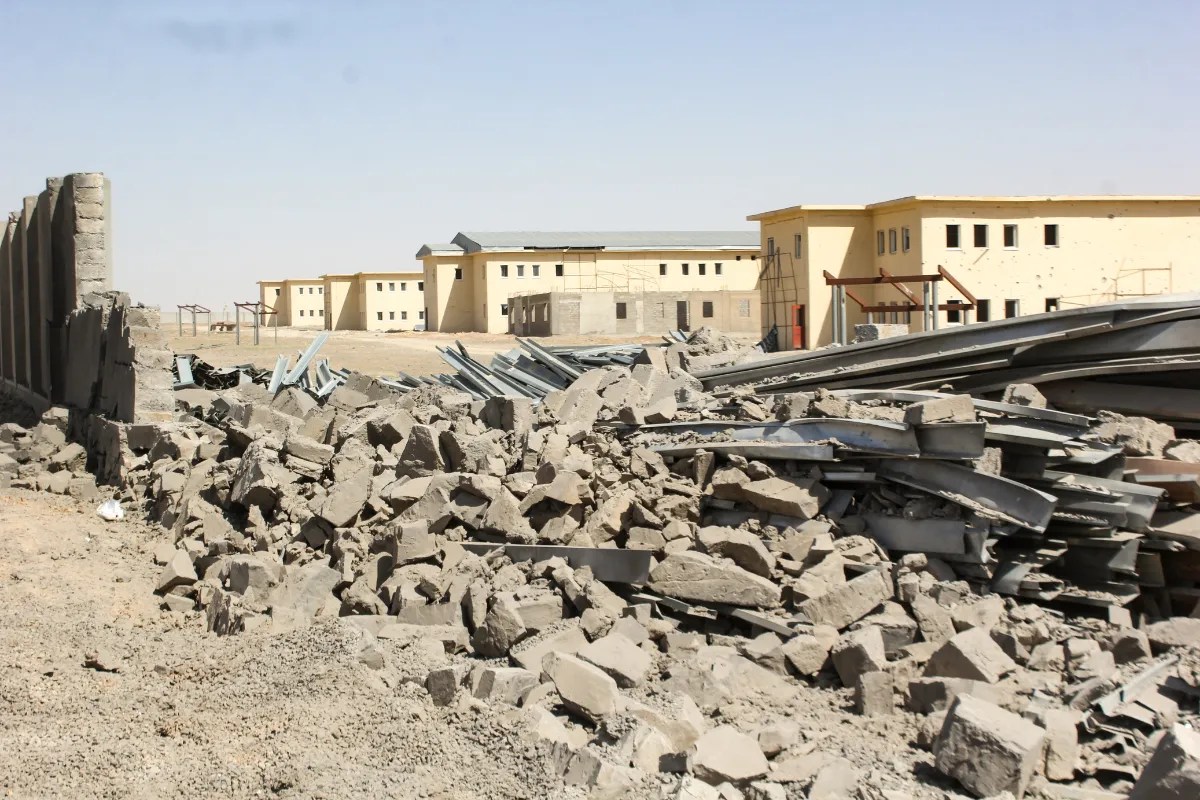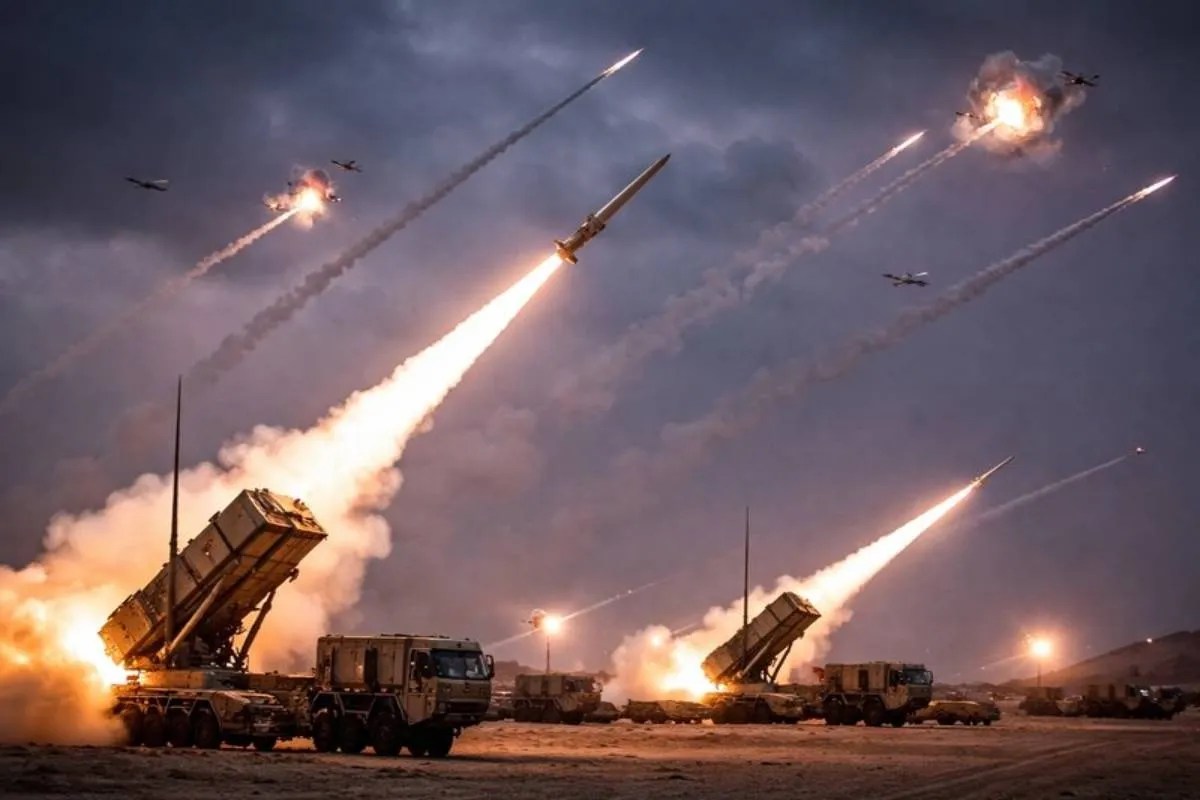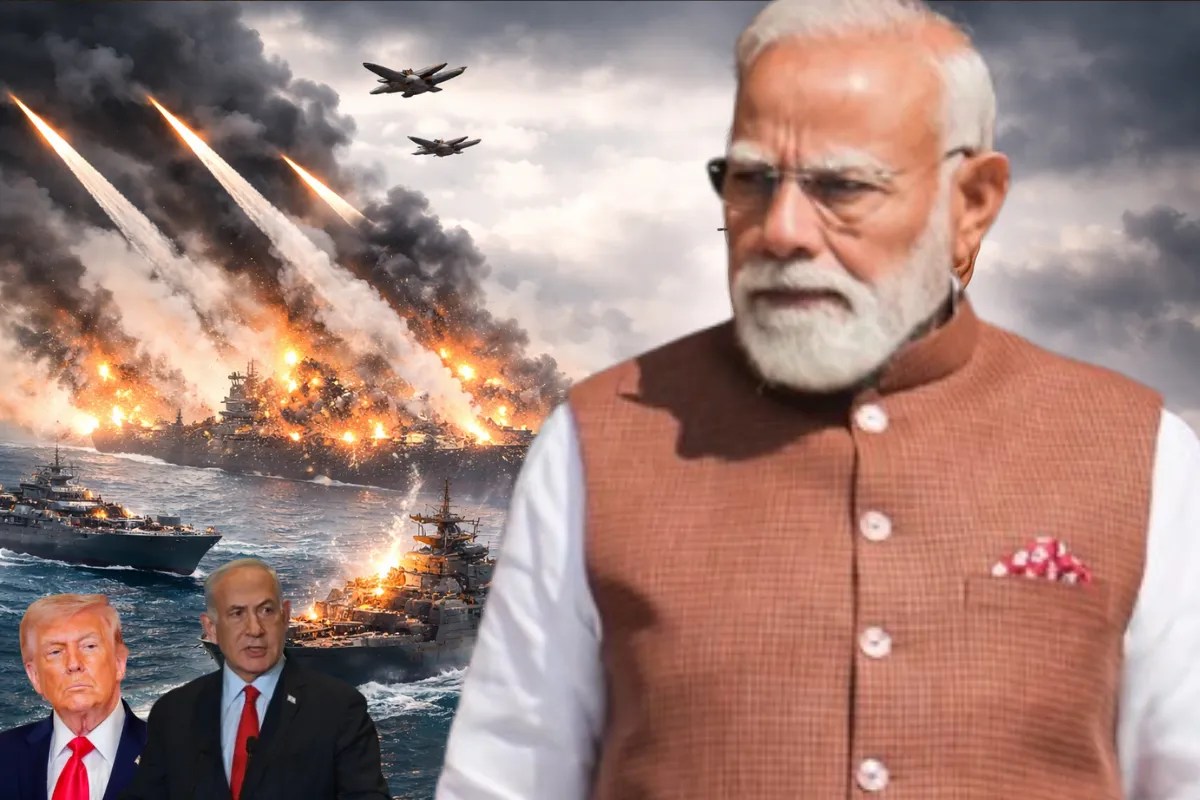
The prevailing security architecture in the Middle East has transitioned from a state of managed friction to a high-velocity kinetic exchange. The recent joint maneuvers and offensive operations involving U.S. and Israeli assets against Iranian-linked infrastructure represent a shift in the regional "Rules of Engagement" (ROE). While media narratives often focus on the immediate visual of missile strikes, the underlying reality is a calculated recalibration of the deterrence equilibrium. India’s recent diplomatic intervention, led by Prime Minister Modi, is not a mere call for peace; it is a strategic necessity driven by the potential for a catastrophic breakdown in energy logistics and the maritime "Security Architecture" of the North Indian Ocean.
The Triple-Axis Threat to Global Stability
To understand the urgency of the current situation, one must deconstruct the conflict into three distinct functional layers. These layers interact to create a "Force Multiplier" effect that threatens non-belligerent nations like India.
- The Kinetic Layer: This involves the direct application of physical force—missile volleys, drone swarms, and air superiority strikes. The technical sophistication of these exchanges has reached a point where defensive costs are beginning to exceed offensive expenditures.
- The Logistics Layer: The geography of this conflict centers on the Strait of Hormuz and the Bab al-Mandab. Any sustained disruption here creates an immediate "Supply Chain Bottleneck," raising the insurance premiums for maritime trade and threatening the "Just-in-Time" delivery models of global energy markets.
- The Diplomatic Layer: This is the realm of narrative control and alliance management. India’s involvement at this level is dictated by the "Strategic Autonomy" doctrine, where the goal is to prevent a binary choice between Western interests and regional stability.
Quantifying the Economic Friction of Extended Conflict
The economic impact of a full-scale war between Israel and Iran, supported by U.S. logistical depth, is not a linear projection. It follows a power-law distribution where small increases in kinetic intensity lead to exponential rises in global operational costs.
The Energy Premium
India imports approximately 85% of its crude oil requirements. A $10 increase in the price per barrel of Brent Crude typically adds nearly $10 billion to India’s annual current account deficit. When the U.S. and Israel target Iranian facilities, the market reacts to the loss of Iranian supply (approximately 3 million barrels per day) and the potential for Iran to retaliate by obstructing the Strait of Hormuz, through which 20% of the world's total oil consumption passes.
The Maritime Security Variable
The cost of shipping is a function of risk. When high-value assets are deployed in the Red Sea or the Persian Gulf, private insurers implement "War Risk Surcharges." For an Indian exporter, this translates to a direct hit on the "Margin of Competitiveness." If the conflict remains uncontained, the redirection of vessels around the Cape of Good Hope adds roughly 10 to 14 days to transit times, effectively reducing the global shipping fleet's capacity by 15-20% through "Vessel Inefficiency."
The Anatomy of the India-Israel-Iran Trilemma
India occupies a unique position in this geopolitical theater. Its relationship with Israel is defined by "Deep-Tech Collaboration" and defense procurement, while its relationship with Iran is anchored by the "Chabahar Port Initiative" and the International North-South Transport Corridor (INSTC).
The logic of India’s current diplomatic posture is driven by two specific variables:
- The Diaspora Factor: Over 9 million Indian nationals reside in the Gulf region. Any escalation that necessitates a mass evacuation would create a logistical and fiscal "Black Hole" for the Indian government.
- The Investment Trap: Significant capital is sunk into the INSTC. If Iran becomes a permanent combat zone, the viability of a land-bridge to Russia and Central Asia evaporates, rendering billions of dollars in infrastructure investment "Stranded Assets."
Escalation Dominance and the Failure of Traditional Deterrence
The current conflict demonstrates the limits of "Escalation Dominance"—the ability to increase the stakes of a conflict such that the opponent is forced to de-escalate. When the U.S. provides the "Qualitative Military Edge" (QME) to Israel, the intent is to deter Iran. However, in a multi-polar environment, this often results in "Asymmetric Reciprocity." Iran, unable to match U.S.-Israeli conventional air power, utilizes proxy networks and "Gray Zone Warfare" to target vulnerabilities in global trade and regional allies.
Prime Minister Modi's warning that "war must be stopped" is a recognition that we have reached the "Point of Diminishing Returns" in kinetic deterrence. Further strikes do not lead to a surrender; they lead to a systemic collapse of regional order that no single power can contain.
The Technological Dimension of Modern Warfare
The shift from manned platforms to "Autonomous Loitering Munitions" has fundamentally altered the cost-benefit analysis of modern defense.
$$C_{defense} \gg C_{offense}$$
Where $C_{defense}$ is the cost of intercepting a threat (e.g., an Iron Dome or Aegis missile) and $C_{offense}$ is the cost of the attacking drone or rocket. In a sustained war of attrition, the side with the lower-cost offensive capability can effectively bankrupt the more sophisticated defender, regardless of technical superiority. This "Economic Attrition" is a primary reason why a prolonged conflict is unsustainable for the global economy.
Operational Limitations of International Mediation
Mediation in this context faces three primary structural barriers:
- The Sovereignty Paradox: Both Israel and Iran view the conflict as an existential necessity, making the "Middle Ground" non-existent.
- The Information Gap: Real-time intelligence is often used to justify further strikes rather than to find diplomatic openings.
- The Zero-Sum Logic: In the current regional climate, a gain for one side is perceived as an absolute loss for the other, preventing the "Win-Win" scenarios required for traditional diplomacy.
India's strategy is to bypass these barriers by focusing on the "Collective Rationality" of economic survival. By highlighting the threat to global energy and food security, India seeks to build a "Coalition of the Impacted" to pressure both sides toward a ceasefire.
Strategic Forecast and the Path to Containment
The immediate requirement is the establishment of a "De-escalation Corridor." This involves a three-step operational sequence:
- Step 1: Kinetic Freeze. A temporary halt to direct state-on-state strikes to allow for back-channel negotiations.
- Step 2: Maritime Neutrality. Formal guarantees from all regional powers to leave commercial shipping and energy infrastructure outside the "Target Envelope."
- Step 3: Multi-Lateral Security Dialogue. Moving beyond bilateral "Hotlines" to a regional framework that includes major energy consumers like India and China, who have the most to lose from a systemic breakdown.
The logic of "Total Victory" is an illusion in the modern interconnected world. The only viable strategic outcome is a return to a "High-Friction Peace," where competition continues without the catastrophic costs of open warfare. Any actor ignoring this reality is not just risking regional stability, but is actively participating in the dismantling of the global economic order.
Monitor the "Volatility Index" (VIX) and the "Crude Oil Volatility Index" (OVX) over the next 72 hours. A sustained rise in both, coupled with any disruption in the Strait of Hormuz, will signal the transition from a localized conflict to a global economic contraction. Strategic positioning should prioritize "Liquidity" and "Supply Chain Redundancy" until a verified ceasefire or a significant reduction in kinetic activity is confirmed by independent satellite monitoring.
Would you like me to analyze the specific impact of the INSTC disruption on India’s trade volume with Central Asia?