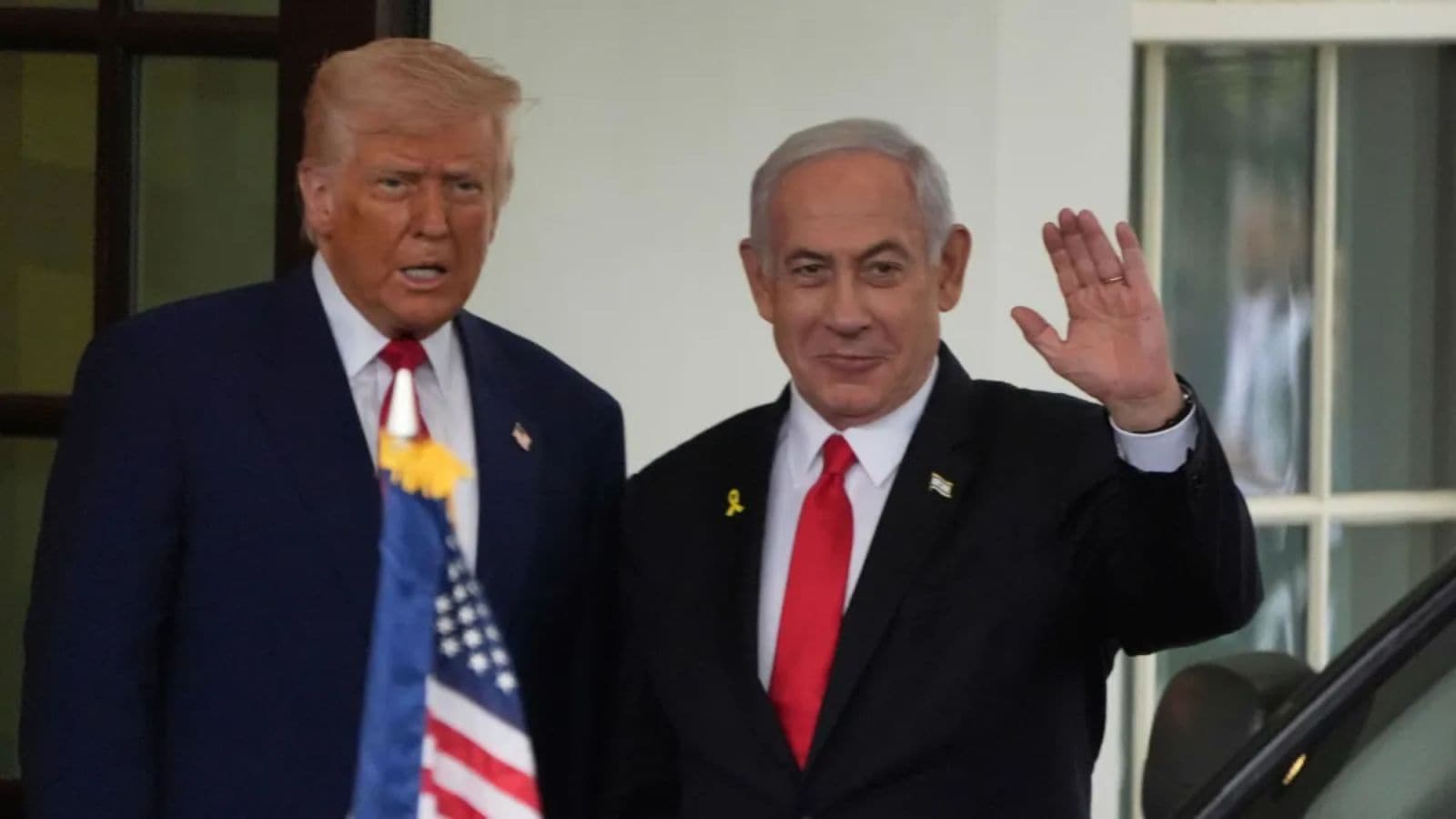
The institutionalization of a "daily briefing" pipeline between the Trump administration and Israeli Prime Minister Benjamin Netanyahu regarding Iran nuclear negotiations represents a fundamental shift from traditional diplomatic coordination to a unified executive intelligence loop. This arrangement bypasses standard multilateral channels, effectively creating a bilateral command structure designed to preemptively constrain the Joint Comprehensive Plan of Action (JCPOA) or any successor framework. The primary objective is the elimination of information asymmetry—the gap between what Washington negotiates and what Jerusalem perceives—thereby synchronizing the two nations' sabotage or containment strategies in real-time.
The Triad of Strategic Synchronization
The efficacy of this briefing mechanism rests on three distinct pillars of cooperation that move beyond the "special relationship" rhetoric into operational integration.
- Tactical Intelligence Convergence: By receiving daily updates, the Israeli security apparatus gains visibility into the granular details of U.S. diplomatic concessions. This allows Mossad and the IDF to align their "Gray Zone" operations—covert actions within Iranian territory—with the rhythm of the talks. If the U.S. signals a potential lifting of sanctions, Israel can calibrate its kinetic activities to alter the negotiation environment.
- Domestic Political Leverage: Shared intelligence acts as a force multiplier for Netanyahu’s domestic messaging. By positioning himself as a co-architect of American policy, he stabilizes his right-wing coalition and creates a perception of indispensability.
- The "Pre-Commitment" Constraint: Daily briefings function as a mechanism of "audience costs" for the U.S. administration. Once the U.S. shares a specific negotiating position with Israel, any deviation from that position becomes a potential diplomatic or political liability, effectively locking the U.S. into a harder line to maintain bilateral trust.
The Cost Function of Transparency
While daily briefings suggest a seamless alliance, they introduce significant frictions into the broader Middle Eastern security architecture. Transparency between the U.S. and Israel creates an inverse relationship with the privacy required for successful high-stakes diplomacy.
The first friction point is the negotiation leak risk. When a third party is briefed daily on confidential discussions, the probability of sensitive details reaching the public or adversarial press increases. This is often a deliberate strategy; if the Israeli government views a specific U.S. concession as dangerous, leaking that information to the U.S. Congress or the media can kill the proposal before it is finalized.
The second limitation involves the divergence of existential thresholds. For the United States, an Iranian nuclear capability is a regional proliferation crisis; for Israel, it is defined as an existential threat. The daily briefing ensures that the U.S. is constantly confronted with Israel's lower threshold for military action. This creates a psychological bottleneck for American negotiators who must weigh every diplomatic gain against the risk of an uncoordinated Israeli strike.
Intelligence Loops vs. Formal Treaties
There is a critical distinction between the formal intelligence sharing protocols that have existed for decades and this informal executive-level briefing cycle. Formal channels are mediated by the CIA, NSA, and Mossad, filtered through bureaucratic layers that prioritize long-term stability and source protection. Executive-level daily briefings are political instruments.
The move to daily updates signals that the Trump administration has prioritized "maximum pressure" alignment over the traditional "honest broker" role often played by the State Department. This creates an environment where the executive branches of both countries function as a single unit against the Iranian clerical leadership.
This integration serves to marginalize the E3 (United Kingdom, France, and Germany). By establishing a superior information loop with Israel, the U.S. renders European mediation efforts secondary. The Europeans find themselves negotiating with a U.S. team that has already cleared its positions with a non-party to the talks, effectively giving Israel a silent veto at the table.
The Mechanism of Pressure Calibration
To understand the impact of these briefings, one must analyze the "Maximum Pressure" campaign as a dynamic system rather than a static set of sanctions.
- Information Input: U.S. State Department updates on Iranian economic status and enrichment levels.
- Analysis Filter: Israeli assessment of "Breakout Time" (the time required to produce enough weapons-grade uranium for one nuclear device).
- Action Output: Coordinated sanctions via Washington and cyber/physical disruption via Jerusalem.
The daily briefing ensures that the delay between information input and action output is minimized. In traditional diplomacy, this cycle can take weeks. In the current framework, it is compressed into a 24-hour window. This high-frequency feedback loop prevents Iran from exploiting the bureaucratic "lag" that usually exists between Western allies.
The Risks of Unified Intelligence Failure
The danger of this architecture is the "Echo Chamber Effect." When two allies share the same intelligence stream daily, they lose the benefit of independent verification. If the U.S. intelligence community or Israeli intelligence makes a fundamental error in assessing Iran’s intent, the daily briefing reinforces that error across both governments simultaneously.
There is no "Red Team" functionality when the two most powerful actors in the equation are working from the same daily script. This lack of cognitive diversity in the planning rooms increases the risk of miscalculating Iran’s "point of no return," potentially leading to an accidental regional war. Iran, sensing this total alignment, may perceive that diplomacy is a dead end, inadvertently incentivizing the very nuclear sprint the alliance seeks to prevent.
Strategic Realignment and the Pre-Emptive Play
The Netanyahu-Trump briefing cycle is a masterclass in pre-emptive diplomacy. It is designed to survive the current administration. By embedding Israeli oversight into the daily functions of U.S. Middle East policy, the administration is creating an institutional memory that will be difficult for future U.S. leaders to dismantle without appearing to "betray" a key ally.
The strategic play here is not just about stopping a nuclear bomb; it is about the total integration of two nations' sovereign foreign policies regarding a specific adversary. This is a move toward a "Joint Venture" model of geopolitics, where the distinction between U.S. national interest and Israeli national interest in the Persian Gulf is intentionally blurred.
For the regional players—Saudi Arabia, the UAE, and Qatar—this bilateral loop is a signal of exclusion. While the U.S. maintains security guarantees with the Gulf states, the "Daily Briefing" status is a tier of partnership reserved for Israel alone. This creates a hierarchy of influence that forces Gulf nations to coordinate their own Iran policies through Jerusalem as much as through Washington.
The long-term viability of this arrangement depends on the continued alignment of political ideologies in both capitals. Should a shift occur in either the Knesset or the White House, the "Daily Briefing" mechanism becomes a weapon of the outgoing administration, a lingering tether that forces the new leadership to confront the ghost of their predecessor's promises every 24 hours.
The immediate move for regional observers and policymakers is to treat U.S. and Israeli statements on Iran as a single, unified output. The era of playing the "moderate" American view against the "hardline" Israeli view has ended. The briefings have synchronized the watches; the next phase is the coordinated execution of the pressure cycle, leaving no room for Iranian maneuvering or European hedging.