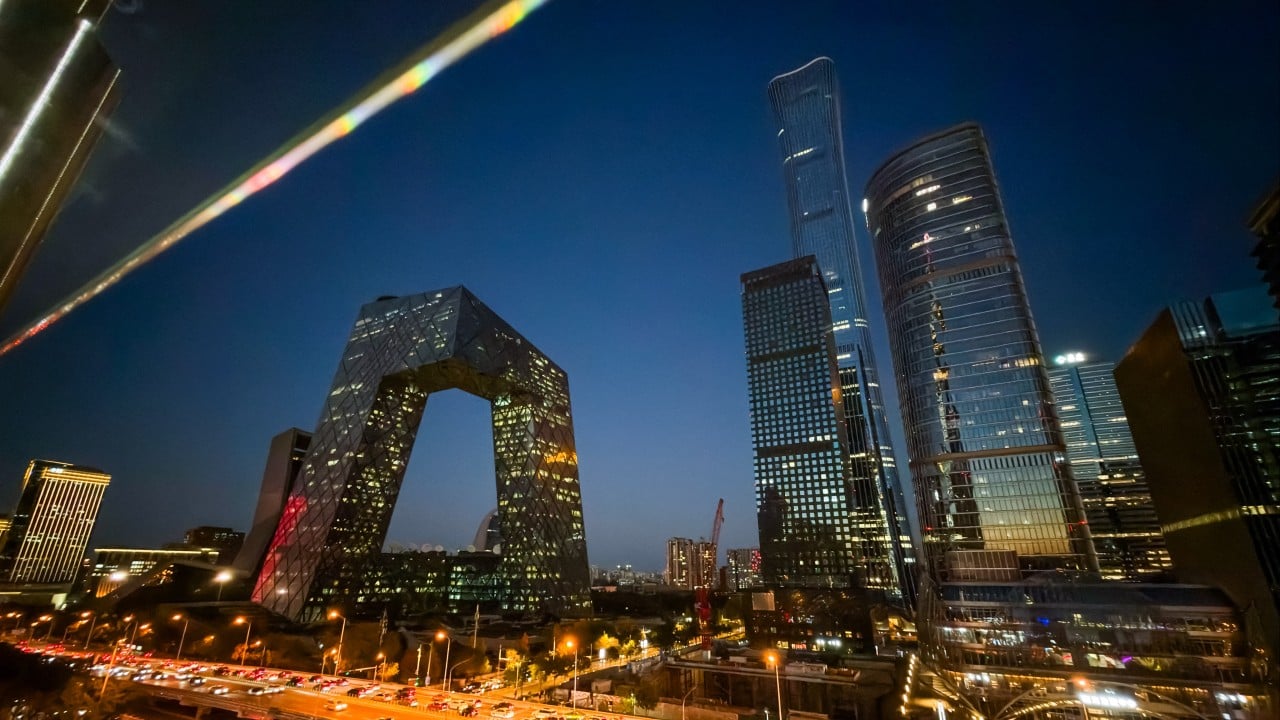
Walk through Central in Hong Kong or the Lujiazui district in Shanghai at dusk. The architecture is breathtaking. These are cathedrals of capital, steel-and-glass monuments that stretch so high they seem to scrape the belly of the clouds. They were built on a singular, intoxicating promise: that the trajectory of growth would always be a vertical line.
But look closer at the windows as the sun dips below the horizon. In floor after floor of the world’s most expensive real estate, the lights don't come on. There are no flickering monitors, no late-night analysts hunched over spreadsheets, no sounds of muffled heels on plush carpeting. Meanwhile, you can find similar events here: Structural Accountability in Utility Governance: The Deconstruction of Southern California Edison Executive Compensation.
The silence is expensive.
According to the latest data from Cushman & Wakefield, we are witnessing a historic collision between ambition and reality. Across Mainland China and Hong Kong, the supply of premium "Grade A" office space is hitting a massive peak. At the exact same time, the hunger to fill those desks is cooling. It is a mathematical standoff that tells a much deeper story about how our world is changing—and what we get wrong about the value of a physical desk. To understand the complete picture, we recommend the recent report by The Economist.
The Architect’s Dilemma
Consider a man named Chen. He is a hypothetical developer, but his story is repeated in boardrooms from Shenzhen to Beijing. Five years ago, Chen broke ground on a sixty-story marvel. He secured the financing when interest rates were manageable and the demand for "prestige addresses" was a fever. To Chen, the building wasn't just a structure; it was a bet on the future of the global economy.
He calculated his returns based on a world that no longer exists. He didn't account for a global shift in how we define "work." He didn't foresee a cooling tech sector or a more cautious approach to corporate expansion. Now, his tower is nearly finished. The lobby is polished marble. The elevators are the fastest in the province.
He has everything a tenant could want, except the tenant.
Chen’s predicament is the macro-economic reality of the region. In the top-tier cities of Mainland China—Beijing, Shanghai, Guangzhou, and Shenzhen—nearly one-fifth of Grade A office space sat empty by the end of last year. In some hubs, vacancy rates are creeping toward 20%. For a market that used to treat 5% vacancy as a crisis, these numbers are a scream.
The Ghost of 2026
The year 2026 is becoming a focal point for economists. It marks the apex of a construction cycle that started when the world felt invincible. Projects that were greenlit half a decade ago are finally reaching completion, dumping millions of square feet of workspace onto a market that is already full.
It is a surplus of riches that nobody can afford to buy.
In Hong Kong, the situation carries a different kind of weight. For decades, the city held the title of the world’s most expensive office market. Getting a floor in the IFC or the Landmark was the ultimate signifier of "having arrived." But even there, the vacancy rate has hovered around 15%. When you walk the streets of Admiralty, you aren't just seeing buildings; you're seeing a fundamental shift in the city’s identity.
The "demand lag" the analysts talk about isn't just a line on a chart. It’s a reflection of human hesitation. Multinational firms are shrinking their footprints. They are realizing that a team of fifty doesn't necessarily need fifty desks every Tuesday. They are looking at the rent—the highest in the world—and they are asking: "What exactly are we paying for?"
The Gravity of the Interior
Inside these buildings, the air feels different. There is a specific kind of stillness that exists in an empty office. It’s the smell of new carpet and the hum of an HVAC system cooling a room where no one is breathing.
Economics teaches us that when supply goes up and demand goes down, prices must fall. We are seeing this play out in real-time. Landlords are no longer just offering four walls and a view. They are desperate. They are offering "rent-free" periods that stretch for months. They are paying for the interior fit-outs, covering the cost of the desks, the wiring, and the espresso machines just to get a signature on a lease.
But even a free month of rent can't fix a structural problem.
The problem is that we are building 20th-century solutions for a 21st-century workforce. We are building massive, centralized hubs at a time when the workforce is becoming decentralized. We are stacking people on top of each other in city centers while those same people are yearning for shorter commutes and more flexibility.
The Ripple Effect
The stakes are higher than just the profit margins of developers like Chen. The office market is the backbone of the urban ecosystem.
Think about the noodle shop on the corner. Think about the dry cleaner three blocks over. Think about the transit systems that were designed to funnel hundreds of thousands of bodies into these glass canyons every morning. When the buildings stay empty, the ecosystem starves.
In Mainland China, the pressure is intensified by a broader property sector that has been wobbling for years. The "premium" office segment was supposed to be the safe harbor—the high-end, stable asset that would weather any storm. Seeing cracks in this specific foundation is rattling the confidence of investors who thought they were immune to the volatility of the residential market.
A New Definition of Value
We have spent a century believing that the office was the "hearth" of the business. It was where culture was made. It was where deals were struck over coffee.
Now, we are entering a period of forced introspection. If a building in Shanghai stays empty for three years, is it still a "Grade A" asset? Or is it just an expensive pile of materials?
The truth is that the supply peak of 2026 will eventually pass. The buildings will remain. They aren't going anywhere. But the terms of their existence have changed forever. The leverage has shifted from the person who owns the view to the person who decides where to open their laptop.
The Loneliness of the Skyline
As the lights stay dim in those high-altitude windows, it's easy to view this as a failure of planning or a glitch in the market cycle. But there is something almost poetic about it. These towers were built to be symbols of reach and power. Now, they stand as symbols of a world trying to figure out what comes next.
The glass is still there. The views are still magnificent. The elevators still whisper as they fly toward the clouds.
But the people haven't come back. At least, not in the numbers we expected. We are left with a skyline that is overbuilt and under-loved, a forest of steel waiting for a reason to wake up.
The sun sets on the Bund, and the shadows of the skyscrapers grow long, stretching across the water. They look like fingers reaching for a future that keep moving just out of grasp. The buildings aren't failing; they are simply waiting for us to decide what a "workplace" is actually worth. Until then, the glass canyons will remain silent, beautiful, and hauntingly empty.