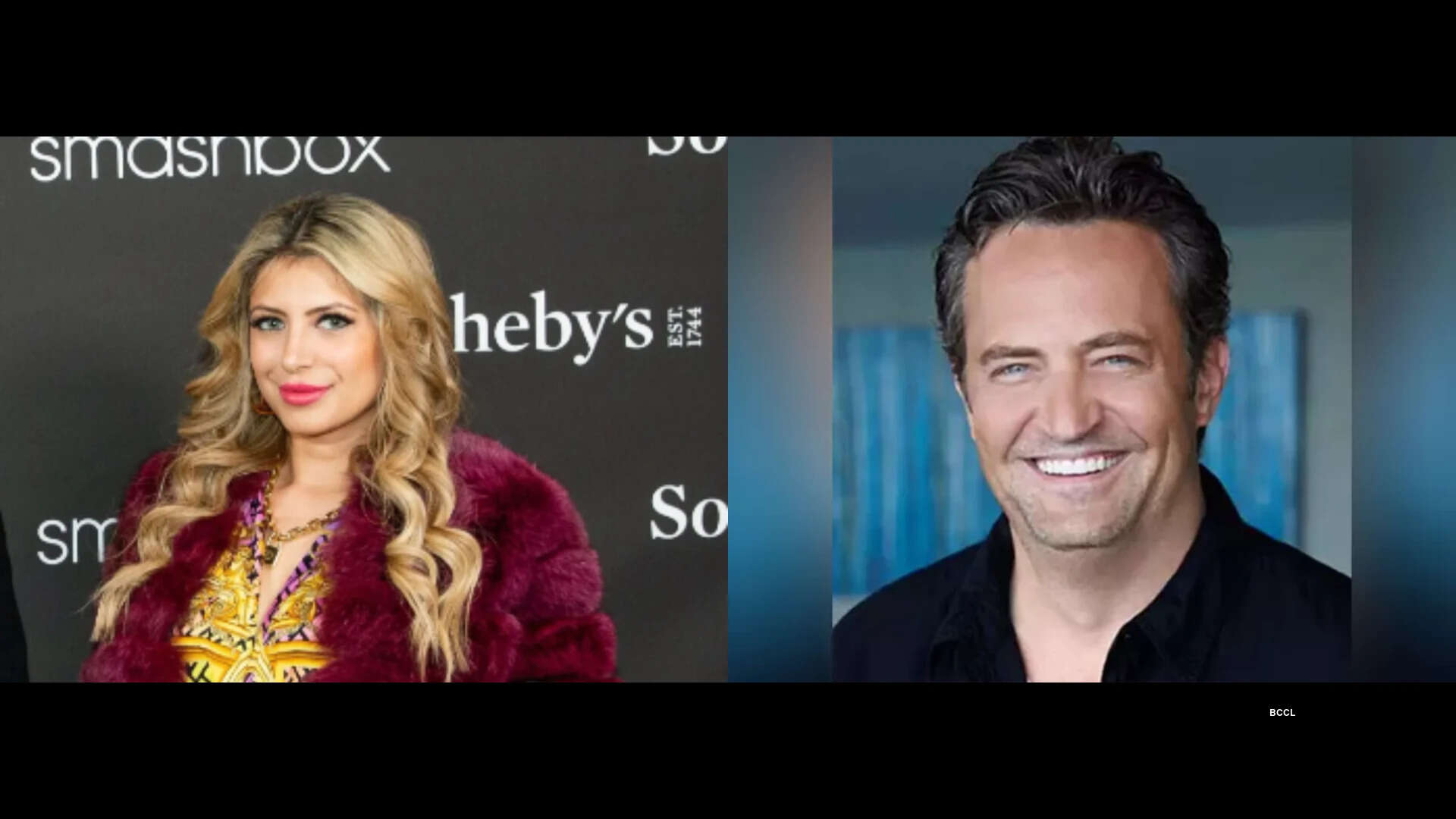
The fifteen-year sentence handed to Jasveen Sangha, the woman the Department of Justice branded the Ketamine Queen, marks the end of a legal saga but only the beginning of a much harder conversation about the industrialization of celebrity addiction. Sangha’s conviction for her role in the death of Matthew Perry wasn’t just a victory for federal prosecutors; it was a rare glimpse into the specialized black markets that cater exclusively to the wealthy, the famous, and the desperate. While the headlines focused on the tragic loss of a sitcom icon, the evidence presented in court revealed a cold, calculated business model that relied on a network of enablers, crooked doctors, and the lethal efficiency of high-grade narcotics.
The sentencing of Sangha and her co-conspirator, Dr. Salvador Plasencia, clarifies the mechanics of the tragedy. Perry didn't just stumble into a relapse. He was systematically targeted by a distribution ring that saw his struggle as a profit center. When a celebrity of Perry’s stature seeks help for depression or anxiety, they are often steered toward ketamine infusion therapy, a legitimate but loosely regulated medical frontier. This creates a dangerous entry point. It bridges the gap between clinical care and street-level dealing, allowing predators to masquerade as providers.
The Architecture of a High Society Drug Ring
Jasveen Sangha did not operate from a dark alley. She ran her enterprise out of a North Hollywood "stash house" that looked like any other upscale residence. This is the hallmark of the modern boutique dealer. They offer a sense of safety and exclusivity that traditional drug trafficking lacks. To a client like Perry, Sangha wasn't a "dealer" in the gritty sense; she was a fixer who could provide "unmarked" vials of high-purity ketamine that bypassed the prying eyes of assistants and sober coaches.
The prosecution’s case rested on the digital trail left by this operation. It was a business built on Signal messages and encrypted chats, where Perry was referred to as a "customer" and his life was balanced against the $55,000 he spent in his final weeks. This wasn't about the drug itself as much as it was about the access. Sangha provided the product, but the infrastructure was bolstered by Dr. Plasencia, who reportedly mocked Perry’s desperation in text messages, wondering aloud how much the "vandal" would pay.
This symbiotic relationship between a licensed physician and an unlicensed distributor is what made this case particularly heinous. The doctor provided the medical legitimacy, while Sangha provided the volume. It is a lethal combination that exists in every major metropolitan hub where the pressure to perform meets an endless supply of disposable income.
The Ketamine Loophole and the Myth of Safety
Ketamine occupies a strange gray area in the American pharmacopeia. Originally developed as an anesthetic, it has gained traction as a miracle cure for treatment-resistant depression. However, the distance between a controlled clinical setting and a private residence is where the danger lives. Perry was receiving legitimate treatments, but when those weren't enough, he turned to the underground market to supplement his needs.
The problem is one of perception. Because ketamine is used in hospitals, users often perceive it as "safer" than heroin or fentanyl. They are wrong. When administered without respiratory monitoring or professional supervision, ketamine causes a profound loss of motor control and consciousness. For Perry, who was found face-down in his hot tub, the drug was a physical anchor. He didn't just overdose; he was incapacitated in a way that made survival impossible.
The "Ketamine Queen" brand was built on this false sense of security. Sangha’s clients believed they were getting a premium product, but they were actually participating in a high-stakes gamble with a substance that shuts down the body’s most basic reflexes. The fifteen-year sentence reflects the court's recognition that Sangha wasn't just selling drugs; she was selling a lethal illusion of medical-grade safety.
The Enabler Economy
We have to look at the people surrounding Perry to understand how this progressed so far without intervention. In the world of high-level talent, there is an entire economy built on saying "yes." Personal assistants, live-in coaches, and secondary medical staff often find themselves in a position where their livelihood depends on the happiness of the principal. This creates a vacuum of accountability.
Kenneth Iwamasa, Perry’s longtime assistant, pleaded guilty to conspiracy to distribute ketamine. He was the one who physically administered the shots. Think about that for a second. A man with no medical training was injecting a powerful anesthetic into a person with a known history of severe substance abuse, multiple times a day. This happened because the "inner circle" in Hollywood is often a fortress that keeps the truth out rather than keeping the client safe.
The industry analyst sees this as a systemic failure. When a star is working, they are a multi-million dollar asset. Stopping production for a rehab stint costs money for studios, agents, and managers. There is a silent, crushing pressure to keep the engine running, even if the driver is falling apart. Sangha and Plasencia simply filled the demand that the industry’s high-pressure environment created.
Tracking the Money Trail
The financial records revealed during the trial should be a wake-up call for regulators. The sheer volume of cash moving through these private transactions is staggering.
- $2,000 per vial: The markup on ketamine that costs a fraction of that in a legal setting.
- Bulk discounts: Evidence showed Sangha offered "deals" for larger orders, treating a controlled substance like a wholesale commodity.
- The "Celebrity Tax": Dealers like Sangha charge more because they know their clients can’t report them without ruining their own reputations.
A Warning to the Medical Community
The conviction of Dr. Plasencia is perhaps more significant than Sangha’s. While Sangha was a career criminal, Plasencia was a gatekeeper who betrayed his oath. His involvement highlights a disturbing trend where doctors "moonlight" as concierge providers for the elite, trading their prescriptions for high-ticket cash payments.
Regulatory bodies have been slow to catch up with the ketamine boom. Unlike opioids, which have been under intense scrutiny since the Purdue Pharma settlements, ketamine is often treated with a lighter touch. This must change. The "Perry Case" proves that without strict oversight of how these vials move from manufacturers to private clinics and into the hands of individuals, more tragedies are inevitable.
Federal authorities are now using the Sangha conviction as a blueprint for future investigations. They are no longer just looking for the person on the corner; they are looking for the "K-Queen" in the penthouse and the doctor in the luxury office who makes the whole thing possible. They are following the digital breadcrumbs and the bank transfers that define the modern drug trade.
The Cost of Silence
Matthew Perry spent decades being honest about his struggle. He wrote a book about it. He gave interviews about it. He spent millions of dollars trying to get sober. Yet, in his final days, he was surrounded by people who saw his pain as a transaction. That is the most brutal truth of this entire investigation.
Jasveen Sangha will spend the next fifteen years in a federal cell, but the market she served hasn't disappeared. As long as there is a demand for "discreet" solutions to mental health crises, there will be someone ready to fill it. The sentencing is a deterrent, certainly, but it doesn't fix the underlying culture that allowed a world-famous actor to die in a hot tub while his assistant injected him with black-market anesthetics.
The real work lies in dismantling the "concierge" drug culture that treats addiction as a lifestyle choice rather than a medical emergency. If the industry continues to value the "show" over the person, Sangha’s chair in the stash house won't stay empty for long. The prosecution of the Ketamine Queen was a necessary strike against a specific predator, but the environment that allowed her to thrive remains largely untouched. Access to the wealthy will always be a commodity, and in Hollywood, that access is frequently bought with a syringe.