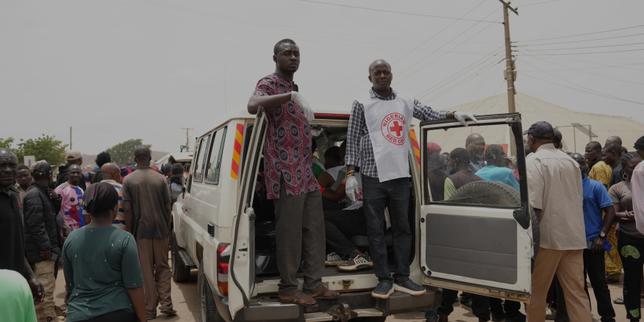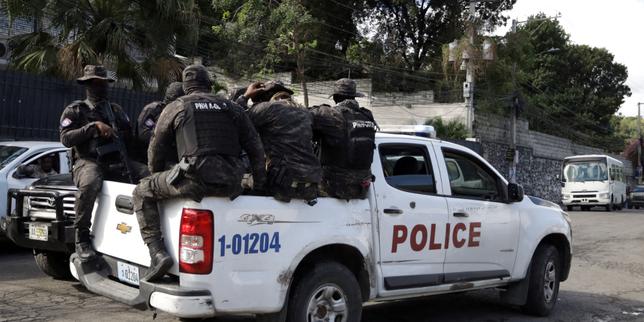
Sixteen dead in a neighborhood that most editors couldn't find on a map without a GPS. Another "senseless" gang attack in Port-au-Prince. The headlines follow a weary, predictable script: the tragedy, the body count, the quote from a displacement camp, and the inevitable call for "international intervention."
This narrative is a lie. It is a comfortable, western-centric fairy tale that treats Haitian gangs like a sudden weather event or a localized virus.
If you think these killings are about "lawlessness," you aren't paying attention. This isn't the absence of a state. This is the evolution of a new one. While the mainstream media wrings its hands over the body count, they miss the cold, tectonic shift underneath: Haiti’s gangs are no longer mere criminal enterprises. They have become the country’s most functional political entities, and the international community’s obsession with "restoring order" is exactly what keeps the cycle of blood moving.
The Myth of the "Criminal" Vacuum
The standard reporting suggests that gangs like the Viv Ansanm coalition exist because the Haitian state collapsed. That’s backwards. The gangs exist because they are the infrastructure of the state.
For decades, the Haitian elite and political class used armed groups as private enforcement. When the central government finally shattered, these groups didn't just stay in the shadows; they stepped into the light to provide the only thing the official government couldn't: a hierarchy.
When sixteen people die in an attack, the media calls it "chaos." In the brutal logic of territorial control, it's an acquisition. It’s a merger. It’s a hostile takeover of a logistics hub. In Haiti, territory equals tax revenue. If you control the road, you control the food. If you control the food, you own the people.
We keep asking why the police can't stop them. It’s a stupid question. You are asking a defunct, underfunded security force to fight a war against their own landlords and cousins. The "state" and the "gangs" are not two separate teams playing a game; they are the same players wearing different jerseys depending on who is cutting the check.
Stop Calling it a Security Crisis
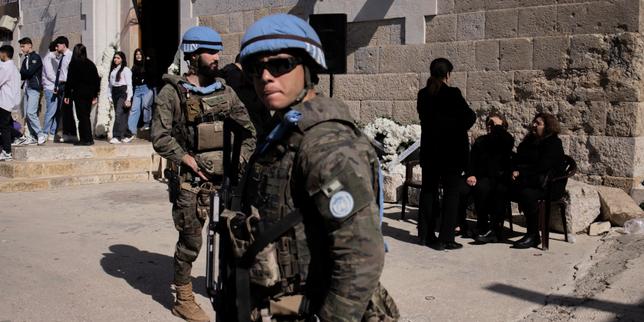
Calling Haiti a security crisis is a lazy intellectual shortcut. It suggests that if you just send enough Kenyan police or UN peacekeepers with armored vehicles, the problem evaporates.
It won't. I have watched billions of dollars in foreign aid and thousands of foreign boots vanish into the Haitian soil over the last twenty years, leaving behind nothing but cholera and scandal.
This is a sovereignty crisis.
The gangs have realized something the diplomats haven't: traditional Westphalian sovereignty—the idea of a central government with a monopoly on violence—is dead in the Caribbean. Jimmy "Barbecue" Chérizier doesn't want to be a drug lord; he wants to be a revolutionary. Whether he’s sincere or not is irrelevant. What matters is that he is speaking the language of political legitimacy while the "official" transitional council speaks the language of a corporate board meeting held in a bunker.
When a gang attacks, they aren't just killing; they are campaigning. They are demonstrating that the transitional council cannot protect you. They are proving that the only power that matters is the power that can reach into your house and take your life. Every massacre is a ballot cast in blood.
The Intervention Trap
Every time a headline screams about a new massacre, the reflex is to demand the "international community" do something.
Here is the brutal truth: The international community is the reason the gangs are winning.
By insisting on propping up "interim" governments that have zero popular mandate, the US and its allies create a permanent legitimacy gap. The gangs fill that gap. We provide the gangs with their most effective recruitment tool: an external enemy.
Imagine a scenario where a foreign power lands troops in your city to protect a government you didn't vote for and haven't seen in years. Who do you turn to? You turn to the guy who has been providing the local "protection," even if that guy is the one who burned down the pharmacy last week.
We are stuck in a feedback loop of performative humanitarianism.
- A massacre occurs.
- The world expresses "deep concern."
- A new task force is announced.
- The gangs, sensing a threat to their business model, escalate violence to prove the task force is useless.
- Repeat.
The Economy of the Bullet
We need to stop talking about "aid" and start talking about "incentives." Haiti is not poor; it is being looted. But the looters aren't just guys with mismatched camouflage and AK-47s.
The gangs are the muscle for an economic system that thrives on instability. Chaos keeps the ports "flexible." Chaos ensures that no regulatory body can check where the money goes. If you are a high-level importer in Port-au-Prince, a stable, law-abiding government is your worst nightmare. It means taxes. It means inspections. It means competition.
The sixteen people who died in the latest attack weren't victims of a lack of "values." They were externalities in a high-stakes trade war. The gangs move the needle on the price of fuel, the availability of grain, and the flow of weapons.
If you want to stop the killings, you don't send more guns. You stop the flow of money that makes those guns a good investment. But that would require auditing the very elites that the international community invites to "stability talks" in luxury hotels in Jamaica.
The Uncomfortable Reality
The "lazy consensus" is that Haiti needs a return to normalcy.
Newsflash: This is the new normalcy.
The gangs have achieved a level of vertical integration that any Fortune 500 company would envy. They control the labor (the youth), the logistics (the ports), and the marketing (social media). They are the only ones providing a path for advancement for a generation of men who have been told by the world that they don't exist.
We keep looking for a "political solution" that looks like a Western democracy. It’s not coming. The solution that is currently winning is a warlord-led feudalism. It is violent, it is ugly, and it is incredibly stable in its own horrific way.
The media focuses on the sixteen dead because it’s a number they can quantify. They can’t quantify the millions who have silently accepted that the gang leader is their president, their judge, and their priest.
Stop asking when the government will take back control. There is no government to take it. There is only the slow, bloody birth of a narco-state that we helped conceive.
If you are waiting for the next international mission to fix this, you are part of the problem. You are waiting for a ghost to save a graveyard. The only thing "intervention" does is buy more time for the same players to reorganize.
The massacre isn't a sign that the system is failing. It’s a sign that the system is working exactly as intended for the people holding the triggers.
Stop mourning the "collapse" of Haiti. Start looking at the entity that is rising to replace it. It isn't a gang. It's the future of failed-state governance, and it doesn't care about your hashtags.