The "stoic athlete" trope is a lie we tell ourselves to sleep better at night.
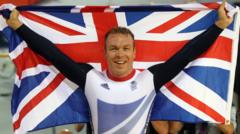
When Sir Chris Hoy, a man with six Olympic gold medals and the thighs of a track-cycling god, tells the world he is focusing on "what he can control" after a terminal cancer diagnosis, the world nods in collective, teary-eyed agreement. It sounds noble. It sounds disciplined. It sounds like the ultimate masterclass in mental toughness.
It is actually a dangerous simplification of human biological and psychological reality.
The advice to "focus on what you can control" has become the "thoughts and prayers" of the wellness industry. It’s a bumper-sticker philosophy that ignores the brutal, messy complexity of being a biological organism in a state of decay. If you spend your final years—or even your healthy years—obsessing over the narrow bandwidth of your "controllables," you aren't achieving mastery. You are building a high-walled prison of denial.
The Myth of the Stoic Circle
Modern self-help gurus love the Circle of Influence. They draw a little ring and tell you that inside are your actions, your words, and your attitude. Outside is the weather, the economy, and the rogue cells mutating in your prostate or lungs.
This binary is a comforting fiction.
In reality, the boundary between what we control and what we don't is a porous, shifting grey zone. When you are hit with Stage 4 cancer, your "attitude" isn't a lever you just pull. It is a byproduct of your neurochemistry, your inflammatory markers, and your pain threshold. Telling a person with a systemic biological failure to "control their mind" is like telling a man in a hurricane to control his umbrella. It might help for a second, but it’s not the point of the storm.
The obsession with control is a trauma response. When the floor drops out from under a high-performer—an athlete who has spent decades engineering every millisecond of their existence—their instinct is to engineer the catastrophe. They want to turn dying into a training block. They want to turn grief into a spreadsheet.
Why Acceptance is Faster Than Control
The competitor's narrative suggests that by narrowing your focus, you find peace. I’ve seen elite performers in business and sports crumble under this weight because "control" requires constant, hyper-vigilant effort. It is exhausting to constantly police your own thoughts to ensure they remain "positive" or "constructive."
The counter-intuitive truth? Radical surrendering to the uncontrollable provides more utility than clinging to the controllable.
When you stop trying to manage your "legacy" or your "mindset," you free up cognitive resources to actually experience the time you have left. Stoicism, in its original, un-diluted form, wasn't about micromanaging your reaction to keep a stiff upper lip; it was about the total, ego-stripping realization that you are a tiny speck of dust in a vast, uncaring cosmos.
Chris Hoy is an outlier. He has a physiological and psychological architecture built for extreme stress. For the average person, the "focus on control" advice leads to a secondary layer of suffering: the guilt of failing to be "strong enough." If they feel despair, they feel they have failed the "control" test.
The Data on "Fighting" Cancer
We have a cultural obsession with "fighting" disease. We use martial language—battles, warriors, champions. But the data on the "fighting spirit" is surprisingly thin.
Studies, such as those published in The Lancet Oncology, have shown that "fighting spirit" or "stoic acceptance" has no statistically significant impact on actual survival rates for most major cancers. Your T-cells do not care if you have a "can-do" attitude. They care about immunotherapy, genetic mutations, and metabolic pathways.
The danger of the Hoy narrative is that it reinforces the idea that the "right" way to be ill is to be productive, focused, and composed. It commodifies the patient. It turns the dying process into a performance of "resilience" for the benefit of the healthy people watching.
The High Cost of the "Controllable" Mindset
When you focus exclusively on what you can control, you often ignore the most important thing: the people around you who are out of your control.
- The Isolation of Agency: By focusing on your response and your actions, you create a barrier. You become a project to be managed rather than a human to be loved.
- The Planning Fallacy: You spend your limited energy planning for a future that is mathematically unlikely to occur, rather than sitting in the discomfort of the present.
- The Suppressed Shadow: Real grief, real terror, and real anger are deemed "uncontrollable" and therefore "unproductive." So, you bury them. And they rot you from the inside faster than the tumor.
Imagine a scenario where a patient spends their last six months optimizing their diet, their sleep, and their "positive self-talk" to maintain a sense of agency. They die anyway. Was that time "controlled," or was it stolen by an obsession with a result they couldn't influence?
Stop Optimizing Your Death
The industry tells you to be "inspiring." I'm telling you to be real.
If you get the news that the clock is ticking, the most "rational" thing to do isn't to start a new "life management" protocol. It’s to admit that you are no longer the captain of the ship. The ship is going down. You can spend your last hour polishing the brass on the deck, or you can go to the bar, find your friends, and watch the sunset.
The "controllable" obsession is just the final stage of the productivity cult. It suggests that even in death, we must be "effective."
The Superior Path: Total Vulnerability
Instead of focusing on what you can control, focus on what you can endure and what you can receive.
- Drop the Mask: If you’re terrified, be terrified. The effort of hiding fear is a waste of your remaining ATP.
- Cease the "Winning" Narrative: You aren't "losing" a battle. You are completing a biological cycle. There is no shame in a body doing what bodies have done for a billion years.
- Outsource the Control: Let the doctors handle the biology. Let your family handle the logistics. Your only job is to exist until you don't.
Chris Hoy’s approach is a testament to his character as a champion, but it shouldn't be the blueprint for your humanity. You don't owe the world a "focus on what you can control" masterclass. You don't owe anyone a dignified exit.
The most powerful move isn't taking control. It’s finally admitting you never had any to begin with.
Stop trying to win at dying. Just die. Underneath the terror of that thought is the only real peace you will ever find.