The wind in Nuuk doesn't just blow. It carves. It carries the scent of ancient ice and the salt of a North Atlantic that doesn't care about real estate portfolios or the bruised egos of world leaders. In August 2019, that wind carried a proposal so absurd it felt like a fever dream, yet so consequential it managed to topple a government four thousand miles away in Copenhagen.
It started with a tweet. Then a headline. Then a diplomatic earthquake.
When the suggestion was made that the United States should simply purchase Greenland—the world’s largest island and a semi-autonomous constituent of the Kingdom of Denmark—the initial reaction in the Danish Parliament, the Folketing, was a mix of nervous laughter and genuine bewilderment. But the laughter died quickly. What followed was a geopolitical staring match that forced a quiet, stable Scandinavian nation to confront its own identity, its colonial shadows, and the fragile nature of its sovereignty.
The Midnight Sun and the Cold Shoulder
Denmark is a country built on the concept of hygge—a sense of cozy security and social cohesion. It is a nation that prides itself on being a "small state" with a big conscience. Suddenly, it was being treated like a landlord in a hostile takeover.
Imagine being the Danish Prime Minister, Mette Frederiksen. You are leading a new government, focused on climate change and the creeping expansion of the welfare state. Then, overnight, you are told that a chunk of your kingdom—a territory fifty times the size of Denmark proper—is being appraised like a fixer-upper in Queens. Frederiksen’s response was blunt: "Greenland is not for sale. Greenland is not Danish. Greenland belongs to Greenland."
It was a statement of fact, but in the world of high-stakes diplomacy, facts are often secondary to feelings. The "absurd" label she placed on the proposal triggered a cancellation of a planned state visit and a diplomatic frost that hadn't been seen since the Cold War.
But the real story wasn't in the marble halls of Copenhagen. It was in the kitchens of Nuuk and the fishing boats of Ilulissat. For the people of Greenland, the Kalaallit, this wasn't a "bid." It was a reminder that in the eyes of the world's superpowers, their home is often viewed as a strategic chess piece rather than a living, breathing community.
The Tipping Point in the Folketing
Back in Denmark, the political fallout began to crystallize. While the public rallied around the flag in a rare moment of nationalist fervor, the underlying tensions of the Danish Realm began to fray. The "Greenland Question" didn't just stay in the Arctic; it bled into the halls of the Christiansborg Palace.
The Danish government operates on a delicate balance. It is a multi-party system where minor disagreements can lead to major collapses. The Trump proposal acted as a catalyst, exposing deep rifts in how Denmark manages its relationship with Greenland and the Faroe Islands. Critics argued that the government’s handling of the crisis was either too provocative or too submissive.
The snap election didn't happen because of a single tweet. It happened because the tweet acted as a thermal camera, revealing the heat signatures of long-simmering frustrations.
- The Sovereignty Gap: Danes realized they were responsible for the defense and foreign policy of a land they barely understood.
- The Economic Tether: Greenland relies on an annual block grant from Denmark of roughly $600 million. The U.S. proposal, however clumsy, forced a conversation about whether Denmark could actually afford to keep its Arctic jewel if the "big players" started bidding.
- The Climate Anxiety: As the ice melts, the Rare Earth minerals beneath Greenland become accessible. The world wants those minerals for the "green revolution." Denmark found itself caught between its environmental ideals and the raw, dirty reality of resource extraction.
A Walk Through the Gray Streets of Copenhagen
If you walk through Copenhagen in November, the light is a bruised purple. The cyclists pedal with a grim determination. During the lead-up to the snap election, the air was thick with a specific kind of Danish anxiety. In the cafes, people weren't just talking about taxes or healthcare. They were talking about their place in the world.
"Are we just a protectorate now?" a student asked me at a bar near Nyhavn. He wasn't talking about Greenland. He was talking about Denmark. The realization that a single comment from Washington could throw their entire political calendar into chaos was a bitter pill.
The snap election was called not just to seat a new parliament, but to find a mandate. The government needed to know if the people wanted a Denmark that stood defiant against global pressure, or a Denmark that quietly managed its decline from "empire" to "middle power."
The Invisible Stakes of the Arctic
To understand why a real estate offer caused a government to fall, you have to look at a map from the top down. The Arctic is the new Mediterranean. It is the future of global shipping and the front line of the next great resource war.
Denmark, through Greenland, is an Arctic superpower. Without Greenland, Denmark is a small, flat peninsula known for wind turbines and Lego. The stakes weren't just about pride; they were about the seat at the table. If Denmark lost its grip on Greenlandic affairs, it lost its relevance in the most strategic theater of the 21st century.
Consider the hypothetical case of Lars, a fisherman in the North of Jutland. For Lars, Greenland is a place he’s seen in documentaries. But the election triggered by the Greenland bid affects his fuel prices, his fishing quotas, and the likelihood of his son serving in a NATO mission in the high north. The abstract becomes concrete very quickly when the "Game of Thrones" moves to your backyard.
The Vote and the Aftermath
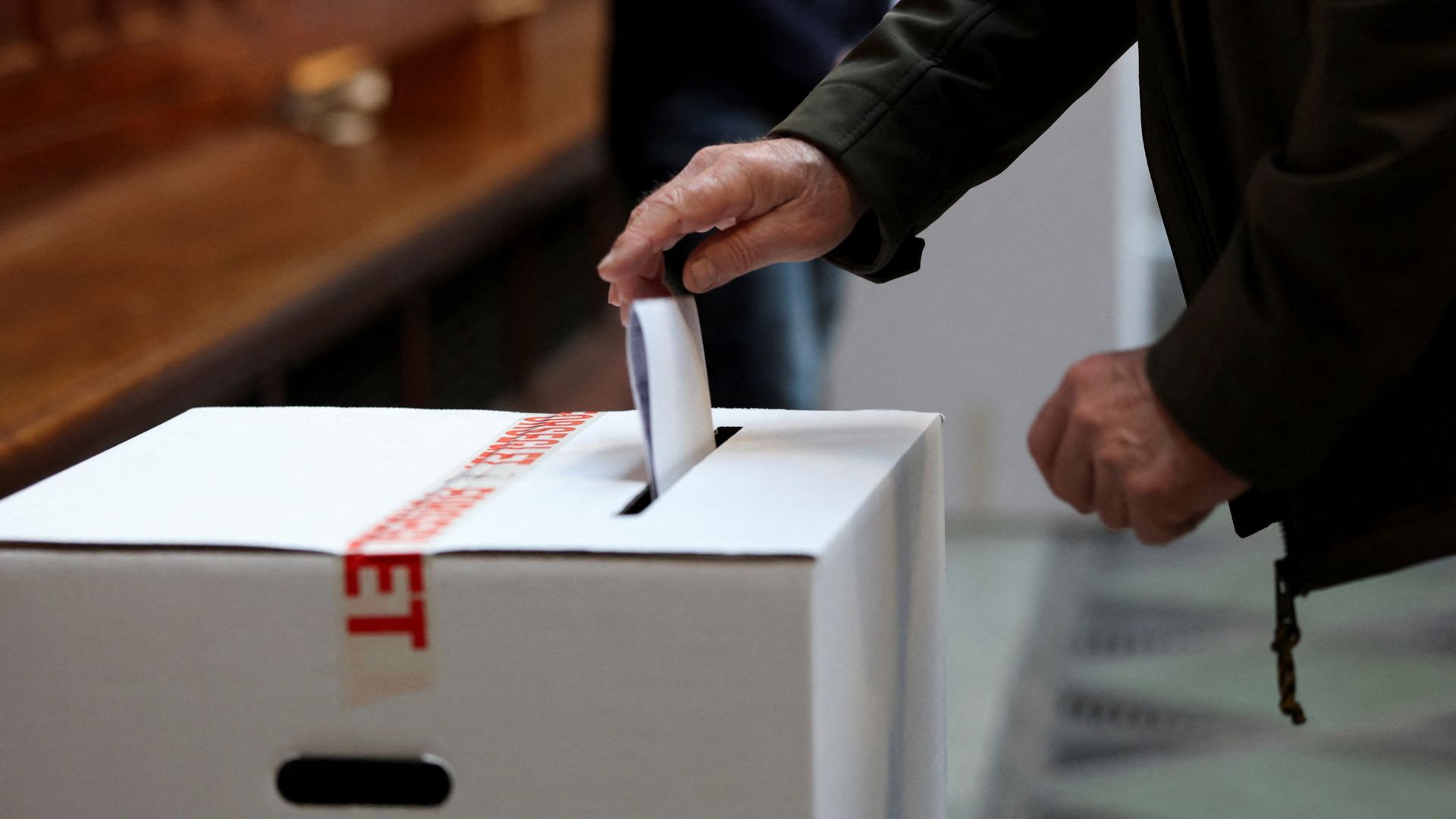
When the Danes finally went to the polls, the mood was somber. There were no victory parades. The results reflected a nation trying to find its footing on shifting ice. The coalition that emerged had to be tougher, more cynical, and more focused on "Arctic Sovereignty" than any government in recent history.
They learned that "no" is a complicated word. It requires a military presence to back it up. It requires an economic alternative to offer the Greenlandic people. And it requires a diplomatic finesse that can navigate the whims of a volatile superpower without breaking the country's spirit.
The election passed, the headlines faded, and the "for sale" sign was never posted. But something in the Kingdom of Denmark changed forever. The innocence of being a "small, happy country" was gone. They are now a nation awake to the cold reality that their land is a prize, and the world is no longer asking nicely.
In the end, the ice didn't just melt in the Arctic. It melted in the hearts of those who thought geography was a shield. The wind continues to carve the landscape in Nuuk, indifferent to the ballots cast in Copenhagen, reminding everyone that while governments can fall in a day, the land remains, silent and unbought, waiting for the next person to think they can own the wind.