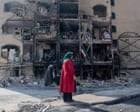
The expansion of the Iran-Israel conflict into a sustained kinetic exchange marks the transition from shadow warfare to a high-intensity attrition cycle. When explosions were reported across Tehran during the second week of active hostilities, the strategic objective shifted from signaling to the systematic degradation of Integrated Air Defense Systems (IADS). To analyze the current escalation, one must move beyond the surface-level reporting of "blasts" and "strikes" to examine the underlying structural logic governing modern missile warfare, logistics chains, and the escalation ladder.
The conflict now operates under a specific cost-function: the ratio of offensive interceptor depletion versus the replenishment rate of precision-guided munitions (PGMs).
The Triad of Persian Defense Infrastructure
The vulnerability of Tehran is not merely a matter of geographic proximity or stealth capability. It is a function of the three pillars supporting Iranian sovereignty.
- Command and Control (C2) Resilience: The centralization of the Islamic Revolutionary Guard Corps (IRGC) creates a single point of failure within the subterranean bunkers of the capital. Unlike decentralized insurgent networks, a state-level military requires synchronized data links. Disruption of these links via electronic warfare or physical strikes on fiber-optic nodes creates a "fog of war" that slows reaction times by minutes—a terminal delay in the era of hypersonic or high-supersonic transit.
- The Deep State Logistics Network: Iran’s missile program relies on a "distributed hardening" strategy. Assets are stored in "missile cities" carved into the Zagros Mountains. Striking Tehran serves to pin down defensive assets (S-300 and Khordad-15 batteries) to the urban center, leaving these peripheral mountain sites more exposed to localized incursions or specialized bunker-busting ordnance.
- Proxy Synchronization: The "Ring of Fire" strategy—utilizing assets in Lebanon, Iraq, and Yemen—functions as a thermal shield. By forcing Israel to commit Iron Dome, David’s Sling, and Arrow interceptors to low-cost drone swarms from the periphery, Iran attempts to drain the technical and financial reserves of the Israeli defense apparatus before the primary exchange occurs over Iranian soil.
The Calculus of Interception and Saturation
The primary technical bottleneck in this conflict is the Saturation Threshold. Every air defense system has a finite number of simultaneous tracking channels. If a battery can track 36 targets but 40 are launched, the remaining four possess a 100% probability of impact, barring mechanical failure.
The explosions in Tehran indicate a successful breach of this threshold or the utilization of "dead zones" in radar coverage. Iran’s reliance on the Russian-made S-300 system presents a specific limitation: the system is optimized for high-altitude, long-range threats but struggles with low-altitude, high-speed cruise missiles or small-diameter "suicide" drones that utilize terrain masking.
The Economic Asymmetry of the Interceptor Gap
There is a fundamental imbalance in the unit cost of engagement.
- Offensive Variable: A Shahed-136 drone costs approximately $20,000 to $50,000.
- Defensive Variable: A single Tamir interceptor (Iron Dome) costs $40,000 to $50,000, while an Arrow-3 interceptor (required for ballistic missiles) can exceed $3 million.
When strikes reach the interior of Iran, the economic burden shifts. Israel must utilize high-end stealth assets (F-35I Adir) or long-range ballistic missiles (Jericho series), which represent a significant "per-shot" investment. Conversely, Iran’s domestic production of short-range ballistic missiles (SRBMs) allows for a high-volume, low-cost offensive. The winner of this phase is not the side with the most "explosions," but the side that maintains a positive inventory of interceptors when the other’s magazine is empty.
Strategic Bottlenecks in the Second Week
As the conflict enters its second week, three specific bottlenecks dictate the tempo of operations.
1. The Intelligence-Striking Loop (F2T2EA)
The "Find, Fix, Track, Target, Engage, Assess" cycle is compressed. In the first 48 hours, both sides exhausted "fixed" targets—known barracks, factories, and warehouses. By week two, the targets are "emergent"—mobile missile launchers (TELs) and moving convoys. This requires persistent Overhead Persistent Infrared (OPIR) surveillance and real-time signals intelligence (SIGINT). The explosions in Tehran suggest that the attacker has established a persistent "kill web" inside Iranian airspace, indicating either a failure in Iranian counter-espionage or a gap in their electronic masking.
2. Energy Infrastructure Vulnerability
Iran’s economy is sensitive to the "Oil-for-Power" nexus. Striking refineries or the Kharg Island terminal does not just remove a revenue stream; it causes a systemic collapse of the domestic power grid. A darkened Tehran is a Tehran that cannot run the industrial cooling systems required for centrifuge arrays or missile assembly lines. This is a "force multiplier" strike—one bomb at a refinery is worth ten bombs at a military base because it degrades the entire state's regenerative capacity.
3. The Escalation Dominance Trap
Both actors are currently struggling with "Escalation Dominance"—the ability to increase the stakes of a conflict such that the opponent cannot follow without incurring unacceptable costs.
- Israel’s Play: Striking the capital directly to signal that no "red line" is sacred.
- Iran’s Play: Threatening the Strait of Hormuz to globalize the cost of the war, forcing international pressure on Israel to de-escalate.
The limitation of the Iranian position is its reliance on "one-shot" deterrence. Once the Strait is closed or a major city is hit, the deterrent is spent, and the response becomes an existential total war for which neither side’s civilian infrastructure is fully prepared.
The Mechanism of Internal Destabilization
Military kinetic energy often converts into political potential energy. In a highly centralized state, the inability of the government to protect the capital's airspace creates a "legitimacy deficit." The psychological impact of explosions in Tehran outweighs the physical damage. It signals to the domestic population and the various factions within the security apparatus that the "Shield of the Revolution" is porous.
This creates a secondary front: the internal security front. The IRGC must divert resources from the external war to internal policing to prevent opportunistic unrest. This diversion of manpower and "brain trust" from the front lines to the streets is a deliberate objective of deep-penetration strikes.
Operational Forecast: The Shift to Industrial Attrition
The conflict will now migrate from tactical skirmishes to the systematic destruction of the "Means of War." Expect the targeting logic to shift toward:
- Dual-Use Power Nodes: Electrical substations that feed both civilian sectors and military radar arrays.
- Specialized Component Ports: Facilities that receive the foreign-made microchips and gyroscopes necessary for Iranian missile precision.
- Hardened C3 Nodes: The elimination of high-ranking decision-makers to force the IRGC into a decentralized, and thus less coordinated, response.
The current trajectory indicates that the "Second Week" is merely the calibration phase. The attacker is mapping the "recovery time" of the Iranian response. If Iran can rebuild or reroute its C2 within 24 hours, the frequency of strikes will increase. If the recovery time is 72 hours, the attacker will shift to a "pulsed" strategy, allowing the defender to start repairs only to destroy the new equipment, maximizing the waste of the defender's remaining resources.
The strategic play here is the implementation of a "Deadlock Strategy." By maintaining a consistent, low-to-medium volume of strikes on Tehran, the attacker prevents Iran from ever fully mobilizing its reserves for a counter-offensive. The Iranian military is forced into a permanent defensive crouch, burning fuel, man-hours, and political capital while their strategic options narrow to a single, desperate choice: total escalation or quiet capitulation. The current explosions are not the end of the campaign; they are the rhythmic "drumbeat" of a long-term neutralization process.