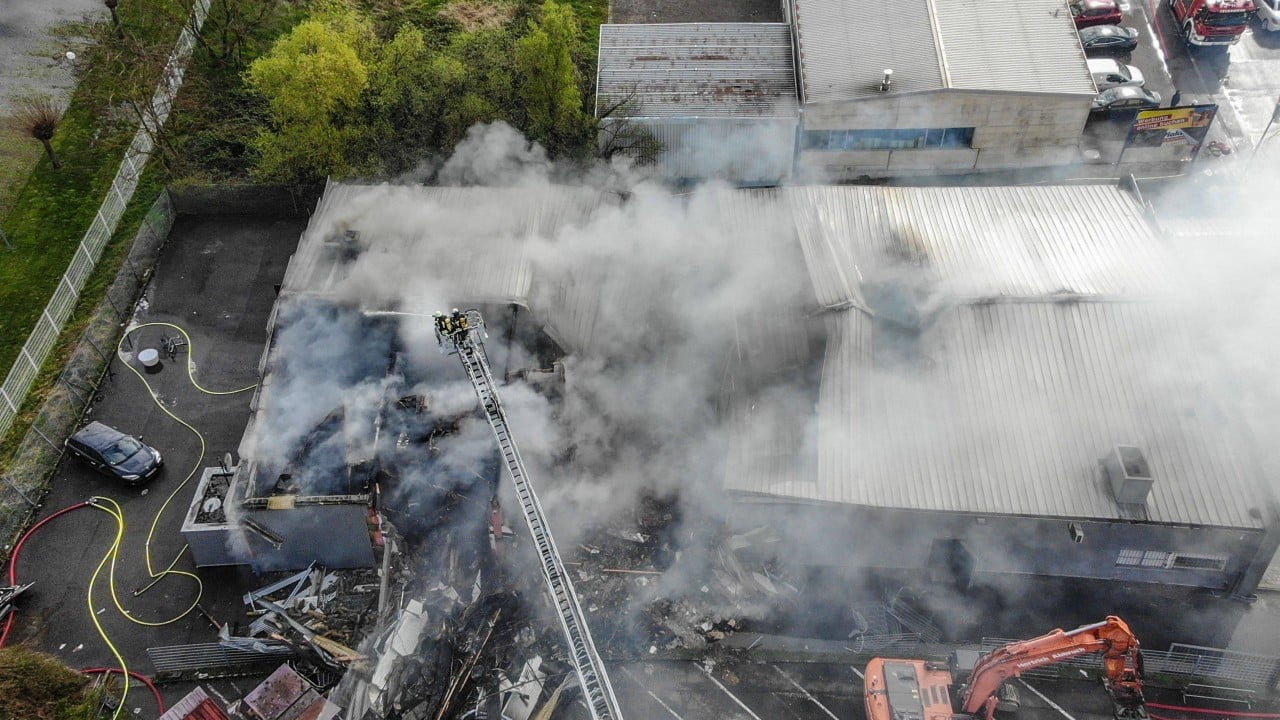
The recent Ukrainian strike on Russian Baltic port infrastructure marks a shift from tactical harassment to the systematic degradation of Russia’s primary revenue-generating nodes. While headlines focus on the raw volume of drones intercepted, the critical metric is not the "kill ratio" of the Russian air defense systems, but the economic and operational disruption caused by the penetration of a high-density, low-cost "swarm" into a previously insulated geographic theater.
The engagement reveals a fundamental asymmetry in the cost-exchange ratio between precision long-range strike capabilities and localized point-defense systems. To understand the strategic implications of this shift, one must analyze the interaction between geographical reach, energy transit dependence, and the saturation limits of modern electronic warfare (EW). Meanwhile, you can find other stories here: The Cold Truth About Russias Crumbling Power Grid.
The Triad of Baltic Energy Vulnerability
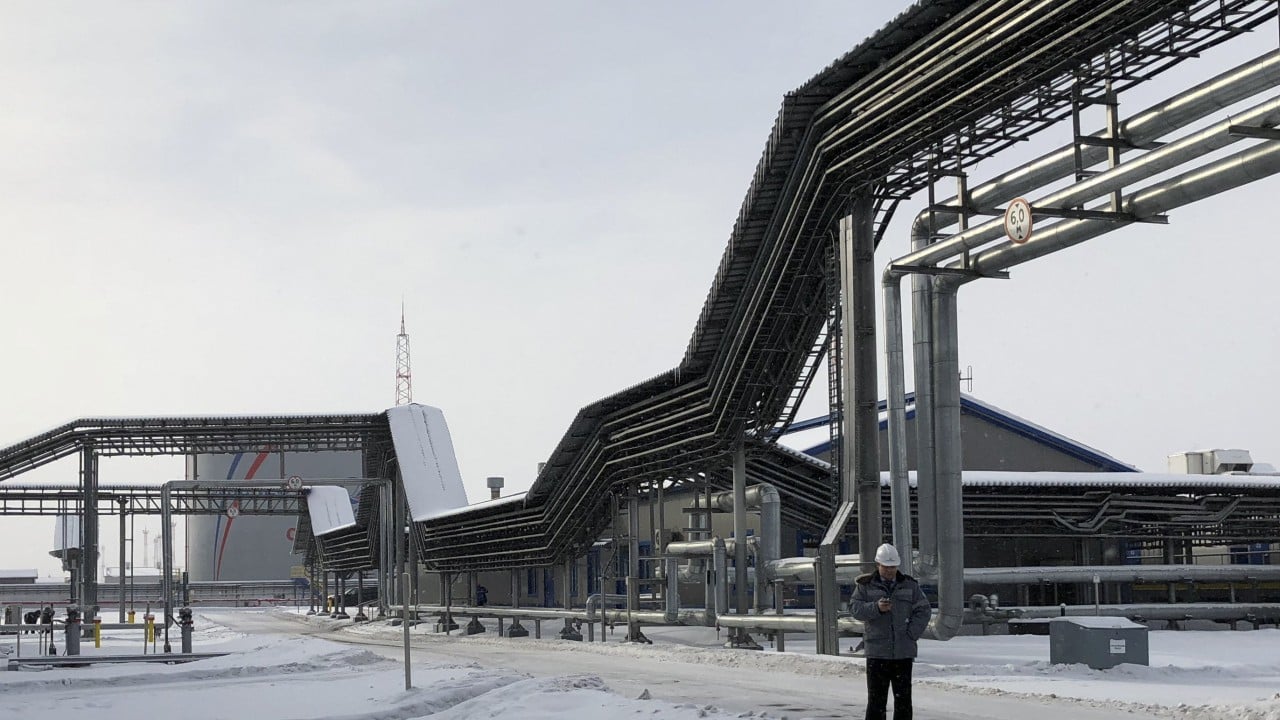
Russia’s Baltic ports, specifically Ust-Luga and Primorsk, serve as the terminal points for a massive network of pipelines and storage facilities. These are not merely shipping points; they are complex industrial ecosystems. A strike in this region targets three distinct vulnerabilities:
- Refinement and Storage Inertia: Unlike mobile military units, oil terminals and gas fractionation plants are "fixed-asset" targets with high thermal signatures and volatile contents. A single successful hit on a stabilized condensate tank can cause a cascade of secondary combustion, requiring days of specialized firefighting that halts all nearby loading operations.
- The Geographic Flank: For the first two years of the conflict, the Baltic was considered a "rear area" protected by the distance from Ukrainian launch points and the proximity to NATO airspace, which complicates Russian radar discrimination. The extension of the Ukrainian strike radius to 1,200+ kilometers forces Russia to redeploy S-400 and Pantsir-S1 units from the front lines or the Moscow "Iron Ring" to protect the northern export corridor.
- Revenue Transit Dependency: Roughly 40% of Russia’s seaborne crude exports exit through the Baltic. Even if a strike fails to destroy a facility, the mere presence of drones in the airspace triggers "Port State Control" protocols and forces insurers to hike premiums, effectively imposing a "shadow tax" on every barrel of Brent or Urals crude shipped from the region.
The Mathematics of Swarm Saturation
Russian reports claiming the destruction of "hundreds of drones" highlight a misunderstood variable in modern attrition warfare: the Saturation Threshold. Every air defense battery, regardless of its sophistication, has a finite number of "fire channels"—the ability to track and engage a specific number of targets simultaneously. To explore the bigger picture, check out the detailed analysis by The Guardian.
The Ukrainian strategy employs a tiered approach to overwhelm these channels:
- Decoy Saturation: Utilizing ultra-low-cost, plywood-and-foam airframes equipped with radar reflectors. These "simulated targets" force the defender to expend expensive interceptor missiles or reveal the position of their radar emitters.
- Electronic Masking: By launching drones in coordinated waves along the coast, the attackers use the "clutter" of the Baltic Sea’s surface and the complex topography of the shoreline to minimize the detection window for ground-based pulse-Doppler radars.
- The Terminal Dive: Modern Ukrainian OWA (One-Way Attack) drones frequently use visual navigation or "terrain matching" in the final kilometer. This bypasses GPS jamming (spoofing), which is Russia's primary defense for the Baltic region. If the drone does not rely on a satellite signal for its final approach, the most powerful EW jammers in the world become irrelevant.
The "hundreds of drones" figure, if accurate, suggests an industrial-scale production capacity that allows Ukraine to treat airframes as "disposable munitions" rather than "valuable assets." This forces the Russian Ministry of Defense into a negative cost-exchange loop: firing a $500,000 missile to down a $20,000 drone.
The Bottleneck of Specialized Component Repair
The long-term impact of these strikes is found in the Replacement Lead Time for Western-manufactured components. Many of the specialized pumps, compressors, and control systems in Russian Baltic terminals were installed by European firms like Siemens, Linde, or ABB.
Under current sanctions regimes, these parts cannot be legally procured. While "gray market" sourcing exists, the lead time for a specialized cryogenic compressor for LNG or a high-capacity oil pump is measured in months, not days. A kinetic strike that destroys a specific, non-redundant component at a fractionation plant can effectively take that plant offline for a fiscal quarter, regardless of how quickly the "fire" is extinguished.
This creates a "Cascading Failure Function" where:
$$Effectiveness = (Direct Damage) \times (Part Scarcity) \times (Insurance Escalation)$$
Strategic Re-alignment of Air Defense Assets
Russia now faces a "Zero-Sum Resource Dilemma." Every Pantsir-S1 system moved to protect the Ust-Luga port is a system removed from protecting:
- Supply lines in the Donbas.
- Ammunition depots in Crimea.
- Command and control nodes within Russia proper.
By expanding the "active" combat zone to the Baltic, Ukraine is effectively diluting the density of Russian air defenses across the entire 2,000-kilometer front. This dilution increases the probability of success for subsequent strikes in other sectors. The Baltic strike is therefore not an isolated event but a "shaping operation" designed to force a tactical error in Russian asset distribution.
The Limitation of Perimeter Defense
Current Russian defense doctrine relies heavily on "Layered Defense," but this system is designed for high-altitude bombers or ballistic missiles, not low-altitude, slow-moving plastic drones with the radar cross-section of a large bird.
The primary failure point in the Baltic engagement appears to be the Detection-to-Engagement Lag. In a dense industrial environment, radar systems often filter out "slow-moving" objects to avoid false positives from birds or wind-blown debris. Ukrainian drone operators are exploiting this "filter gap," flying at speeds and altitudes that mimic natural background noise until the terminal phase of the flight.
Kinetic Pressure as a Diplomatic Variable
The targeting of Baltic ports serves a dual purpose beyond the immediate physical damage. It demonstrates to the Russian domestic elite—many of whom have significant financial interests in the Baltic energy trade—that the "safety" of the Russian hinterland is an illusion.
This creates an internal pressure point. When the cost of the conflict begins to cannibalize the core infrastructure of the state’s revenue, the "Calculus of Continuation" for the Kremlin shifts. The strategic logic is to make the defense of the energy sector more expensive than the revenue it generates.
The operational reality is that no air defense system is 100% effective against a persistent, high-volume threat. In a war of industrial attrition, the side that can produce the most "sufficient" strike platforms at the lowest cost inevitably overcomes the side relying on a finite number of "superior" interceptors. The Baltic strike proves that the "Strategic Depth" traditionally enjoyed by Russia is being eroded by the commoditization of long-range precision flight.
The most effective response for a defender in this scenario is not more missiles, but a radical hardening of the infrastructure itself—installing "anti-drone cages" over critical valves and pumps, and creating "dark" facilities with no thermal or electronic signatures. However, for a 100-acre port complex, such hardening is an engineering task that requires years, not weeks.
The immediate play for the Russian command is a high-risk redistribution of mobile EW units from the Ukrainian border to the Baltic coast, which will almost certainly leave a "seam" in the southern theater that Ukrainian forces are poised to exploit.
Strategic momentum now rests on the ability to maintain a high "launch cadence." If Ukraine can sustain a weekly strike rate on Baltic and Arctic ports, the cumulative degradation of Russian energy exports will reach a tipping point where the state must choose between funding the front and repairing the rear.