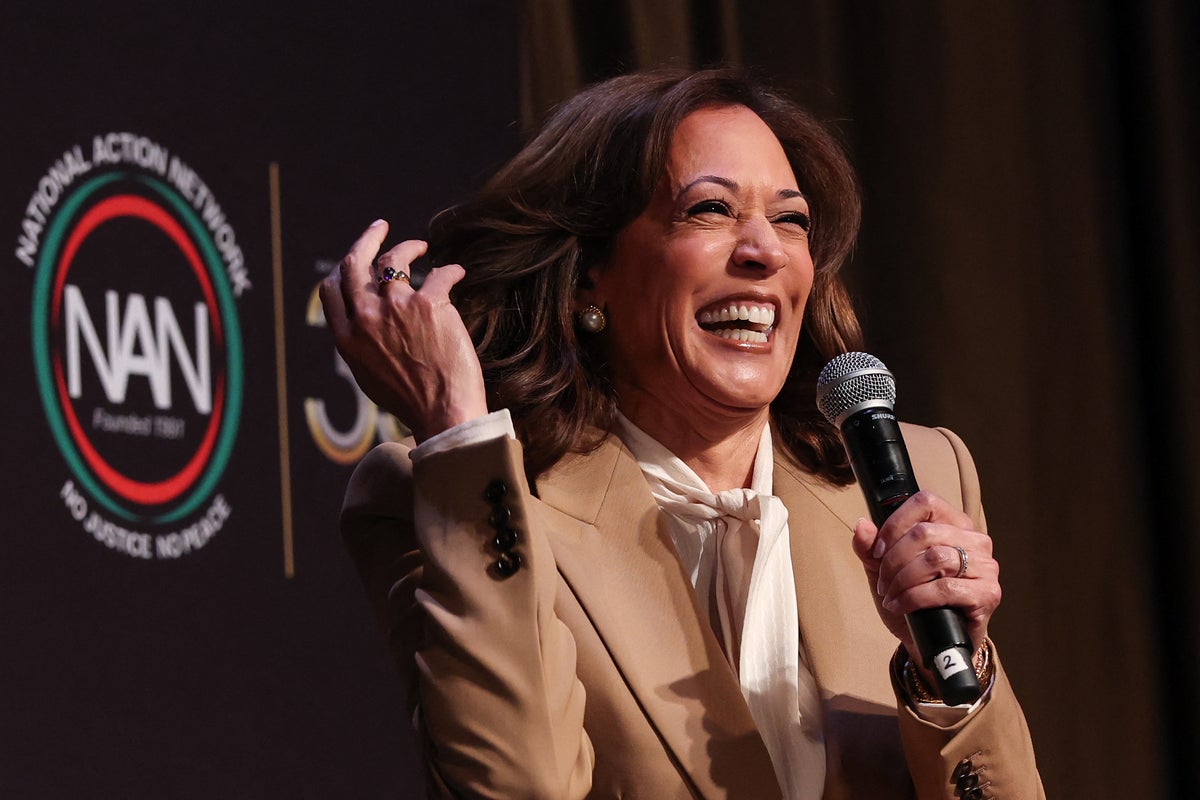
The lights in the Howard University gym had long since dimmed, and the confetti—those small, metallic scraps of a dream deferred—had been swept into gray industrial bins. For Kamala Harris, the silence that followed the 2024 election wasn’t just a lack of noise. It was a weight. When you have stood that close to the glass ceiling, close enough to see the reflections of every girl in America looking up at you, the shattering sounds different when it’s the floor beneath you that gives way instead.
But silence is rarely empty. It is a space for breathing.
Lately, that silence has been replaced by a low, rhythmic hum. It’s the sound of a political engine being stripped down to the bolts, greased, and reassembled. The news cycle buzzed recently with a simple, five-word admission from the Vice President: "I am thinking about it." Those words, dropped like a pebble into the still waters of the 2028 primary cycle, have sent ripples through every marble hallway in Washington.
She isn't just reflecting on a loss. She is calculating a return.
The Anatomy of the Second Act
History is littered with the ghosts of "almost." To lose a presidential race is to undergo a public flaying; every word you ever spoke is dissected by pundits who have never risked a thing. Most people would retreat to a coastal villa, write a memoir with a ghostwriter, and collect six-figure checks for speaking at insurance conventions.
Harris is doing something else.
Think of a marathon runner who trips at the twenty-four-mile mark. The crowd gasps. The knees are bloodied. The logical move is to limp to the medical tent. But Harris is the runner who stays on the track, watching the medal ceremony from the sidelines, not out of spite, but to memorize the pace of the winner.
The reported interest in 2028 isn't a whim. It’s a refusal to let the narrative end on someone else’s terms. To understand her mindset, you have to look past the polling data and into the psychology of the survivor. In the rooms where her closest advisors gather, the conversation isn't about what went wrong in Pennsylvania or the "blue wall" collapse. It's about the evolution of a brand that was rushed into a 100-day sprint and is now being groomed for a four-year marathon.
The Ghost of 2024
Consider a hypothetical voter named Elias. Elias lives in a suburb of Detroit. In 2024, he sat at his kitchen table, staring at a stack of grocery receipts that looked like a ransom note. He liked Harris's poise. He liked the idea of a prosecutor taking on a firebrand. But he felt he didn't know her. To him, she was a person shaped by the shadow of the man she served, a silhouette defined by the light of the Oval Office behind her.
This is the hurdle Harris faces.
The struggle of the Vice Presidency is inherently a struggle for identity. You are the ultimate supporting actor, required to be present but never to outshine. For four years, Harris was the loyal lieutenant. When the baton was finally passed to her, it was mid-stride, under the most grueling conditions imaginable.
The "I am thinking about it" phase is about shedding the silhouette. It’s about Elias. It’s about making sure that by the time 2028 rolls around, he doesn't see a Vice President—he sees a leader who has spent four years in the wilderness and came back with a map.
The Invisible Stakes of 2028
The stakes aren't just about a desk in the West Wing. They are about the soul of a party that is currently wandering through a forest of its own making. There is a tension growing. On one side, there is the call for fresh blood, for governors from the heartland who haven't been "polluted" by the Beltway. On the other, there is Harris: the battle-tested incumbent-in-waiting who has already built the donor networks and survived the most intense scrutiny the world can offer.
If she runs, she isn't just running against Republicans. She is running against the idea that her time has passed.
Politics is a cruel business because it demands you be perfect, yet humans only truly connect with those who have failed and found a way to stand back up. We see ourselves in the recovery, not the victory. If Harris can lean into the vulnerability of her 2024 defeat—if she can stop being the polished prosecutor and start being the woman who felt the sting of a nation’s rejection and decided she still had something to offer—the 2028 map changes entirely.
The Sound of the Gears Turning
Money hasn't stopped flowing. That is the clearest signal in the noise. Donors don't invest in nostalgia; they invest in futures. The fact that the Harris camp remains a hub of activity suggests that the "thinking about it" stage is closer to "planning for it."
We often think of political campaigns as grand ideological battles. In reality, they are logistical nightmares held together by coffee and ambition. To keep that machinery warm for four years requires a rare kind of discipline. It requires a person to wake up every morning, read the unfavorable headlines, and decide that the goal is still worth the price of the journey.
Imagine the dinner table in the Harris-Emhoff household. The debates aren't about policy papers. They are about the toll. They are about what it means to put your family through the grinder one more time. To say "I'm thinking about it" is to acknowledge that the fire hasn't gone out. It’s a warning to anyone who thinks the 2028 field is wide open.
The Long Walk
There is a specific kind of light in Washington in the early morning. It’s cold and gray, hitting the white stone of the monuments with a clinical precision. It doesn't hide the cracks.
Harris is walking through that light now. She is no longer the Vice President of a soaring hope, nor is she the defeated candidate of a dark November. She is something far more dangerous to her opponents: a person with nothing left to lose and four years to prepare.
The road to 2028 is paved with the lessons of a thousand mistakes. She knows the map now. She knows where the potholes are hidden and where the bridges are weak. Most importantly, she knows the sound of the silence that follows a loss, and she has decided she isn't finished talking.
The confetti is gone. The gym is empty. But out in the hallway, the footsteps are steady, rhythmic, and heading toward the door.