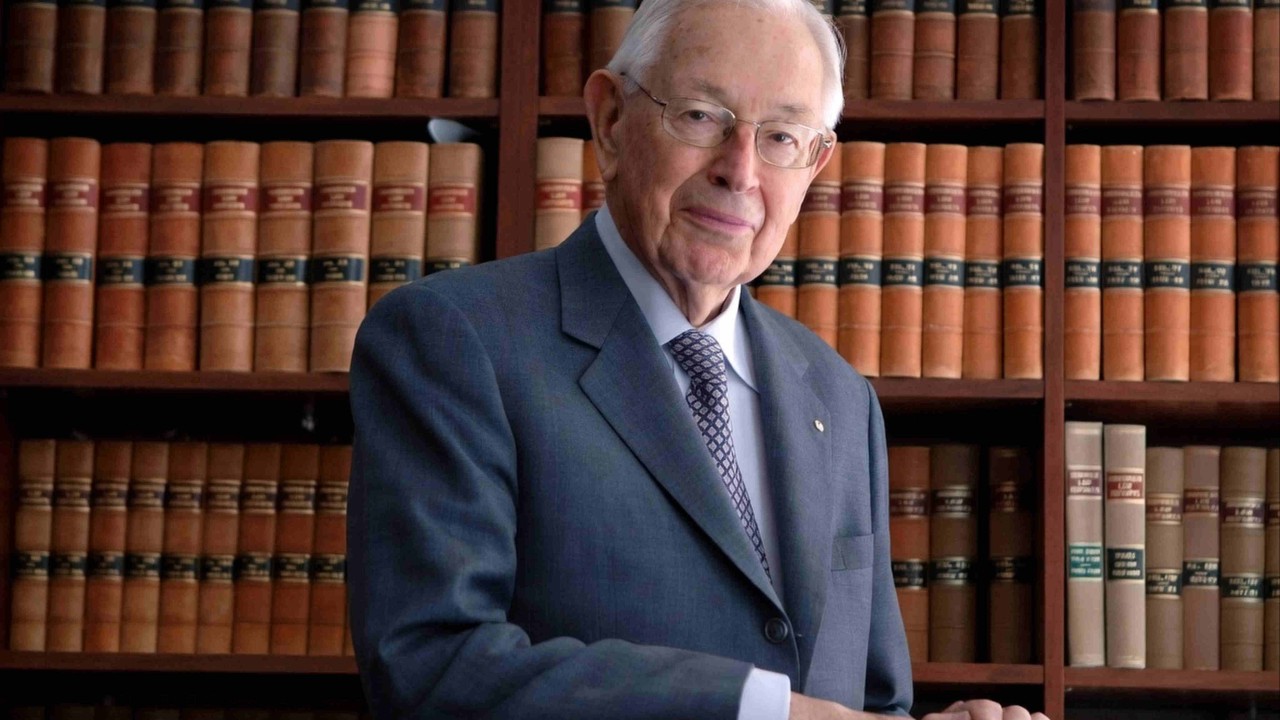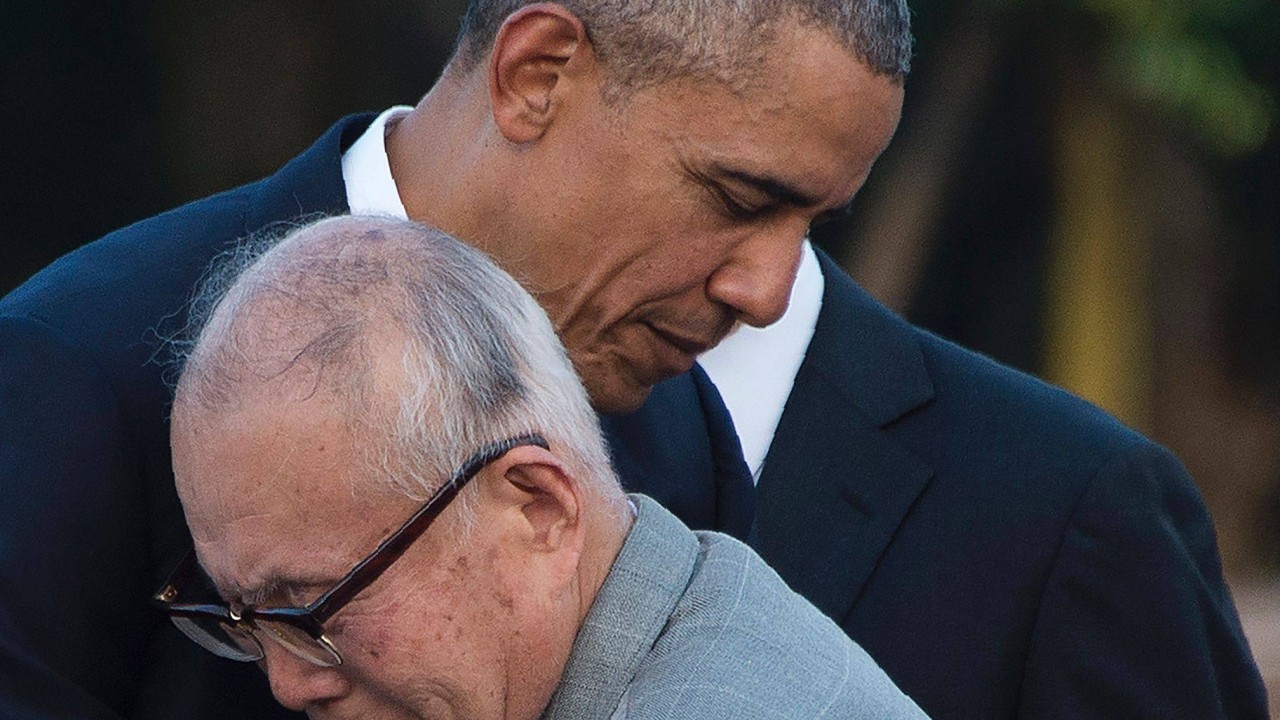
Shigeaki Mori didn't just survive the lightning flash that leveled Hiroshima. He spent the next eight decades making sure the world didn't forget the faces of the people the history books usually ignore. You might recognize him from that 2016 photo. He’s the elderly man weeping into Barack Obama’s chest at the Hiroshima Peace Memorial Park. It was a moment that went viral because it looked like closure. But for Mori, who passed away recently at 88, it was just one brief second in a life defined by a much grittier, lonelier kind of work.
He died of aspiration pneumonia in a hospital in his beloved city. With his passing, we’re losing more than just a witness. We’re losing the person who proved that the "official" version of history is almost always incomplete.
The day the sun fell
On August 6, 1945, Mori was 8 years old. He was walking to school. Then the air turned into a furnace. He was knocked off a bridge and into a river, an accident that probably saved his life while the city around him turned to ash.
Most people know the broad strokes. The Enola Gay. The 140,000 dead. The black rain. But Mori’s obsession wasn't with the numbers. He was haunted by the specific stories of the people who weren't supposed to be there. He spent 40 years of his own time and money tracking down the families of 12 American prisoners of war who died in the bombing.
Think about that for a second. A man who had every reason to hate the United States spent his adulthood cold-calling military archives and knockin' on doors in the U.S. Midwest. He wanted to make sure those American families knew exactly where and how their sons died. He even got their names added to the official memorial list in Hiroshima. That’s not just "surviving." That’s a level of empathy that honestly feels superhuman.
Why the Obama hug was complicated
When Obama visited, it was the first time a sitting U.S. president had ever stepped foot in Hiroshima. The optics were massive. When Mori started crying and Obama pulled him in for that hug, the world saw a bridge being built.
But talk to people in Hiroshima, and they’ll tell you the hug wasn't about politics. Mori wasn't looking for an apology for the bomb. He’d lived through the aftermath. He’d seen the keloid scars and felt the social stigma of being a hibakusha (atomic bomb survivor). For him, that moment was about acknowledgment. It was a recognition that the pain was real, shared, and shouldn't ever happen again.
Critics at the time called it an "apology tour." They were wrong. It was a human moment that transcended the geopolitical chess board. Mori's reaction wasn't scripted. He was overwhelmed by the fact that the leader of the nation that dropped the bomb was finally standing on that scorched earth, looking him in the eye.
Tracking the ghosts of the 12 Americans
Mori’s research into the fallen American POWs is the stuff of a detective novel. These men were crew members of planes like the Lonesome Lady. They were held in a civilian jail in Hiroshima when the bomb went off. For decades, their fate was a footnote.
Mori didn't like footnotes.
He used his own salary as a securities clerk to fund his research. He didn't have the internet. He had paper maps, international stamps, and a relentless drive. He eventually identified all 12. He found their families in places like Florida and Michigan. He sent them photos of the crash sites. He gave them the peace the Pentagon couldn't or wouldn't provide.
This work is why he was in the front row when Obama arrived. He wasn't just a survivor. He was a historian of the forgotten.
The disappearing voice of the Hibakusha
We're hitting a terrifying tipping point. The average age of survivors is now over 85. Every month, we lose more of them. When the last hibakusha dies, the atomic bombings move from "memory" to "history."
History is easy to ignore. Memory is visceral.
Mori’s death is a wake-up call. Without people like him to remind us of the smell of the city after the blast or the way the skin hung from people’s arms, nuclear weapons start to look like abstract "deterrents" again. They aren't abstract. They’re tools of total annihilation. Mori spent his final years terrified that the world was forgetting this.
He didn't want to be a celebrity. He didn't want the fame of the hug. He wanted people to look at the names he’d recovered and realize that every single one was a life stolen.
What we can actually do now
If you want to honor Shigeaki Mori, don't just look at the photo of the hug and feel good. Do the work he did.
- Educate yourself on the specifics. Read Hiroshima by John Hersey. It’s the closest you’ll get to the ground-level reality Mori lived through.
- Support the archives. The Hiroshima Peace Memorial Museum is constantly digitizing testimonies. They need the resources to finish this before the last survivors pass away.
- Watch the documentary. There's a film called Paper Lanterns that focuses entirely on Mori’s work to identify the American POWs. It’s a masterclass in what it means to be a global citizen.
- Stop sanitizing history. When you talk about 1945, don't just talk about the "necessity" or the "strategy." Talk about the people in the rivers.
Mori is gone, but the names he rescued aren't. We’re the ones responsible for them now.