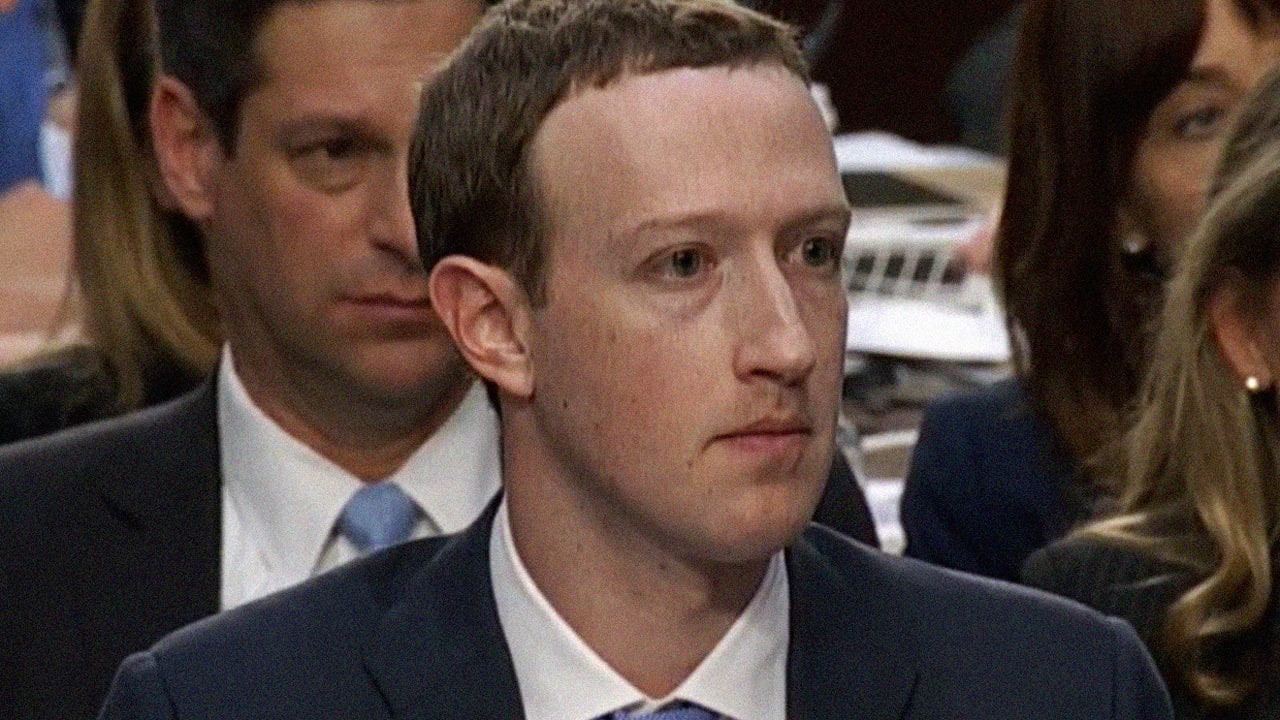
The bill for Mark Zuckerberg’s pivot to artificial intelligence has finally come due, and it is written in the cold, hard currency of GPU clusters and power grid demands. For months, Meta’s massive capital expenditure—projected to hit $40 billion this year alone—sent Wall Street into a minor panic. Investors watched the balance sheet expand with dread, wondering if the social media giant was simply chasing a ghost. Now, we have the first tangible result of that spending spree with the release of Llama 3, the latest iteration of their open-weights model. This isn’t just a software update. It is a declaration of war against the closed-garden models of OpenAI and Google.
Meta is betting that they can commoditize the underlying intelligence of the internet. By spending tens of billions to build models and then giving the weights away for free, Zuckerberg is attempting to strip away the competitive advantage of his rivals. If intelligence becomes a utility—cheap, accessible, and run on local hardware—then the proprietary moats built by ChatGPT and Gemini begin to dry up.
The Brutal Physics of the Compute Gold Rush
To understand why this model matters, you have to look at the silicon. Meta has been vacuuming up Nvidia H100 cards at a rate that borders on the obsessive. By the end of this year, the company expects to have a stockpile of 350,000 H100s. When you factor in other chips, their total compute power will equal roughly 600,000 H100s.
This isn't just about "more data." It’s about the sheer brute force required to train a model that can compete with GPT-4. Llama 3 was trained on a cluster that is, by some estimates, ten times larger than what was used for its predecessor. The energy consumption of these data centers is now a geopolitical factor. We are moving past the era where "software is eating the world" and into an era where "hardware is swallowing the grid."
The cost of entry for frontier-level AI has reached a point where only four or five entities on the planet can even afford to play. Zuckerberg is using Meta’s massive advertising cash flow to buy his way into the lead. While competitors have to worry about the margins of their API calls, Meta treats the model as a loss leader. Their goal isn't to sell you a chatbot subscription. Their goal is to ensure that the entire ecosystem of AI development happens on their terms, using their architecture.
Why Open Weights is a Strategic Dagger
There is a frequent misunderstanding about what "open source" means in the context of large language models. Meta isn't releasing the recipe or the full training data—that remains their most guarded secret. Instead, they are releasing the weights. This allows developers to take the pre-trained brain and fine-tune it for specific tasks without having to spend $100 million on a training run.
This move creates a massive headache for OpenAI. If a developer can get 95% of the performance of GPT-4 by running Llama 3 on their own private servers for free, the incentive to pay for a closed API vanishes. This is the "scorched earth" policy of Silicon Valley. If you can't be the only one with the technology, make sure the technology has no market value so your competitors can't profit from it either.
The Hidden Cost of Free
Nothing is truly free in this industry. By releasing Llama 3, Meta effectively enlists a global army of unpaid developers to debug, optimize, and expand their ecosystem. When a developer finds a way to make Llama run faster on a specific chip, or discovers a more efficient way to handle long-context windows, Meta inherits that innovation.
It is a parasitic-symbiotic relationship. The community gets a world-class model, and Meta gets the collective intelligence of the world’s best engineers for the price of a download link. This strategy also serves as a massive recruitment tool. If every college student and startup founder is building on Llama, Meta becomes the default standard for the next decade of computing.
The Data Moat and the Quality Wall
We are hitting a ceiling in the AI industry that few people want to talk about publicly. We are running out of high-quality human text. The internet has been scraped clean. To train Llama 3, Meta had to go deeper into their own coffers, utilizing the massive amounts of public data across Facebook and Instagram.
This gives them a distinct advantage over pure-play AI companies. While OpenAI has to negotiate licensing deals with Reddit or the New York Times, Meta sits on a mountain of human interaction data that is refreshed every second. They are using your 2012 vacation photos and your uncle’s political rants to teach their models how humans communicate.
Synthetic Data as the New Frontier
Because the pool of human writing is finite, the next leap forward depends on synthetic data—AI talking to AI to create new training material. This is a dangerous game. If a model trains too much on its own output, it risks "model collapse," where it becomes a simplified, distorted version of itself.
Meta’s massive investment is aimed at solving this specific problem. They are using their compute power to generate and then rigorously filter synthetic data, effectively trying to manufacture "digital thought" that is higher quality than the average Reddit comment. If they succeed, the link between human output and AI progress will be severed.
The Regulation Trap
There is a quiet war happening in Washington and Brussels over who is allowed to build these models. The "Safety" argument is often used as a tool for regulatory capture. Established players frequently lobby for strict licensing requirements that would make it illegal for a small startup to train a large model in their garage.
By championing the open-weight movement, Zuckerberg is positioning himself as the populist alternative to the "AI Priests" who want to keep the technology behind closed doors. It is a brilliant bit of corporate aikido. He is using the language of transparency and democratization to distract from the fact that his company still controls the most powerful social influence machine in history.
The Real Winner in the GPU Wars
While we analyze the benchmarks and the "vibes" of the new Llama model, we must acknowledge the one company that wins regardless of who has the best chatbot. Nvidia.
Every time Zuckerberg announces a new "spending spree," Jensen Huang’s net worth ticks upward. We are currently in a cycle where the tech giants are cannibalizing their own margins to hand money to chip designers. This cannot last forever. At some point, these models have to generate actual revenue that exceeds the cost of the electricity used to run them.
Meta’s play is that the revenue will come from "Engagement." If AI makes Facebook, Instagram, and WhatsApp more addictive, the advertising revenue will eventually cover the $40 billion tab. It is a gamble of breathtaking scale. They are betting that the future of the internet isn't just about seeing what your friends are doing, but interacting with a personalized, AI-generated version of the world that never lets you go.
Local Intelligence is the Final Goal
The true disruption of Llama 3 isn't that it’s smarter; it’s that it’s leaner. The goal is to get these models running natively on your phone and your laptop without an internet connection.
When your device can understand your intent, summarize your emails, and edit your videos locally, the cloud-based giants lose their grip on your data. This is why Apple is rumored to be looking at these open-weight models for their future integrations. They want the intelligence without the baggage of a competitor’s cloud.
Meta understands that the first company to become the "Linux of AI" wins the infrastructure war. They don't need to be the best; they just need to be everywhere. By the time the dust settles on this spending spree, we may find that we don't live in a world of multiple AI options, but a world where everything—from your fridge to your car—runs on a version of the brain that Mark Zuckerberg built.
The Fragility of the Open Source Promise
We must remain skeptical of any trillion-dollar corporation bearing gifts. Meta is "open" right now because they are the underdog in the AI race. History shows us that once a company achieves market dominance through an open standard, they often begin to tighten the screws.
If Llama becomes the industry standard, Meta will have the power to dictate the direction of AI development globally. They could change the licensing terms for future versions or stop releasing weights altogether once their competitors have been starved out. The "open" era of Meta AI is a tactical maneuver, not a moral philosophy. It is a means to an end.
The immediate impact, however, is undeniable. The barrier to entry has been smashed. A developer in a basement in Jakarta now has access to the same level of raw intelligence as a researcher at a multi-billion dollar firm. This will lead to an explosion of "weird" AI—applications that are too niche, too risky, or too strange for the cautious corporate giants.
The Pivot is Permanent
Zuckerberg has burned the boats. There is no version of Meta’s future that doesn't involve being an AI company first and a social media company second. The "Spending Spree" isn't a temporary spike; it is the new baseline for survival.
If you are an investor, you have to accept that the dividends are being redirected into cooling fans and H100 clusters. If you are a consumer, you have to accept that your data is the fuel for this new engine. We are no longer just users of a social network; we are the training set for a global intelligence experiment that has no "off" switch.
The release of this model proves that Meta is willing to set the entire industry's profit margins on fire to ensure they are the last ones standing. In the high-stakes game of silicon and power, being the one who gives it away for free is the most aggressive move on the board.
Stop looking at the chatbot and start looking at the infrastructure. The hardware is being laid, the code is being distributed, and the costs are being socialized. The only thing left to see is if anyone can actually afford to compete with a man who is willing to spend $50 billion just to make his rivals' products worthless.