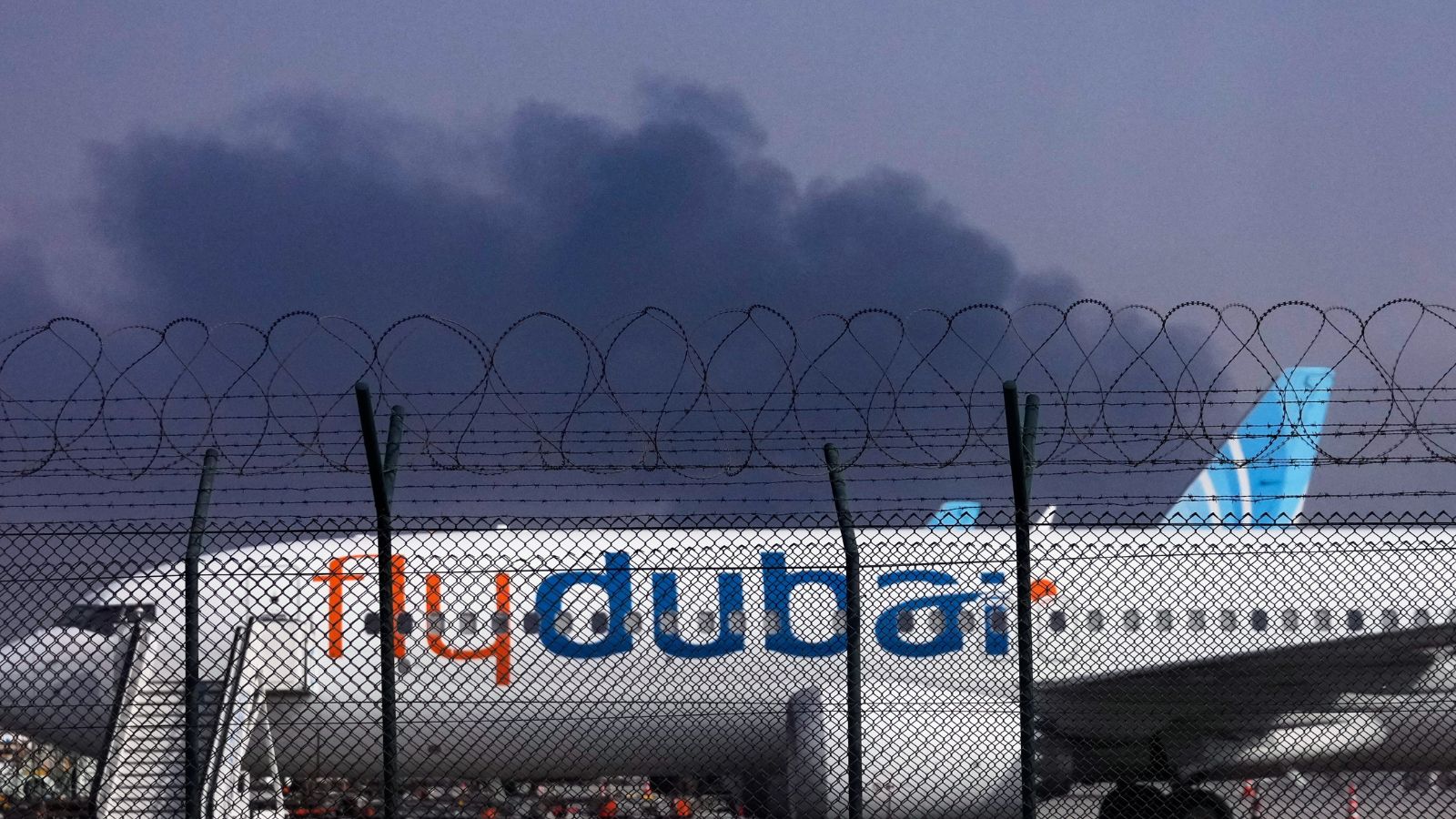
Civil aviation in the Middle East has transitioned from a model of managed volatility to one of systemic fragility. When a kinetic conflict escalates, the primary constraint for an airline is not the physical destruction of assets, but the rapid contraction of "safe-to-operate" three-dimensional space. The current wave of flight cancellations by global carriers—including Lufthansa Group, Air France-KLM, and Delta—represents a sophisticated risk-mitigation calculus that weighs the marginal revenue of a flight against the catastrophic insurance and hull-loss risks of operating near active missile corridors.
This analysis deconstructs the operational logic behind these cancellations by examining the three fundamental stressors: airspace narrowing, insurance surcharge triggers, and the breakdown of crew logistics.
The Tri-Border Airspace Bottleneck
The immediate casualty of regional escalation is the available "transit pipe." Commercial aviation relies on predictable, high-altitude corridors. When Lebanon, Israel, Jordan, and Iraq intermittently close or restrict their airspace, the remaining corridors in Turkey and Saudi Arabia experience a sudden, massive influx of diverted traffic.
- Corridor Saturation: As flights are pushed out of the Levant, they must funnel through narrow geographic gaps. This increases the Air Traffic Control (RC) workload and introduces significant fuel penalties. A flight from London to Dubai that must avoid Iranian or Iraqi airspace may require 45 to 90 minutes of additional flight time.
- The Fuel-Weight Feedback Loop: For ultra-long-haul flights, this extra time is not just a fuel cost issue. It is a weight-and-balance issue. Carrying the contingency fuel required to navigate around a sudden airspace closure might force a carrier to "offload" revenue-generating cargo or passengers to stay under the maximum takeoff weight (MTOW).
- The GPS Spoofing Variable: Beyond physical missiles, the electronic warfare environment in the Eastern Mediterranean has created a "soft" denial of airspace. Pilots report significant GPS interference and "spoofing," where onboard systems incorrectly identify the aircraft's position. For many Western carriers, the risk of a navigation error leading to an inadvertent border crossing into hostile territory exceeds the risk tolerance of their Safety Management Systems (SMS).
The Insurance Trigger and the Hull-War Risk Premium
Airlines do not cancel flights solely because they fear a mid-air intercept; they cancel because the financial architecture supporting the flight has collapsed. Most commercial aircraft are leased, and those leases require specific "Hull-War" insurance coverage.
- Notice of Cancellation: Underwriters typically issue a "7-day notice" to cancel or renegotiate war-risk coverage when a conflict intensifies. Once this notice period expires, the cost to insure a single takeoff and landing in a "high-risk" zone can spike from a few hundred dollars to tens of thousands of dollars per flight.
- The Economic Break-Even Point: When insurance surcharges exceed the expected net profit of the flight, the route becomes economically unviable even if the aircraft is full.
- The Aggregate Limit: Insurers also set a "total loss" limit for specific airports. If five $200 million aircraft are sitting on the tarmac at Tel Aviv (TLV) or Beirut (BEY) during an active bombardment, the insurer’s concentrated risk is $1 billion. To manage this, insurers may simply refuse to cover more than one or two hulls at a time, forcing airlines to reduce frequency regardless of passenger demand.
Crew Duty Limitations and Downline Disruption
The most overlooked constraint in the "Factbox" style of reporting is the human element—specifically, Flight Duty Period (FDP) regulations. Aviation safety law (such as FAA Part 117 or EASA ORO.FTL) strictly limits how many hours a pilot can work.
The Beirut-Tel Aviv Turnaround Problem
Carriers often operate "turnaround" flights where the crew stays with the aircraft and flies back immediately to avoid an overnight stay (layover) in a conflict zone. However, if an airspace closure or a "hold" occurs while the aircraft is in the air, the crew may "timeout."
- Legal Impasse: If a crew reaches their legal work limit while the aircraft is on the ground in a high-risk zone, they cannot legally fly the plane out.
- Stranded Assets: This leaves the airline with a multi-million dollar asset and a crew stuck in a combat zone, creating a massive logistical and liability nightmare.
- Network Contagion: Because aircraft rotations are tightly linked, a three-hour delay in Tel Aviv due to a missile alert can cause a "downline" cancellation for a flight from New York to London later that day. The system lacks the "slack" to absorb these shocks, leading carriers to preemptively cancel the high-risk leg to protect the integrity of the rest of their global network.
Differential Risk Tolerance: National vs. International Carriers
There is a clear divergence in how airlines respond to the same conflict. While United or Delta may suspend service for weeks, El Al or Middle East Airlines (MEA) often continue to fly. This is not necessarily a difference in bravery, but a difference in state-backed guarantees.
National flag carriers often operate under "sovereign indemnification." The government effectively acts as the insurer of last resort, promising to cover the cost of a lost aircraft if private markets refuse. International carriers lack this backstop. If a Delta jet is damaged in a conflict, the shareholders bear the brunt; if an El Al jet is damaged, the state views it as a matter of national security and infrastructure.
The Cost Function of Rerouting
For the analyst, the primary metric to watch is the Great Circle Distance (GCD) Deviation.
$$Cost_{Ext} = (F_h \times \Delta T) + (C_m \times \Delta T) + L_p$$
Where:
- $F_h$ = Fuel burn per hour.
- $\Delta T$ = The increase in flight time due to rerouting.
- $C_m$ = Maintenance cost per flight hour (engine wear).
- $L_p$ = Lost productivity/opportunity cost of the airframe.
As $\Delta T$ increases, the efficiency of the hub-and-spoke model decays. If a plane is supposed to fly three legs a day but the reroute makes it only capable of two, the airline has effectively lost 33% of its fleet capacity without losing a single aircraft.
Strategic Action for Market Participants
The immediate tactical move for stakeholders is to shift from "reactive monitoring" to "predictive capacity hedging."
Airlines must prioritize the "Wet Lease" (ACMI) market to maintain connectivity without risking their own hulls or crews. By leasing aircraft from providers who specialize in high-risk environments, major carriers can maintain a presence in the region while insulating their primary balance sheets from catastrophic loss.
For travelers and logistics managers, the strategy is the "Secondary Hub Pivot." Relying on hubs like Tel Aviv, Beirut, or even Amman during periods of kinetic escalation is an exercise in high-probability failure. Shifting transit flows to Gulf hubs (Dubai, Doha, Abu Dhabi) or Northern hubs (Istanbul) provides the necessary buffer, as these locations possess the geographic "depth" to absorb rerouted traffic without immediate closure.
The current trend suggests that Middle Eastern aviation is entering a "semi-permanent state of contingency." Airlines that fail to bake "Variable Airspace Access" into their five-year planning will find their margins permanently eroded by the recurring costs of sudden, unmanaged network collapses.