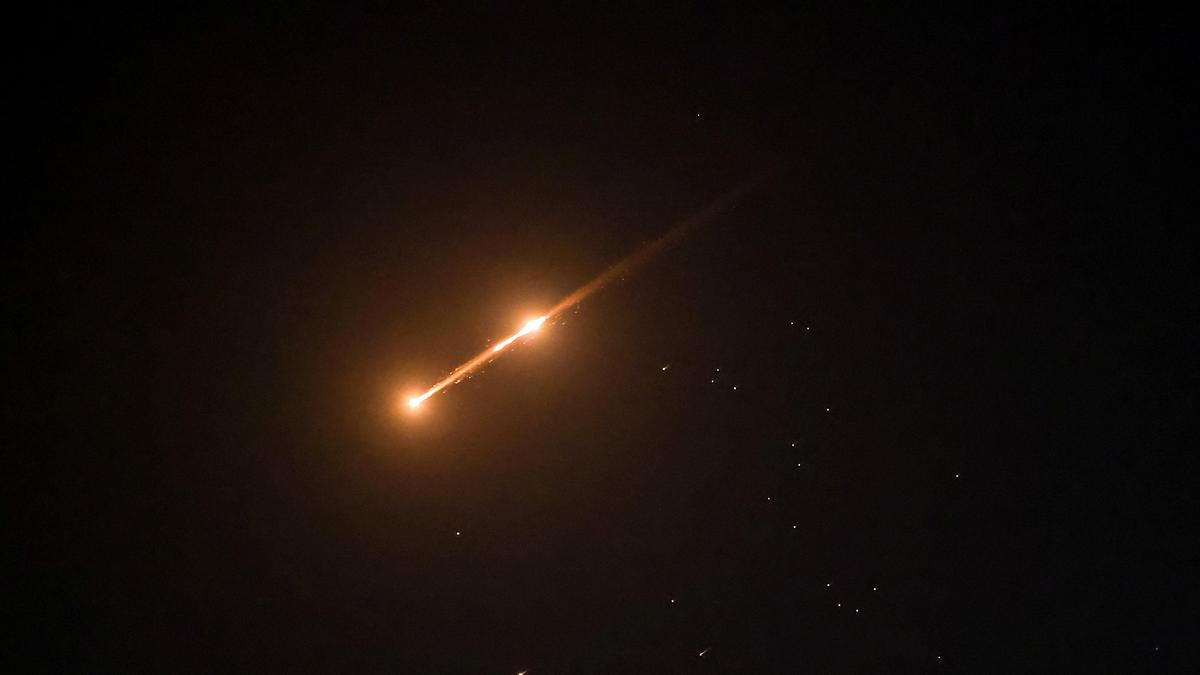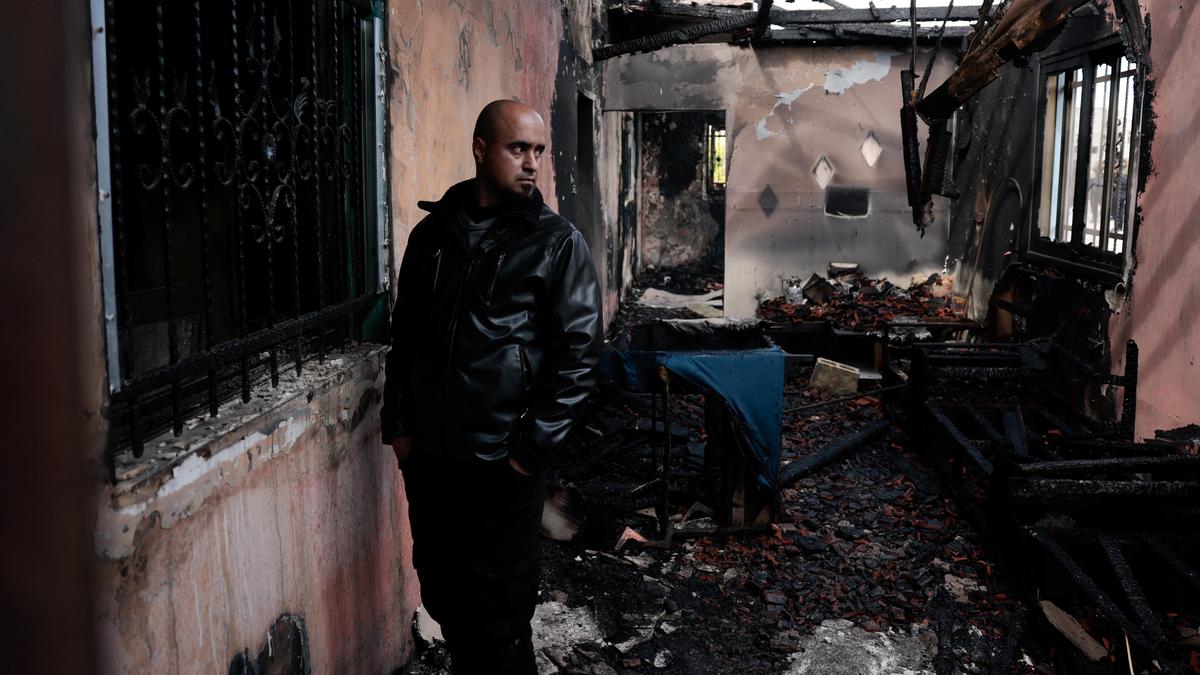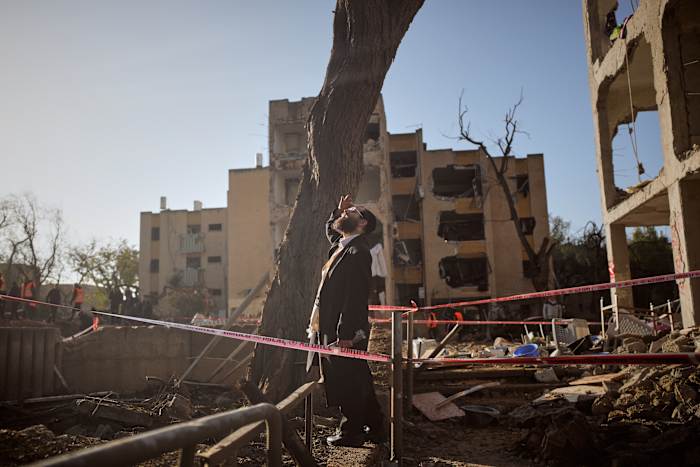
The threat of precision strikes against Iranian power generation infrastructure in response to a blockade of the Strait of Hormuz represents a shift from traditional maritime skirmishing toward a doctrine of total infrastructure asymmetry. This strategic posture rests on the premise that the kinetic destruction of Iran’s domestic electricity grid creates a non-linear internal crisis that outweighs the global economic shock of a maritime chokepoint closure. To analyze the viability of this threat, one must evaluate the technical vulnerabilities of the Iranian Integrated National Grid (ING), the physics of the Strait of Hormuz as a tactical bottleneck, and the economic feedback loops that govern global oil price elasticity.
The Architecture of Iranian Power Vulnerability
Iran’s electricity generation is heavily centralized, making it a "target-rich" environment for precision-guided munitions. As of 2025, the Iranian power sector relies on a handful of massive thermal and combined-cycle plants that provide the backbone of the national load.
The Concentrated Nodes of Failure
The Iranian grid is not a distributed web; it is a series of high-output nodes connected by long-distance transmission lines. Critical facilities like the Shahid Rajaee, Damavand, and Montazer Ghaem plants represent "single points of failure" within their respective regional sub-grids.
- Thermal Efficiency and Cooling Systems: Most Iranian plants are gas-fired or combined-cycle. Disruption does not require the total leveling of a facility. Strategic targeting of cooling towers or high-voltage switchyards can render a multi-gigawatt plant inoperable for months.
- The Baseload Dependency: Because Iran’s industrial sector and urban centers are decoupled from significant renewable or decentralized storage, the loss of three to five major plants would trigger a cascading frequency collapse across the ING.
- Black-Start Limitations: Restoring a national grid after a total collapse (a "black start") requires specific, functioning "anchor" plants. If these anchor facilities are kinetically neutralized, the duration of the blackout shifts from days to an indefinite timeline defined by the availability of heavy industrial replacement parts—many of which are subject to existing international sanctions.
The Physics of the Hormuz Chokepoint
The Strait of Hormuz is the world's most important oil transit point, with approximately 20-21 million barrels per day (bpd) flowing through a passage where the shipping lanes are only two miles wide in each direction. The Iranian strategy of "denial of access" relies on three tactical pillars.
The Triple-Threat Denial Model
Iran’s ability to "close" the Strait does not require a conventional navy. It requires the projection of risk that makes the cost of insurance and the safety of crews untenable for commercial operators.
- Asymmetric Swarming: Using fast-attack craft (FAC) equipped with short-range missiles to overwhelm the defensive suites of tankers and their escorts.
- Sub-Surface Mining: Modern "smart" mines can be programmed to ignore small vessels and detonate only under the acoustic or magnetic signatures of specific tanker classes (VLCCs or ULCCs).
- Anti-Ship Cruise Missiles (ASCMs): Land-based batteries hidden in the rugged topography of the Iranian coastline provide a persistent threat that is difficult to suppress without a large-scale "Suppression of Enemy Air Defenses" (SEAD) campaign.
The "closure" of the Strait is a psychological and insurance-based reality before it is a physical one. Once a single tanker is hit, Lloyd’s of London and other insurers typically withdraw coverage, effectively halting traffic even if the physical path remains clear.
The Calculus of Asymmetric Retaliation
The threat to strike power plants is a move to rebalance the "Pain Threshold." Historically, Iran believed it held the "Hormuz Card"—the ability to tank the global economy to save itself. The counter-strategy proposed involves a direct trade: if Iran suppresses the global energy supply (the Strait), the United States or its allies will suppress Iran's internal energy survival (the Power Grid).
The Internal Stability Cost Function
In a modern state, electricity is the foundational layer for all other services. A prolonged national blackout in Iran would lead to:
- Water Scarcity: The failure of electric pumps for municipal water and desalination.
- Communication Breakdown: The exhaustion of backup batteries at cellular towers and data centers.
- Economic Paralysis: The inability to process digital payments or operate refined product pumps (gas stations), leading to immediate civil unrest.
This creates a logic of "Proportional Infrastructure Parity." The goal is to demonstrate that the cost to the Iranian state (internal collapse) is higher than the benefit of the leverage gained by closing the Strait.
Quantitative Impact on Global Markets
While the destruction of Iranian power plants is a localized event, the closure of the Strait of Hormuz is a global macro-shoc. The relationship between supply disruption and price is governed by the following approximation of price elasticity:
$$\Delta P = \frac{\Delta S}{E_d}$$
Where $\Delta P$ is the change in price, $\Delta S$ is the supply shock (approx. 20%), and $E_d$ is the short-run price elasticity of demand (typically very low, around -0.05 to -0.1).
Because demand for oil is inelastic in the short term, a 20% drop in global supply does not lead to a 20% price increase; it can lead to a 200% to 300% increase. This math explains why the "Hormuz Card" remains a potent deterrent despite Iran’s own economic fragility.
Tactical Constraints and Kinetic Realities
The execution of a strike on the Iranian power grid faces significant operational hurdles. Iran has spent decades hardening its infrastructure and integrating Russian-made S-300 and domestic Bavar-373 air defense systems around key strategic assets.
The Defensive Envelope
Any strike package would need to penetrate a multi-layered Integrated Air Defense System (IADS). This requires:
- Electronic Warfare (EW): Jamming of radar nodes to create "corridors" for cruise missiles.
- Stealth Profiling: The use of F-35 or B-2 platforms to minimize detection.
- Stand-off Munitions: Utilizing JASSM-ER (Joint Air-to-Surface Standoff Missiles) to strike targets from outside the range of Iranian point defenses.
The limitation of this strategy is the "Repair Cycle." Unlike a bridge or a command center, a power plant’s most sensitive components—large-scale transformers and turbines—are not easily replaced. If a strike destroys a 500kV transformer, the lead time for a replacement can be 12 to 18 months under normal trade conditions. Under sanctions and wartime footing, the damage is effectively permanent for the duration of the conflict.
The Strategic Playbook for De-escalation
The most effective use of this threat is not in its execution, but in the signaling of a "New Escalation Ladder." For decades, the West has responded to Iranian maritime provocations with maritime counter-moves (escorts, minesweeping). By shifting the target to the terrestrial power grid, the strategic focus moves from "protecting the water" to "threatening the regime's foundation."
The primary risk remains "Miscalculation of the Red Line." If Iran perceives that its power grid will be struck regardless of its actions in the Strait—perhaps due to internal domestic pressure or separate nuclear escalations—the incentive to keep the Strait open vanishes.
Strategic Recommendation:
Maintain a documented, high-readiness posture for "Infrastructure Neutralization" while simultaneously offering a "Maritime Corridor Verification" protocol. This allows Iran a face-saving exit: they do not "back down" from a threat; they "successfully manage" a maritime safety protocol that ensures their own power grid remains energized. The focus must remain on the operational continuity of the grid as the primary bargaining chip, rather than the abstract concept of "sanctions relief," which has lost its efficacy as a deterrent.