The headlines are breathless. "Morocco is becoming a regional arms hub." "Rabat accelerates its domestic defense industry." The narrative is seductive because it feels like a classic David-and-Goliath success story. We are told that by passing Law 10-20 and courting giants like Lockheed Martin and Sabca, Morocco is magically transforming from a top-tier importer into a sovereign producer.
It is a fantasy.
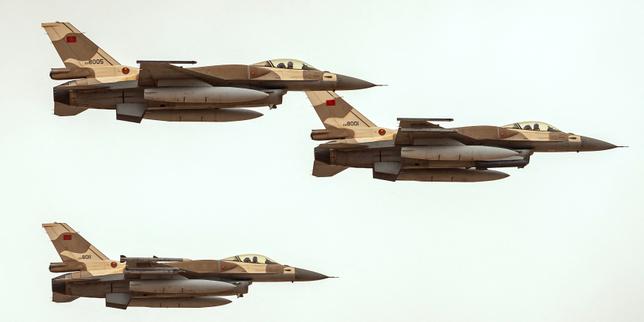
If you look at the raw data, Morocco isn’t building an "arms industry." It is building a high-end garage for American and Israeli tech. There is a massive difference between indigenous manufacturing and high-level assembly. One creates a strategic deterrent; the other creates a long-term subscription model for foreign spare parts. While the press cheers for the opening of maintenance centers for the F-16 and the C-130 Hercules, they ignore the reality that the "sovereignty" being discussed is tethered to a supply chain Morocco does not—and cannot—control.
The Maintenance Trap
The current strategy relies heavily on "Offset Agreements." In the defense world, this is the equivalent of a store giving you a discount if you agree to sweep their floors. Morocco buys billions in hardware from the United States and Israel, then demands that a percentage of that value be reinvested locally. This leads to the "Maintenance, Repair, and Overhaul" (MRO) facilities we see popping up in Benslimane.
It looks impressive on a brochure. It creates jobs for engineers. But it is fundamentally a service industry. You are not "developing an arms industry" when you are merely certified to fix someone else's jet. If Washington or Tel Aviv decides to pull the plug on software updates or specialized components, those local factories become very expensive museums overnight. True industrial power comes from the intellectual property of the design phase, not the wrench-turning of the maintenance phase.
The Mirage of Drone Sovereignty
Much has been made of the collaboration with BlueBird Aero Systems and other Israeli firms to produce "kamikaze drones" on Moroccan soil. The logic goes that if you build the airframe in a factory near Casablanca, you own the capability.
This is a fundamental misunderstanding of modern warfare.
A drone is not a plane; it is a flying computer. The value of a WanderB or a ThunderB drone isn't in the carbon fiber wings or the electric motor. It is in the sensor suite, the encrypted datalinks, and the flight control algorithms. Morocco is currently importing the "brain" and the "eyes" and manufacturing the "skin." To call this a domestic industry is like buying a Lego set, snapping the pieces together, and claiming you are an architect.
I have seen nations pour hundreds of millions into these "sovereign" projects only to realize they are still writing checks to foreign OEMs for every single firmware patch. If you don't own the source code, you don't own the weapon.
Why the "Joint Venture" Model is a Poison Pill
The Moroccan government is aggressively pursuing Joint Ventures (JVs). They want Boeing, Embraer, and Naval Group to set up shops. The logic is that "knowledge transfer" will eventually lead to independent Moroccan designs.
History suggests otherwise. Defense primes are not in the business of creating their own future competitors. They use JVs to lower their own production costs and satisfy local content requirements. They transfer enough knowledge to make the local workforce competent, but never enough to make them autonomous.
Look at the Turkish model, which many cite as Morocco's North Star. Turkey didn't get to where it is by being a "good partner" in JVs. They got there by being a difficult, often combative partner that aggressively reverse-engineered components and dumped billions into state-funded R&D that had zero immediate ROI. Morocco, by contrast, is playing the role of the "reliable ally." In the defense business, being reliable usually means being a permanent customer.
The Human Capital Crisis
You cannot build a sophisticated defense sector with a workforce that is optimized for the automotive and aerospace outsourcing industries. Morocco has done a brilliant job with its automotive ecosystem (Renault, Stellantis), but defense is a different beast.
In automotive, the goal is efficiency and volume. In defense, the goal is innovation under extreme constraints. Currently, the Moroccan education system is churning out excellent technicians for the "Plug and Play" economy. But where are the labs for materials science? Where is the domestic investment in gallium nitride (GaN) for radar systems? Where is the specialized venture capital for local defense startups that aren't just subcontractors for the Royal Armed Forces?
Without a massive pivot toward high-end R&D—the kind that fails nine times out of ten—Morocco will remain a secondary player.
The Geopolitical Risk of the "Single Source"
By tying its industrial aspirations so closely to the Abraham Accords and the U.S. security umbrella, Morocco is betting the house on a specific geopolitical alignment. This is a risk that most analysts refuse to acknowledge.
If the political winds in Washington shift—perhaps toward a more isolationist stance or a pivot that de-prioritizes North African stability—the "arms industry" built on American licenses will stall. We saw this with the F-35 program and Turkey. One day you are a partner; the next day you are locked out of the hangar. Morocco’s "all-in" approach with Western and Israeli tech prevents the kind of non-aligned flexibility that true regional powers, like India or Brazil, try to maintain.
Stop Asking if Morocco can Build Weapons
The question isn't whether Morocco can build a factory that puts together a truck or a drone. Of course it can. The question is: Can Morocco build a weapon that works when the original manufacturer doesn't want it to?
If the answer is no, then this isn't an industrial revolution. It's an expensive procurement strategy disguised as economic development.
To actually disrupt the status quo, Rabat needs to stop chasing the "Big Primes" and start funding the "Small Weirdos." They should be looking at the software-defined warfare tactics coming out of Ukraine—where cheap, off-the-shelf components are being weaponized through local coding talent. That is where the real asymmetry lies. Chasing the 20th-century model of massive aerospace factories is a recipe for debt and dependency.
The "lazy consensus" says Morocco is the new regional powerhouse. The reality is that Morocco is a very sophisticated client. Until the blueprints are written in Arabic and the chips are etched in local silicon, the "Made in Morocco" stamp on a missile is just a sticker on a foreign product.
Move your capital away from assembly lines and into the deep-tech trenches where the real wars are won.
Build the brain, or stay the slave.