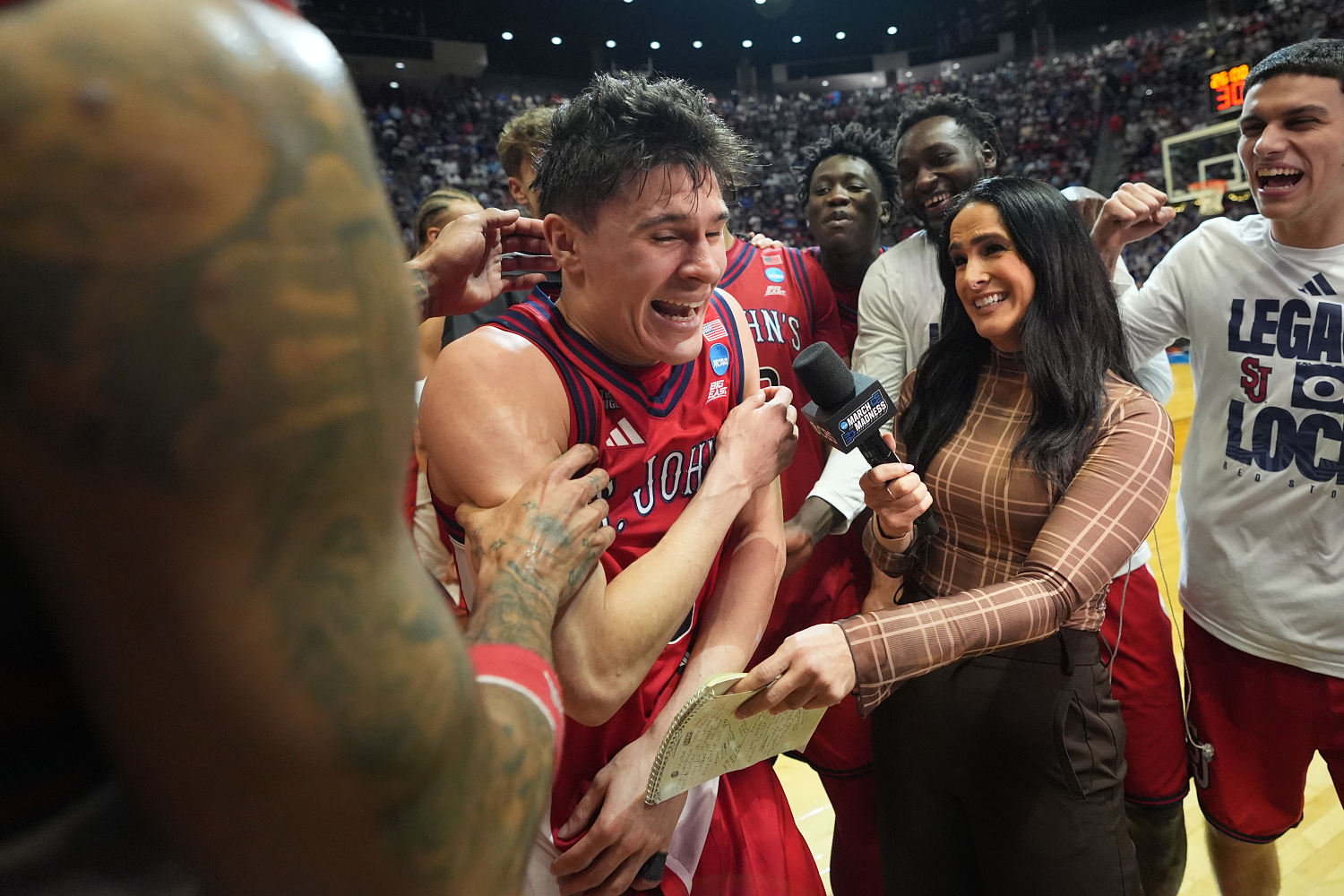
The NCAA Tournament just posted its best television start since 2011, with viewership climbing 5% across the board. On the surface, it looks like a triumphant return to form for linear television. Networks are popping champagne because a 5% bump in a fragmented media environment is usually treated as a miracle. However, the raw numbers mask a fundamental shift in how Americans consume sports. This isn't just about a love for the "Cinderella" story or the purity of the amateur game. It is the result of a calculated, multi-billion-dollar collision between legalized gambling, the desperate survival tactics of cable networks, and a singular, generational talent in the women’s bracket that is currently outshining the men’s side.
The "why" behind this surge is far more complex than simple nostalgia. We are witnessing the first era where the casual viewer is no longer just watching for a team; they are watching for a parlay. The integration of sports betting into the broadcast experience has turned every blowout into a high-stakes drama, keeping eyes on the screen long after the actual outcome of the game has been decided. When a 15-point favorite is winning by 12 with ten seconds left, the five million people watching aren't there for the sportsmanship. They are there for the point spread.
The Gambling Multiplier Effect
For decades, the NCAA tried to keep a wall between the "integrity of the game" and the betting windows of Las Vegas. That wall has been pulverized. Since the 2018 Supreme Court decision to allow states to regulate sports betting, the tournament has transformed from a cultural event into a financial one.
The 5% viewership increase is directly tethered to the fact that sports betting is now legal in 38 states plus D.C. It is no longer a subculture. It is the infrastructure of the viewing experience. Networks like CBS and TNT are no longer just showing a game; they are feeding an addiction to live data. The "second screen" experience—where fans track live odds on their phones while watching the game—creates a feedback loop that makes it almost impossible to turn the TV off.
Retention Over Reach
In the past, a 20-point lead in the second half was a signal for viewers to flip the channel to a sitcom or a movie. Today, those viewers stay. They stay because the "over/under" is still in play. They stay because a garbage-time three-pointer determines whether they pay their rent or lose their shirt. This artificial retention is what is driving the ratings "growth." It isn't necessarily that more people have become die-hard college basketball fans. It’s that the existing fans are being incentivized to never look away.
The Caitlin Clark Phenomenon and the Gender Pivot
We cannot analyze the current ratings surge without acknowledging that the traditional power dynamics of college sports are being inverted. For the first time in history, the women’s tournament is a primary driver of the overall "March Madness" brand value.
Caitlin Clark has done something that no male player has managed to do in the "one-and-done" era: she stayed long enough to become a household name. In the men’s game, the best players are gone after five months. They are anonymous teenagers who disappear into the NBA draft before the general public even learns how to spell their names. Clark, conversely, has built a multi-year narrative arc.
The ratings for women’s games are not just "good for women’s sports." They are beating established men's programs. This creates a rising tide for the entire NCAA brand. When a viewer tunes in to see if Iowa can advance, they stay for the surrounding games. The cross-pollination of the men’s and women’s tournaments has created a 24/7 loop of high-stakes content that didn't exist a decade ago.
The Identity Crisis of the Men's Game
While the numbers are up, the men’s game is suffering from a lack of star power. The transfer portal and Name, Image, and Likeness (NIL) deals have turned rosters into revolving doors. It is hard for a casual viewer to care about a team when four out of five starters were playing for different schools last year.
The tournament's success is currently relying on the "bracket" as a product, rather than the "players" as stars. People are loyal to their brackets, not to the athletes. This is a precarious position for any league. If the format ever loses its novelty, there are no iconic figures left in the men’s college game to hold the floor.
The Cable Bundle's Last Stand
The 2026 media environment is a graveyard of traditional cable channels, but March Madness remains one of the few pieces of "appointment viewing" left that can't be easily replicated by a streaming service's algorithm.
Warner Bros. Discovery and Paramount are leaning on the tournament to prove that the "big pipe" of traditional television still matters to advertisers. The 5% increase is a lifeline. Advertisers are willing to pay a premium because they know sports are the only thing people watch live. You can't "TiVo" a buzzer-beater. The value of the live ad spot has skyrocketed even as the total number of people with cable subscriptions has plummeted.
The Math of Scarcity
Total TV households are down, yet tournament viewership is up. This means the concentration of viewers is reaching unprecedented levels. If you are a brand like Coca-Cola or State Farm, you have fewer and fewer places to reach a mass audience. March Madness is one of the last remaining campfires where everyone gathers.
This creates a "scarcity premium." The networks can charge more for ads even if the raw numbers were flat. With a 5% gain, they can justify astronomical rate hikes. But this is a bubble. The reliance on a single three-week window to carry the financial weight of an entire fiscal quarter is a dangerous strategy.
The Illusion of Amateurism
The ratings surge also coincides with the total collapse of the NCAA’s "amateur" model. As more money pours in from TV deals, the players are demanding—and getting—their cut through NIL. The irony is that as the game becomes more professionalized, the TV product becomes more polished.
We are no longer watching "student-athletes." We are watching a developmental professional league that happens to have school names on the jerseys. The high viewership proves that the American public doesn't actually care about the "student" part of the equation. They want high-level production, professional-grade officiating, and a narrative that fits into their social media feeds.
The Cost of the "Big Dance"
The logistics of moving 68 teams across the country for a three-week television show are staggering. As ratings go up, the pressure to maximize revenue leads to questionable decisions. We see games tipping off at 10:00 PM on a Tuesday to satisfy a television window in a different time zone. We see historic rivalries sacrificed for "super-conferences" that make sense for a TV contract but ruin the local flavor of the sport.
The 5% bump in ratings is the reward for this ruthlessness. The NCAA has successfully traded the soul of the game for the efficiency of a media product.
Why the "Cinderella" Narrative is Morphing
The "underdog" story has always been the engine of March Madness. However, the nature of the underdog is changing. In 2011, a small school like Butler made it to the final because of a specific coaching philosophy and senior leadership. Today, a small school makes a run because they managed to land a disgruntled high-major player through the transfer portal or because a local booster funded a competitive NIL collective.
The "Magic of the Tournament" is increasingly a result of market inefficiencies. The 5% viewership growth reflects a public that is fascinated by the chaos of this new system. We are watching a live-action experiment in capitalism.
The Data Behind the Drama
- Live Stream Volume: While TV ratings are the headline, digital streaming of the tournament has seen a double-digit percentage increase.
- Social Media Impressions: The "highlight" culture—where a 10-second clip of a dunk travels further than the game itself—acts as a free marketing department for the networks.
- Demographic Shift: The average age of the March Madness viewer is actually trending slightly younger for the first time in a decade, largely due to the gambling and social media integration.
The Fragility of the Surge
It would be a mistake to assume this growth is permanent. The 5% jump is a confluence of perfect conditions. You have a historic star in the women’s game, a newly legal gambling market, and a "post-pandemic" hunger for communal events.
If you remove any one of those pillars, the numbers could easily crater. If the federal government decides to crack down on sports betting advertisements—similar to how they handled tobacco—the financial incentive for casual viewership will evaporate. If the women’s game fails to produce another Caitlin Clark immediately, that new audience may drift away.
The NCAA is currently riding a wave that it didn't necessarily build. It is a beneficiary of external cultural shifts. To maintain this momentum, the organization has to figure out how to make the regular season matter as much as the tournament. Right now, college basketball is a one-month sport in a twelve-month world.
The Revenue Gap
The disparity between what the tournament generates and what the players see is narrowing, but the tension is at an all-time high. The TV networks are paying for stability, yet the sport is in a state of constant flux. Coaches are quitting because they don't want to be General Managers. Schools are switching conferences in the middle of the night.
The viewers don't seem to mind the mess. In fact, they might love it. The 5% increase suggests that the American public has an insatiable appetite for the spectacle of a system breaking down in real-time. We aren't just watching basketball; we are watching the final days of an old era of sports media.
The sheer volume of content available today means that for anything to grow by 5%, it has to be doing something fundamentally right—or something dangerously addictive. March Madness is currently doing both. It provides a sense of bracket-based community while feeding a nationwide gambling habit, all wrapped in the flag of "school spirit."
Stop looking at the 5% as a sign of health for college sports. Look at it as a sign of how effectively the industry has learned to monetize chaos. The networks didn't find more fans; they simply found a way to make the ones they have more obsessed. The tournament isn't growing because the basketball is better. It is growing because the stakes have been artificially inflated until the bubble is the only thing we can see.
Every buzzer-beater is now a fiscal event. Every missed free throw is a tragedy for a spreadsheet somewhere in New Jersey. This is the new reality of the "Big Dance." It is a high-definition, multi-platform, legal gambling syndicate that happens to have a pep band. As long as the checks clear and the parlays hit, the ratings will continue to defy the gravity of the dying cable industry.
The question isn't whether the tournament will continue to grow, but what will be left of the sport once the media giants are finished squeezing every possible cent out of the clock. By the time the final whistle blows on this era, the "Madness" won't be about the games at all. It will be about the fact that we ever thought this was just about a trophy.