The air inside a G550 CAEW aircraft doesn't smell like the cockpit of a fighter jet. There is no scent of strained hydraulic fluid or the sharp, metallic tang of liquid oxygen. Instead, it smells like a high-end data center. It smells like recycled air, chilled electronics, and the faint, lingering aroma of lukewarm coffee. It is a quiet environment, save for the low hum of cooling fans struggling to keep the massive server racks from melting under the heat of their own intelligence.
Men and women sit in ergonomic chairs, bathed in the blue glow of high-definition monitors. They aren't looking at the world through plexiglass. They are looking at the world through math. To them, an enemy missile isn’t a streak of fire in the sky; it is a data point, a velocity vector, a flickering ghost on a screen that needs to be chased down and identified before it turns into a tragedy.
Then, the screens went black.
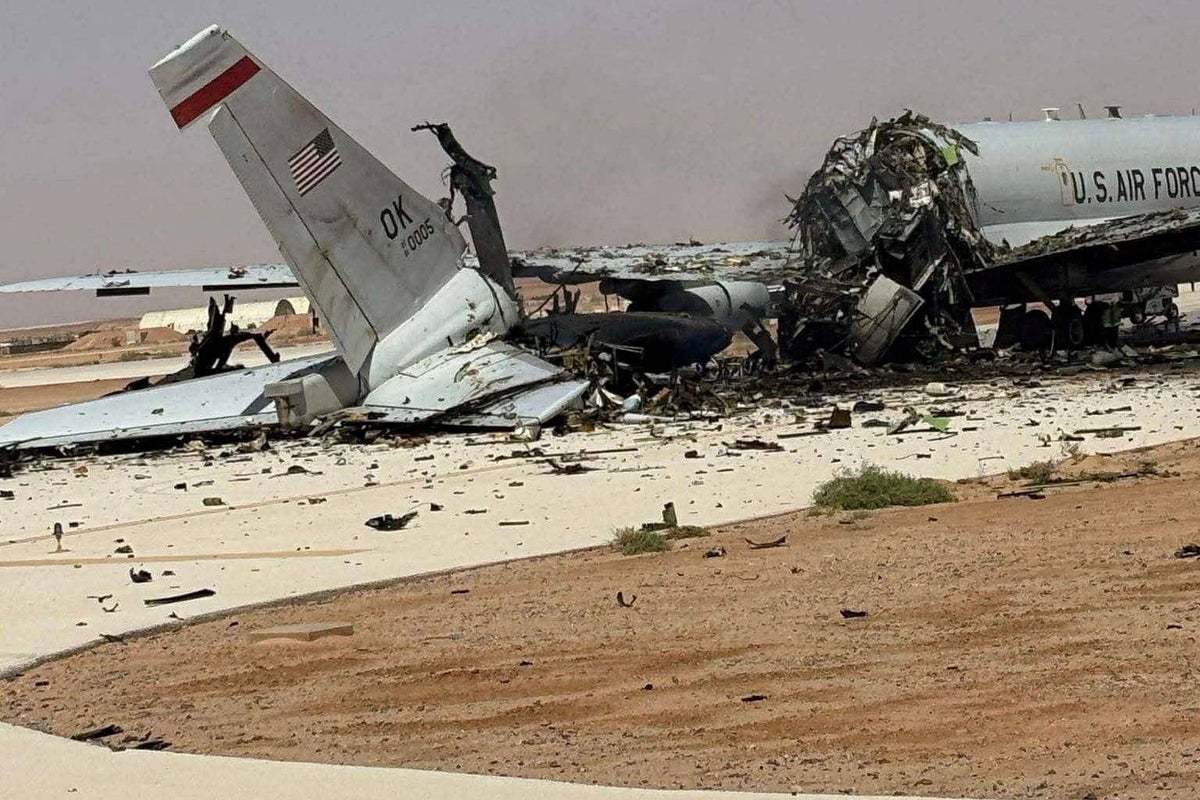
When Iran launched its precision strike against the airbase housing these multimillion-dollar assets, they didn't just break a piece of hardware. They didn't just "destroy a plane." They performed a digital lobotomy on the regional security apparatus. To understand why the loss of a single specialized aircraft is being whispered about in the halls of the Pentagon as a "serious blow," you have to stop thinking about planes as weapons.
Think of them as eyes. Now, imagine trying to win a knife fight in a pitch-black room after someone just poked yours out.
The Invisible Scaffold
The modern battlefield is not a place of individual heroics. It is a network. We have become accustomed to the idea of the "stealth fighter" or the "unmanned drone," but these platforms are effectively useless without the invisible scaffold provided by Airborne Early Warning and Control (AEW&C) aircraft.
These planes are the quarterbacks of the sky. They fly high, circling far above the reach of standard tactical threats, using massive conformal radars to "see" for hundreds of miles in every direction. They see over the curve of the earth. They see the low-flying cruise missiles that ground-based radar misses. They see the heat signatures of taking-off interceptors.
When one of these is caught on the ground and reduced to a charred skeleton of aluminum and rare-earth minerals, the entire network shudders.
The strike wasn't a lucky hit. It was a statement of intent. By targeting the Eitam—or its equivalent variants—the strike utilized a specific kind of surgical violence intended to blind the adversary. It is one thing to lose a dozen F-35s; those are replaceable, and their loss is a matter of attrition. But losing a specialized radar platform is a matter of architecture. You can replace a brick easily. It is much harder to replace the foundation.
A Masterclass in Vulnerability
The irony of the most advanced surveillance technology on the planet is that it is most vulnerable when it is doing nothing.
On the tarmac, the plane is a sitting duck. It is a heavy, fuel-laden bus packed with delicate crystals and cooling loops that cannot handle the shockwave of a nearby explosion. Reports indicate that the Iranian missiles didn't need a direct hit on the fuselage to render the aircraft a total loss. Shrapnel, the size of a fingernail, moving at supersonic speeds, can shred the gallium nitride sensors embedded in the plane's skin.
Once those sensors are compromised, the plane is no longer a strategic asset. It is a very expensive glider.
Consider the hypothetical perspective of a mission commander on the ground during the impact. One moment, you have a God’s-eye view of the Persian Gulf. You can see every dhow, every tanker, and every suspicious blip leaving an Iranian airfield. You feel secure because you have "persistent wide-area surveillance." You are playing a video game with the "fog of war" turned off.
Then comes the impact.
The vibration rattles the windows of the command center. The data link severs. The "No Signal" icon flashes on the primary display. Suddenly, you are back in 1942. You are relying on radio reports from pilots who are themselves confused. You are guessing. In the world of high-speed missile warfare, where the difference between "intercept" and "impact" is measured in four-second windows, guessing is a death sentence.
The Logistics of a Nightmare
Why can't we just send up another one?
This is where the cold reality of defense procurement meets the heat of a burning airbase. These aircraft are not mass-produced. They aren't rolling off an assembly line like F-15s or commercial Boeings. They are boutique instruments. Each one is hand-integrated, requiring years of calibration.
When you lose a critical radar plane, you aren't looking at a six-month delay. You are looking at a multi-year gap in your "order of battle." You are looking at a hole in the sky that cannot be patched.
Furthermore, the personnel who operate these machines are among the most highly trained individuals in any military. They are "Battle Management Officers." They spend years learning how to filter out the noise of civilian air traffic to find the one signal that matters. While early reports focused on the hardware, the psychological blow to the crews—the realization that their "safe" haven behind the front lines is now within the crosshairs—changes how the next mission is flown.
It introduces hesitation. And in the theater of war, hesitation is the only thing more dangerous than a missile.
The Shifting Gravity of Power
For decades, the assumption was that Western air superiority was an immutable fact of nature, like gravity or the tides. We assumed our "eyes in the sky" were untouchable because they stayed so far back.
This strike flipped the script.
It demonstrated that the "rear" no longer exists. If a precision-guided ballistic missile can travel hundreds of kilometers and strike a specific hangar with a circular error probable of only a few meters, then no asset is safe. The "serious blow" the experts are worried about isn't just about the loss of one radar. It is the realization that the entire strategy of "stand-off" surveillance is flawed.
We are entering an era of "blinding" warfare. The goal is no longer to shoot down the fighter jet; it is to destroy the data link that tells the jet where to go. It is to burn the map so the traveler gets lost in the woods.
The Silence After the Blast
Imagine the hangar now. The fire crews have long since departed. The smell of burnt plastic and jet fuel hangs heavy in the humid air. The twisted remains of what was once the most sophisticated piece of technology in the region sits in a pool of blackened foam.
The engineers walk through the wreckage with clipboards, but they already know the truth. They touch the jagged edges of the radar array, the part that was supposed to see the invisible. It failed to see the one thing that mattered: the one aimed directly at it.
The real tragedy of the strike isn't found in the million-dollar price tags or the geopolitical posturing. It’s found in the sudden, terrifying silence on the headsets of every pilot in the region who just lost their guiding voice. It’s the feeling of a blindfold being tied around the head of a giant.
The sky is still there. The planes are still flying. But the vision is gone. And in the dark, everyone is equal.