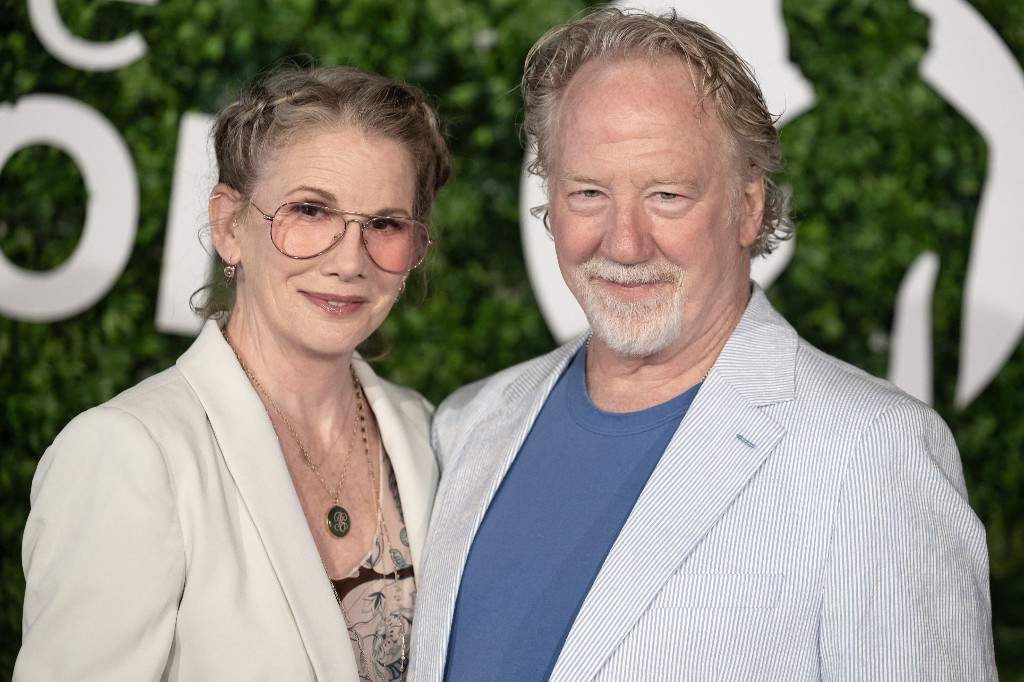
Confidence is a cheap currency in Hollywood. When Melissa Gilbert tells the press she is "100% confident" in Timothy Busfield’s eventual exoneration, she isn’t delivering a legal forecast. She’s performing a script. It’s the "Stand By Your Man" trope, polished for the digital age, and it’s a strategic blunder that ignores how the modern court of public opinion actually functions.
The industry consensus is that a united front is the only way to survive a scandal. Publicists scream it from the rooftops: "Don't show a crack in the armor." They’re wrong. In the current media climate, absolute certainty doesn't signal innocence; it signals a refusal to engage with reality. By staking her entire reputation on a binary outcome—total exoneration—Gilbert isn't just supporting her husband. She’s tying her legacy to a legal anchor that hasn't hit bottom yet.
The Myth of the "Clean" Exoneration
We need to stop pretending that a legal "not guilty" or a dismissed charge equals a return to the status quo. In the entertainment business, the "exoneration" is often a footnote to the initial accusation. The damage isn't in the verdict; it's in the discovery phase.
When high-profile figures face allegations, the public doesn't wait for a judge. They consume the leaked depositions, the character testimonies, and the messy history that inevitably surface. A legal exoneration doesn't scrub the search results. It doesn't delete the social media threads.
I’ve watched stars burn through millions in legal fees and PR retainers only to find that winning the case didn't win back their audience. The audience doesn't want "not guilty." They want "never happened," and that's an impossible standard to meet once the machine starts grinding.
The Loyalty Tax
Blind loyalty carries a heavy tax. When a spouse or partner adopts a "100% confident" stance, they effectively waive their right to be seen as an independent entity. They become a shield.
The problem? Shields get dented.
If you look at the history of celebrity scandals, the partners who survive with their careers intact are rarely the ones who went on a press tour to vouch for their spouse's soul. They are the ones who maintained a dignified, slightly distanced silence.
Why the "Unity" Play Backfires:
- It validates the scrutiny: By making a bold proclamation, you invite the public to prove you wrong. You turn a legal matter into a personal challenge for every amateur sleuth on the internet.
- It eliminates the "Graceful Exit": If new evidence emerges—even if it doesn't lead to a conviction—the "100% confident" partner looks like a fool or a co-conspirator.
- It creates a secondary target: The media loves a "betrayed spouse" narrative. By being too vocal, you’re just setting the stage for the inevitable "How could she not have known?" headline.
The Illusion of Control in the Legal System
Gilbert’s confidence assumes the legal system is a vending machine: you put in the truth and out comes justice. Anyone who has spent more than ten minutes in a courtroom knows it's actually a casino.
Legal outcomes are dictated by technicalities, witness credibility, and the specific composition of a jury. You can be "innocent" and still lose. You can be "guilty" and still win. To be "100% confident" in an unpredictable system is a form of hubris that the public instinctively distrusts.
True insiders know that the smartest move isn't to predict the finish line; it's to manage the track.
The Economics of Reputation
Let’s talk about the math. A celebrity’s value is built on relatability and trust. When you defend someone accused of misconduct with such absolute fervor, you are betting your entire "brand equity" on a single point of failure.
Imagine a scenario where a company’s CEO is accused of fraud. If the CFO comes out and says, "There is zero chance anything is wrong," and then an audit finds even a minor accounting error, the CFO is fired. Why? Because their judgment is now compromised.
In the celebrity world, Gilbert is the CFO of the Busfield-Gilbert brand. By offering a total guarantee, she is risking her own professional viability. The industry doesn't just cancel the accused; it cancels the enablers.
Beyond the Headline: What People Also Ask (and Get Wrong)
People often ask: "Shouldn't a wife support her husband?"
Of course. But "support" and "publicly guaranteeing a legal outcome" are two different things. Support happens in the living room. Public guarantees happen in the PR office.
Another common question: "Does public confidence help the legal case?"
Hardly ever. Judges and juries are instructed to ignore media commentary. If anything, a loud, confident PR campaign can alienate a jury pool, making them feel like the celebrity thinks they are above the process.
The Nuance of "Waiting for the Facts"
The "lazy consensus" says you have to pick a side immediately. You’re either a loyal supporter or you’re throwing them under the bus.
There is a third path: Radical Neutrality.
It involves saying: "These are serious allegations, and we trust the process to find the truth." It’s boring. It’s un-American. It doesn't make for a good headline. But it is the only way to protect your own skin while the fire burns next door.
The Reality of the "Exoneration" Narrative
The word "exonerated" is used as a shield, but it’s often a linguistic trick. In most cases, people aren't "exonerated"—the prosecution simply fails to meet the burden of proof. The cloud remains. The "100% confidence" play ignores the reality that in the 21st century, the stain is permanent.
Gilbert is playing a game from the 1990s. She thinks a clean verdict resets the clock. It doesn't. We live in an era of permanent digital records where the accusation is the lead, and the acquittal is the fine print.
Stop Vouching for People You Can't Control
You cannot control another person’s past, their secrets, or their legal team’s mistakes. When you vouch for someone with "100% confidence," you are taking responsibility for variables you don't own.
It’s not just risky; it’s bad business.
If you want to survive a scandal, stop trying to convince us of someone else’s perfection. Start protecting your own credibility. Because when the dust settles, the person who stood "100% confident" usually ends up standing alone, wondering why their own career vanished along with the verdict.
The court of public opinion doesn't grant exonerations. It only grants pardons to those who didn't lie to it in the first place.