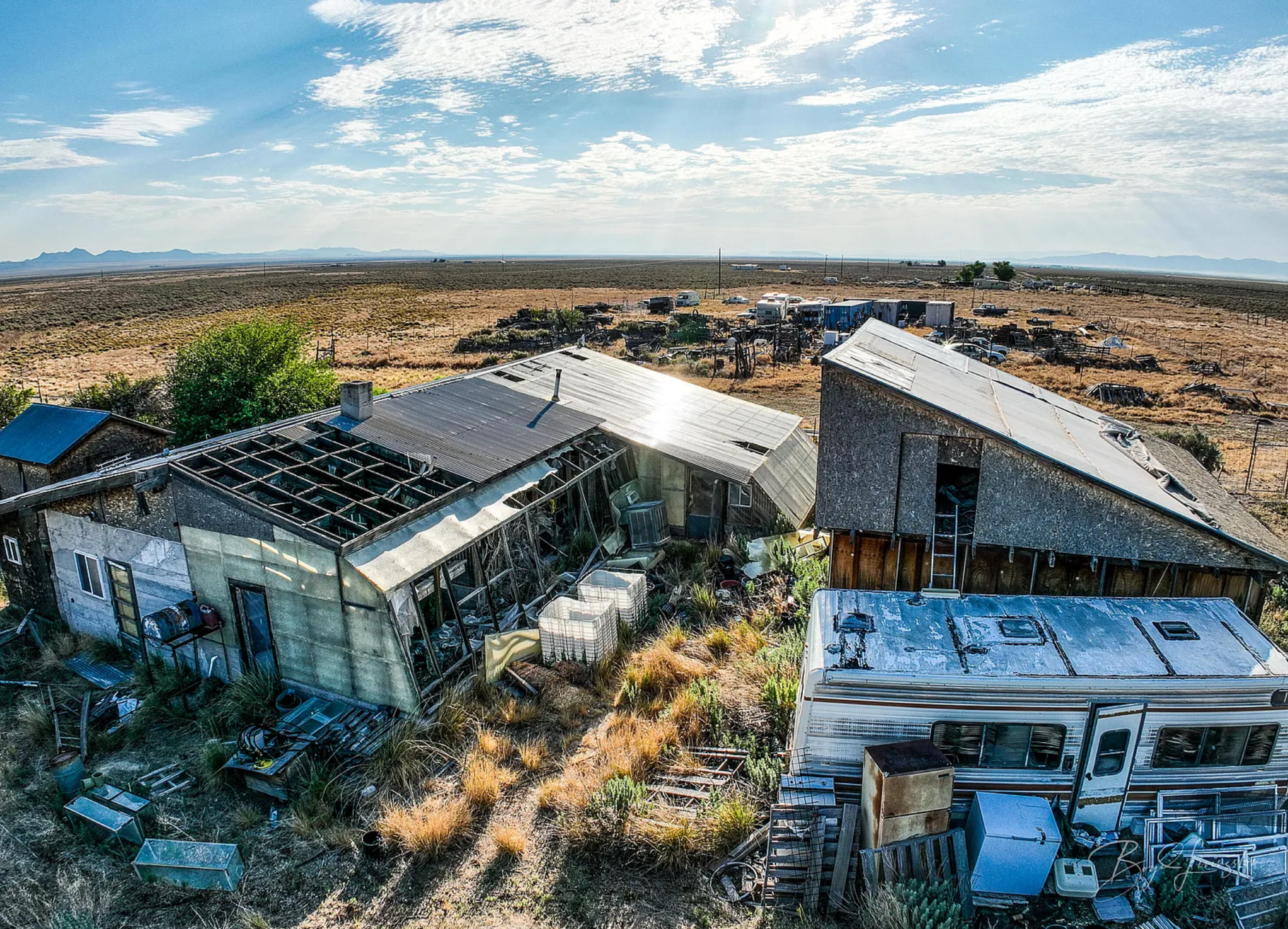
Prepping isn't just about stockpiling canned beans and buying a gas mask. It's a massive industry built on the very human fear that the world might stop working tomorrow. When you look at an abandoned prepper paradise—a place specifically designed to withstand the end of days but left to rot—you see a different story. You see the gap between the dream of total self-sufficiency and the brutal reality of maintaining it.
Most of these sites, often converted Cold War bunkers or remote mountain compounds, fail for the same reasons. Money runs out. People get bored. The "end" doesn't happen on schedule. Looking at these ruins today, we get a raw look at what happens when survivalism meets the slow decay of time. It's eerie. It's quiet. It's a warning for anyone thinking about dropping half a million dollars on a hole in the ground.
Why These Doomsday Fortresses Go Dark
You'd think a place built to survive a nuclear winter could handle a few decades of neglect. It can't. Nature is relentless. I've seen how quickly moisture destroys "bomb-proof" structures once the power goes out. Without active ventilation, these underground havens become petri dishes for black mold in months.
The biggest reason these paradises get abandoned is usually financial. Building a bunker is expensive, but keeping it running is a nightmare. You're dealing with specialized air filtration systems, massive diesel generators, and complex waste management. When the original investor dies or the group members start arguing over HOA fees for the apocalypse, the maintenance stops.
Take the Vivos xPoint or similar massive complexes. They rely on a community staying committed. Once that social contract breaks, the physical structure follows. You end up with miles of concrete hallways filled with rusting bunk beds and expired MREs. It's not a movie set. It's a graveyard of expensive anxiety.
The Architecture of Paranoia
Walking through an abandoned survivalist compound reveals a specific kind of design language. Everything is heavy. Doors are steel. Walls are reinforced. But there’s a total lack of human comfort.
Infrastructure That Failed
In these ruins, you often find high-end tech that’s now useless. We're talking about old communication arrays that can't find a signal and water purification systems clogged with silt. The planners often over-engineered the big stuff—the blast doors—while ignoring the small stuff like how to keep a battery bank from leaking acid over twenty years.
The layout usually follows a predictable pattern. There’s a "clean zone" for living and a "dirty zone" for machinery. In many abandoned sites, the line between these two has blurred. Rust has eaten through the seals. The very air feels heavy because the passive cooling systems weren't actually designed to work without a fan forcing air through the vents.
The Psychology of the Empty Bunk
There is a profound sadness in seeing a child’s bedroom in a bunker. You see the tiny beds, the faded posters, and the stored toys. It shows that someone truly believed they would have to raise a family in the dark.
Most abandoned prepper sites aren't just empty buildings. They’re containers for unspent fear. When you see a shelf with 500 cans of peaches that expired in 1998, you realize someone spent their best years preparing for a tragedy that never arrived. They traded their present happiness for a "safe" future that they eventually walked away from.
What Modern Preppers Get Wrong
If you're looking at these ruins and thinking about your own setup, pay attention. The biggest mistake is the "fortress" mentality. You can't hide from the world forever. These abandoned sites prove that isolation is a death sentence for a building.
- Maintenance is the real survival skill. If you can’t fix a plumbing leak with basic tools, your fancy bunker will eventually drown you in grey water.
- Community beats concrete. The most successful "preppers" aren't the ones in holes. They're the ones with neighbors who know how to farm, heal, and build.
- Humidity is the silent killer. More bunkers have been destroyed by simple condensation than by any external threat.
The ruins of these "paradises" are littered with gear that people bought because it looked "tactical." They bought the $500 knife but didn't know how to sharpen it. They bought the $10,000 solar array but didn't realize the batteries would die in five years if not cycled correctly.
The Lessons Left in the Dust
An abandoned prepper paradise isn't just a curiosity for urban explorers. It's a case study in human priorities. We see the remains of "Bug Out Vehicles" with flat tires and seized engines. We see medical bays filled with outdated supplies that would probably do more harm than good now.
The truth is that survival isn't a destination you can buy. It's a process. These sites were treated as products—something you could purchase, stock, and then ignore until you needed it. But a home, even a survivalist one, needs a pulse. It needs someone to open the windows, oil the hinges, and check the seals.
If you're serious about being prepared, look at these ruins. Don't build a tomb and call it a paradise. Focus on skills that work in the light, not just the dark. Learn to grow food in your backyard today. Learn how to filter water using sand and charcoal. These skills don't rust. They don't require a diesel generator. And they don't require you to live in a concrete box while the world passes you by.
Instead of investing in a bunker that will likely end up as another headline for an urban exploration blog, invest in your local community. Build a garden. Meet your neighbors. Stockpile knowledge. That's the only paradise that won't end up abandoned when the money runs out.