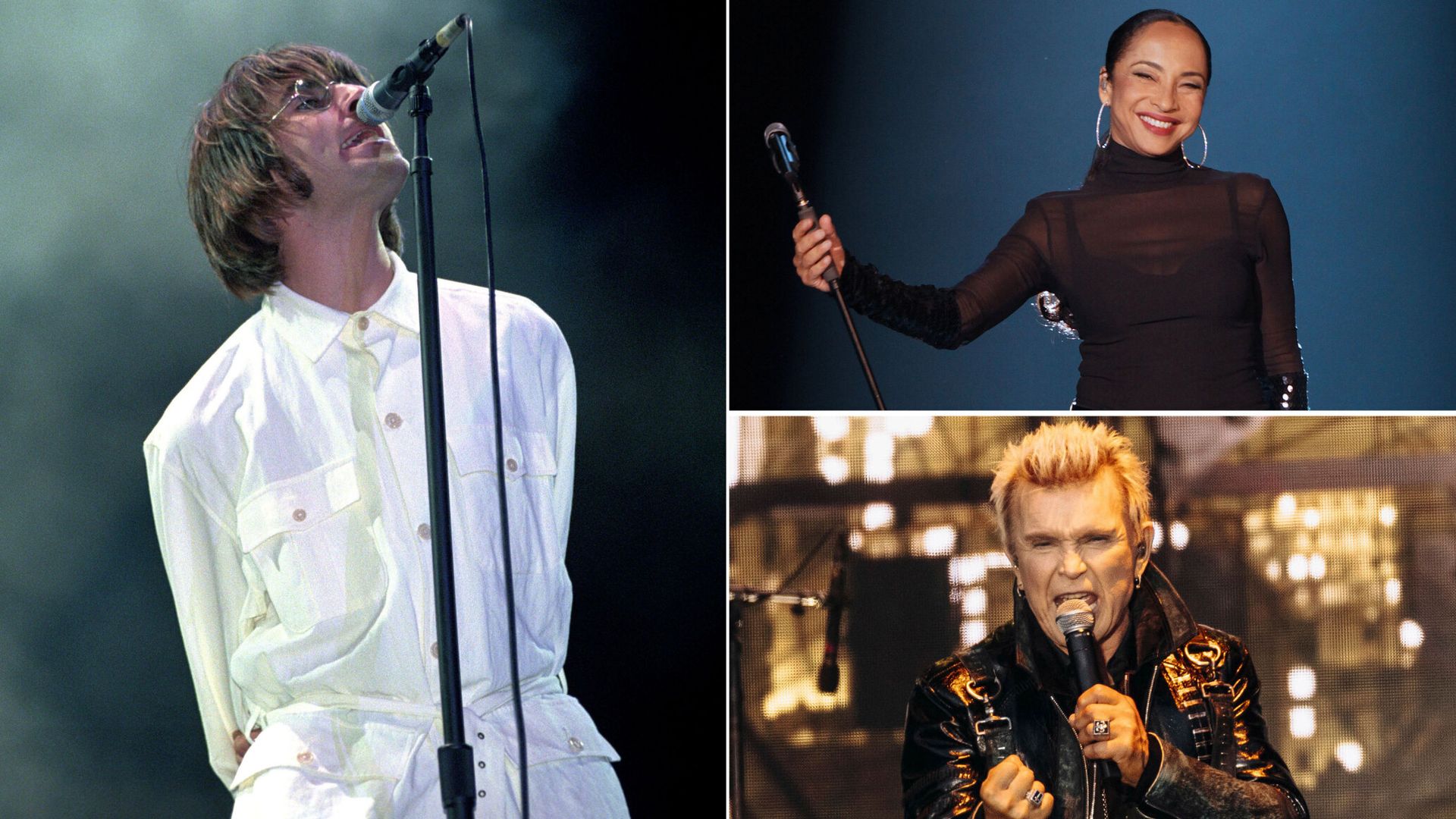
The Rock & Roll Hall of Fame just stopped pretending that "rock" is a narrow aesthetic defined by denim and distortion. By inducting a class that includes the melodic precision of Phil Collins, the heavy metal blueprint of Iron Maiden, the sophisticated soul of Sade, the Britpop bravado of Oasis, the hip-hop grit of Wu-Tang Clan, and the vocal mastery of Luther Vandross, the institution has finally admitted that its own survival depends on reflecting the actual history of popular music rather than a curated clubhouse fantasy.
For decades, the selection process felt like a recurring argument between aging purists and a reality that moved past them thirty years ago. This latest roster isn't just a list of names. It represents a total surrender of the old guard’s exclusionary walls. When you look at the raw data of influence, sales, and cultural longevity, these artists weren't just "overlooked." They were systematically ignored because they didn't fit a specific, mid-century definition of rebellion.
The Heavy Metal Tax is Finally Paid
Iron Maiden’s inclusion marks the end of a long, embarrassing standoff. Bruce Dickinson and his crew have been the gold standard for global touring and technical proficiency for nearly half a century. Yet, the Hall treated them like a niche subculture for years.
This isn't just about loud guitars. It’s about a band that built an independent ecosystem—merchandise, private aviation, and a fanatical global community—without ever begging for radio play or critical validation. The Hall didn't "give" Iron Maiden anything; it finally recognized a power structure that has existed in plain sight since 1980. The delay in their induction served as a glaring indictment of the voting committee's disconnect from the harder edges of the musical spectrum.
Metal fans are notoriously protective. They don't need a trophy in Cleveland to know The Number of the Beast changed the world. However, the institution needs the credibility that comes with acknowledging the genre's most disciplined architects. To exclude them was to admit the Hall was a museum of nostalgia rather than a record of impact.
The Pop Genius of Phil Collins
Phil Collins has long been the industry’s favorite punching bag. During the eighties, his ubiquity was so absolute that a backlash became inevitable. But look at the craft. If you strip away the polished production of the era, you are left with some of the most sophisticated songwriting in the history of the medium.
Collins wasn't just a singer. He was a percussionist who fundamentally altered how drums were recorded. The "gated reverb" sound that defined a decade started with him. His induction recognizes the bridge between progressive rock complexity and mass-market accessibility. You don't get the modern pop landscape without the rhythmic foundations he laid down.
Critics often mistake popularity for a lack of depth. Collins proved that you could be musically intricate while still topping the charts. His inclusion alongside Genesis was a start, but his solo career is a separate beast entirely—one that dominated the global consciousness in a way few artists ever have.
Wu-Tang Clan and the Architecture of the Streets
Inducting Wu-Tang Clan is a statement on the power of the collective. They didn't just release albums; they built a brand identity that functioned like a corporate takeover of the music industry. By allowing each member to sign solo deals while remaining part of the group, they rewrote the rules of the business.
Their sound was jagged, cinematic, and unapologetically raw. RZA’s production style, built on dusty soul samples and eerie atmospheres, created a template that everyone from Kanye West to Kendrick Lamar has utilized.
The Business of the W
- Decentralized Power: They proved a group could be stronger as a collection of individual stars.
- Sonic Identity: They brought a lo-fi, grime-heavy aesthetic to the mainstream.
- Cultural Saturation: From clothing to film, they were the first hip-hop entity to achieve total lifestyle integration.
If the Hall of Fame is meant to honor "rock and roll spirit," there is nothing more rock and roll than nine guys from Staten Island seizing the means of production and forcing the world to speak their language.
Sade and the Power of Silence
Sade Adu is the antithesis of the modern attention economy. She doesn't chase trends. She doesn't stay in the spotlight. She emerges every decade or so, releases a masterpiece, and then disappears back into her private life.
Her induction is a victory for subtlety. In a genre often defined by shouting, Sade proved that a whisper could carry more weight. Her blend of soul, jazz, and sophisticated pop created a "quiet storm" that remains timeless. Unlike many of her contemporaries, her records don't sound dated. They sound expensive and eternal.
The Hall often favors the loud and the boisterous. Recognizing Sade is an admission that influence isn't always measured in decibels. Sometimes, it’s measured in the way an artist’s voice becomes the permanent soundtrack for a specific kind of late-night, urban melancholy.
The Oasis Factor and the Last Great Rock Stars
Liam and Noel Gallagher didn't just write songs; they provided a manifesto for a generation. Oasis was the last time a guitar band felt like the biggest thing on the planet without having to apologize for it.
The Britpop movement was a localized phenomenon that Oasis turned into a global conquest. Morning Glory wasn't just an album; it was a cultural shift. Their inclusion in the Hall brings back a necessary element of arrogance. Rock and roll requires a certain level of delusion—the belief that your songs are the only ones that matter. The Gallaghers lived that delusion until it became a reality.
The ongoing tension between the brothers only adds to the legend. The Hall of Fame thrives on the drama of reunions and the tension of the podium. But beyond the tabloid headlines, the music remains bulletproof. "Wonderwall" and "Don't Look Back in Anger" are modern hymns. They are the types of songs that people sing in stadiums when they want to feel like they belong to something bigger than themselves.
Luther Vandross and the Standard of Excellence
For a long time, the Hall struggled with how to categorize "pure" singers. Luther Vandross wasn't a rocker in the traditional sense, but he possessed a technical mastery that few in any genre could match.
Vandross was the architect of modern R&B phrasing. Every male vocalist who has stepped into a recording studio in the last forty years owes him a debt. He brought a meticulous, orchestral approach to soul music, ensuring that every note served the emotional core of the song.
His induction corrects a long-standing bias against "velvet" vocalists. If the Hall is going to celebrate the pioneers of the blues and the shouters of the fifties, it must also celebrate the man who took those influences and polished them into a diamond-hard standard of vocal perfection.
The Myth of the Pure Genre
The pushback against this diverse class usually comes from a vocal minority who believe the Hall should only house four-piece bands with electric guitars. This perspective is historically illiterate.
Rock and roll was born from a collision of gospel, blues, country, and R&B. It was never a pure genre. It was a theft, a fusion, and a constant evolution. By the time we reached the eighties and nineties, that evolution included the synthesizers of Phil Collins, the samplers of the Wu-Tang Clan, and the smooth jazz infusions of Sade.
To exclude these artists is to lie about how music actually works. People who bought Oasis records also bought Wu-Tang records. The teenage metalheads listening to Iron Maiden in 1984 were often the same kids watching Phil Collins on MTV. Our ears don't live in silos, and our institutions shouldn't either.
The Voting Bloc Rebellion
What we are seeing is a shift in the demographic of the voting body. For years, the committee was dominated by a specific generation of critics who came of age in the late sixties. To them, the "Golden Age" ended in 1974.
As younger writers, musicians, and industry professionals have joined the ranks, the definition of "classic" has shifted. We are now in an era where 1994 is as distant as 1964 was to the original founders. This shift is necessary for the Hall's continued relevance. If the institution doesn't reflect the heroes of the people currently paying for tickets, it becomes a graveyard rather than a celebration.
The inclusion of these six acts represents a breakdown of the old hierarchies. It’s no longer about whether an artist is "rock" enough. It’s about whether they changed the temperature of the room when they walked in.
The Logistics of the Modern Legend
The Rock Hall's move toward these heavy hitters is also a calculated business decision. The annual induction ceremony is a major television event and a massive revenue driver.
A ceremony featuring a potential Oasis reunion, the spectacle of Iron Maiden’s stage production, and the sheer star power of the Wu-Tang Clan is a global draw. This isn't cynical; it's practical. For the Hall to fund its educational programs and maintain its physical museum in Cleveland, it needs to remain a part of the cultural conversation.
The industry is currently obsessed with "IP" and "legacy." We see this in the skyrocketing prices for song catalogs. By inducting these artists now, the Hall is staking its claim on the most valuable musical assets of the last forty years. They are identifying the artists whose music will continue to be licensed, streamed, and covered for the next century.
Moving Beyond the Trophy
There will always be those who complain about the "snubs." Where is Soundgarden? Why hasn't Joy Division made it? These are valid questions, but they miss the larger point of this specific class.
This year wasn't about filling a single gap. It was about a total systemic reset. By moving so many diverse, high-impact artists through the gate at once, the Hall has effectively cleared the deck. They have signaled that the era of the "rock purist" gatekeeper is over.
The new criteria is influence. It is the ability to move the needle of the culture. Whether you do that with a Marshall stack, a Roland TR-808, or a vocal performance that breaks hearts across three generations, the door is finally open.
The real test for the Hall moving forward will be its ability to maintain this momentum without retreating into the safe, the predictable, or the purely nostalgic. It has to keep looking for the outliers who didn't fit the mold but built their own instead.
Stop looking for the leather jackets and start looking for the innovators who didn't care if the "establishment" liked them or not. Those are the artists who actually defined the spirit the Hall claims to protect. The 2024 class is a rare moment where the institution actually caught up to the audience.
Go listen to the opening drums of "In the Air Tonight" or the first bars of "C.R.E.A.M." and tell me they don't belong in the same building. You can't. The argument is over.