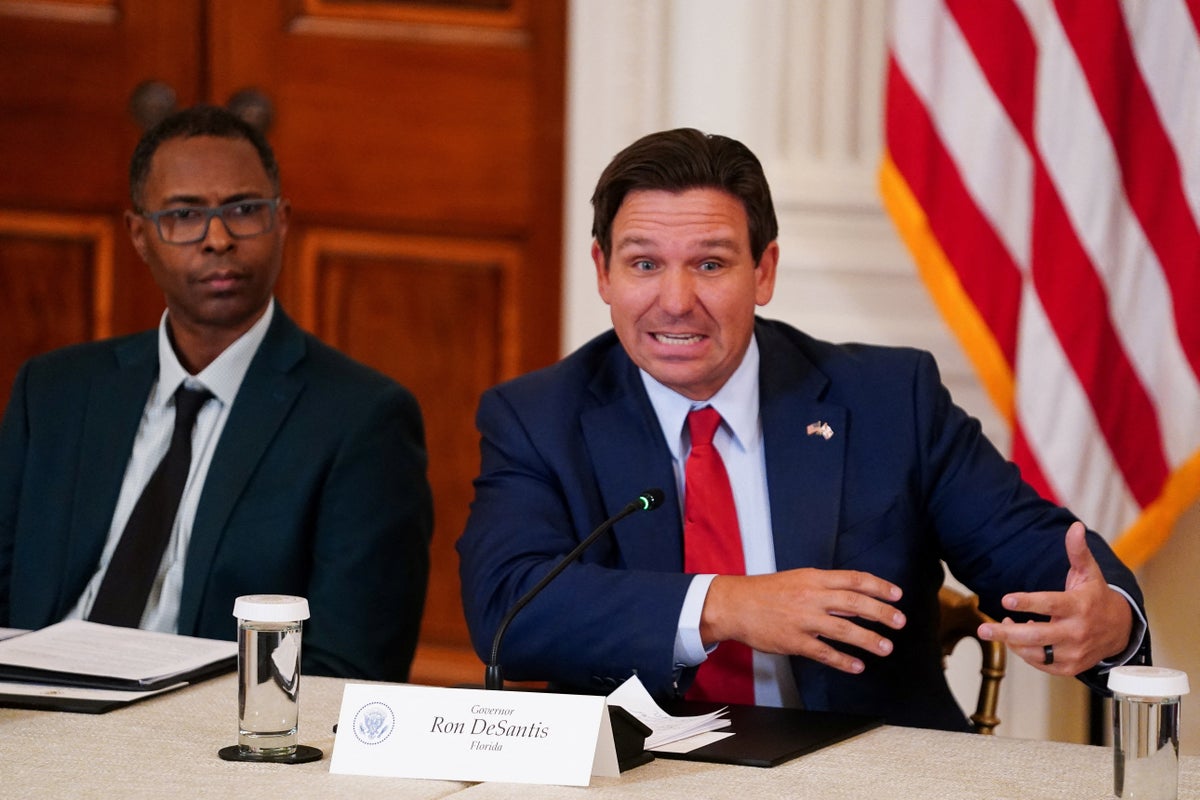
You’re standing in a security line that snakes past the Cinnabon, through the terminal doors, and halfway to the parking garage. Your flight departs in 40 minutes. The person in front of you is currently having a ten-minute debate with a TSA officer about whether a jar of artisanal honey counts as a liquid. This is the "security theater" Americans have endured for 25 years, and Florida Governor Ron DeSantis thinks it’s time to pull the plug.
On March 21, 2026, DeSantis sparked a massive debate by suggesting we should get rid of the TSA entirely. He isn't just complaining about the wait times. He’s questioning the very foundation of a federalized monopoly that, in his view, provides more hassle than actual protection. "Is there evidence that creating TSA has made air travel safer over the past 25 years?" he asked on X. "If not, then why not let the airlines and airports handle it?"
The Federal Monopoly on Your Travel Time
The TSA didn't exist before 9/11. Before that, private security firms handled the checkpoints. After the attacks, the government panicked and federalized the whole system in a matter of months. We traded private contractors for a massive bureaucracy that now costs taxpayers over $10 billion a year.
DeSantis’s argument hits a nerve because it exposes a structural flaw. When a government agency fails, it asks for more money. When a private company fails, it loses the contract. Right now, the TSA has zero competition. If they're slow, you wait. If they're rude, you deal with it. They don't have customers; they have subjects.
Critics call his proposal dangerous. They point to the pre-9/11 era when private screeners were often underpaid and poorly trained. But that’s a false choice. We don't have to choose between 1999-style chaos and 2026-style bureaucracy. There’s a middle ground that’s already working right under our noses.
San Francisco and the Case for Privatization
Most travelers don't realize that the TSA already has a "Screening Partnership Program" (SPP). About 20 airports in the U.S. have already fired the federal screeners and hired private companies. San Francisco International (SFO) is the biggest example.
At SFO, the people checking your bags don't work for the federal government. They work for a private contractor. Here’s the kicker: they still follow every single TSA rule. They use TSA equipment. They undergo the same background checks. But because a private company manages the staff, they’re often more efficient.
- Stability during shutdowns: When the government shuts down and TSA agents stop getting paid, absenteeism usually spikes. At SFO, the private company keeps paying its workers. The lines stay short while the rest of the country’s airports descend into chaos.
- Customer service: Private firms actually care about throughput. If the lines get too long, the airport can threaten to switch vendors.
- Local control: Orlando Sanford and Sarasota-Bradenton in Florida already use this model. It isn't a radical experiment; it’s a proven alternative.
The Problem With Security Theater
The governor’s frustration isn't just about the lines. It’s about the "grandmother taking off her shoes" routine. We’ve all seen it. The TSA spends its energy on low-risk travelers while failing undercover "red team" tests at an alarming rate.
Department of Homeland Security inspectors have famously managed to smuggle mock weapons and explosives past TSA checkpoints in past trials. DeSantis’s point is simple: if a massive bureaucracy isn't actually catching the bad guys better than a lean, private firm would, why are we paying for the overhead?
We've become accustomed to the "liquids and gels" dance, but many experts, including those at the Cato Institute, argue these rules do little for safety. They're designed to make the public feel safe. It’s a performance. DeSantis is essentially asking why we’re still paying for a show that hasn't changed its script in two decades.
What Happens if We Actually Abolish the TSA
If DeSantis gets his way, the TSA wouldn't just vanish into thin air, leaving the gates wide open. The proposal is to shift the operation of security to airports and airlines. The federal government would likely move into an oversight role—setting the standards and auditing the results—rather than running the day-to-day HR department for 60,000 screeners.
This shift would force innovation. A private security firm at a tech-heavy airport like San Jose might invest in better biometric scanners faster than a slow-moving federal agency would. Competition drives tech adoption. Right now, the TSA moves at the speed of a glacier because it has to implement every change across 450 airports simultaneously.
The Politics of the Move
This isn't just about travel; it’s about power. DeSantis is framing this as a way to stop "politicians playing games with the travel of our people." During the 2026 government funding dispute, travelers became pawns in a DC budget battle. By privatizing the workforce, you insulate the traveler from the political circus.
It’s a winning message for a guy who might be eyeing a 2028 presidential run. It appeals to the "small government" crowd and the "I just want to get through the airport" crowd alike.
How to Avoid the Longest Lines Right Now
You don't have to wait for a literal Act of Congress to skip the mess. While the politicians argue about the future of the agency, you can navigate the current system better.
- Check for SPP Airports: If you have a choice between flying out of a massive hub or a smaller regional airport like Orlando Sanford (SFB), pick the regional one. These private-contractor airports often have much better morale and faster moving lines.
- Get Clear or PreCheck: It’s frustrating to pay for "shortcut" programs, but until the system changes, they’re the only way to bypass the security theater.
- Track Real-Time Data: Don't trust the posted wait times at the terminal. Use apps like MyTSA to see crowdsourced data from people actually standing in line.
The debate over the TSA's existence is only going to get louder as more government shutdowns loom. DeSantis has started a fire that won't be easily put out. Whether you think he’s a visionary or a disruptor, one thing is certain: the current system is broken, and "more of the same" isn't a solution.
If you're tired of the lines, start looking at which airports are already opting out of federal screening. You might find that the "private" way is already the better way.