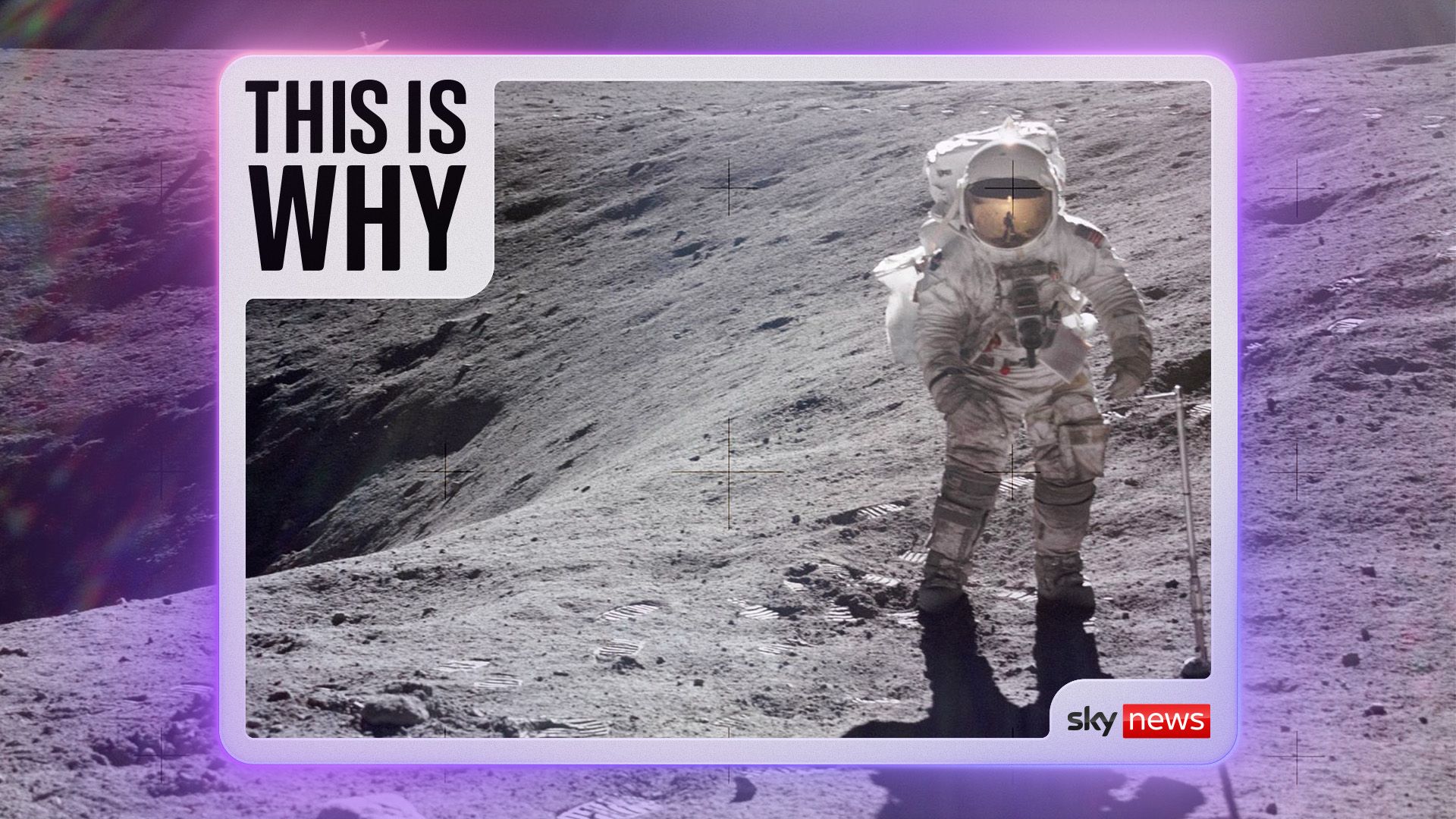
The light that hits the lunar south pole isn’t like the light on Earth. It is horizontal, sharp, and deceptive. It stretches shadows into infinite black ribbons that hide craters deep enough to swallow a skyscraper. For fifty years, we looked at that silver coin in the sky as a graveyard of footprints and discarded gold foil. We treated it like a trophy room we had already visited, locked the door, and misplaced the key.
But the silence is over.
If you stood on the rim of the Shackleton Crater today, you wouldn't hear the roar of engines—sound has no medium there—but you would feel the vibration of a species waking up. We are no longer going back to the Moon to prove we can do it. We are going because we’ve realized that Earth, for all its beauty, is a single point of failure. The Artemis and Chandrayaan programs aren't just technical manuals for rocket thrust and orbital mechanics. They are the first chapters of a survival guide.
The Water in the Shadow
For decades, the Moon was described as "magnificent desolation." It was bone-dry. Or so we thought. The shift in our lunar story began not with a giant leap, but with a chemical signature.
Consider the weight of a single gallon of water. On Earth, it’s a mundane eight pounds. To lift that same gallon into space costs thousands of dollars in fuel. If we want to live out there—to breathe, to drink, to grow a single stalk of wheat—we cannot carry the ocean with us. We have to find it where we’re going.
This is why the world’s eyes are fixed on the lunar South Pole. In the "permanently shadowed regions," places where the sun hasn't shone for two billion years, the temperature hovers around -250°C. It is colder than the surface of Pluto. In that darkness, trapped in the regolith, is ice.
When India’s Chandrayaan-1 first detected signs of this lunar water, it wasn't just a scientific gold star. It was the discovery of a gas station in the middle of a desert. Water is oxygen to breathe. Water is liquid hydrogen and liquid oxygen—the very chemicals that power deep-space engines. By finding water, we didn't just find a resource; we found a way to leave.
Two Paths to the Same Peak
The current race to the Moon is different from the 1960s. The Cold War was a sprint to a finish line. This is an endurance trek to build a foundation.
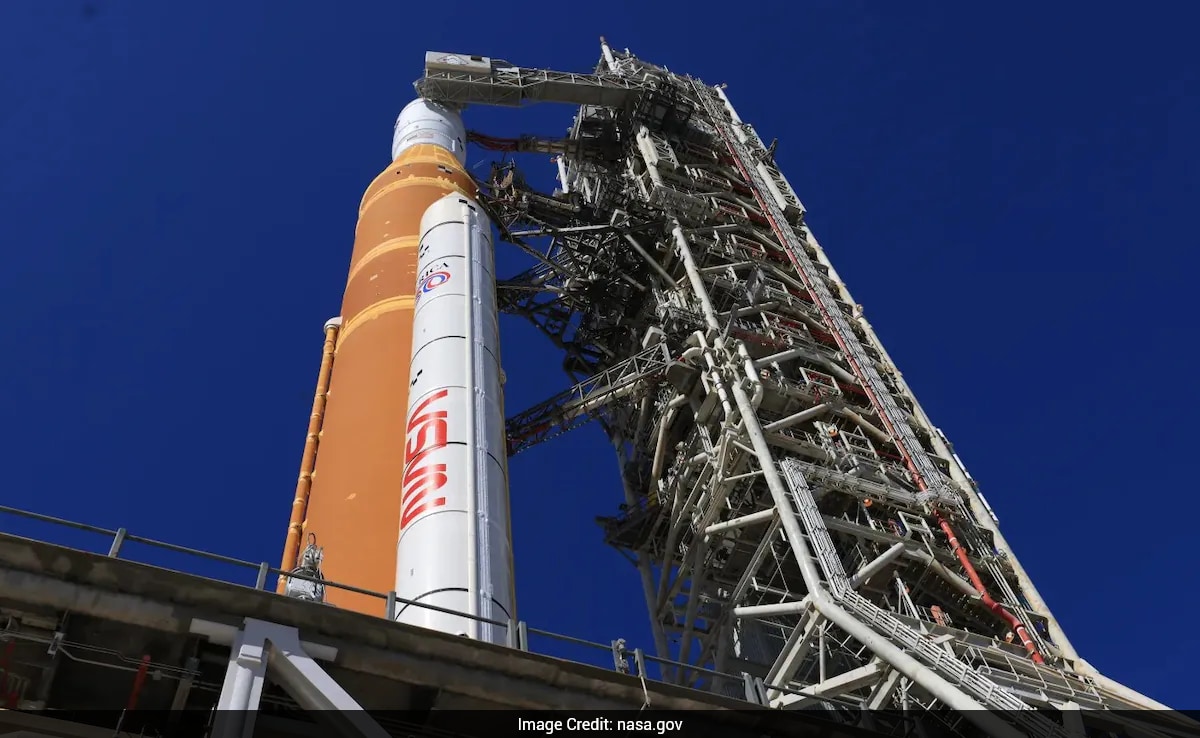
NASA’s Artemis program is the heavyweight. It is a sprawling, multi-national effort designed around the Space Launch System (SLS) and the Orion spacecraft. Its goal is to establish the Gateway, a small station orbiting the Moon that acts as a staging point. Artemis is about infrastructure. It’s about building a house so that we can eventually move into the neighborhood.
Then there is Chandrayaan.
If Artemis is the grand architectural plan, Chandrayaan is the masterclass in precision and grit. When the Indian Space Research Organisation (ISRO) landed Chandrayaan-3 near the South Pole in 2023, they did it on a budget that would barely cover a Hollywood space blockbuster. They didn't just land; they proved that the Moon is accessible to the world, not just the superpowers of old.
The contrast is striking. Artemis represents the massive, institutional push to move humans permanently. Chandrayaan represents the democratic, high-efficiency scout movement. One provides the heavy lifting; the other provides the critical, localized data on how to survive the terrain.
The Human at the Console
Imagine a flight controller in Bengaluru or Houston. It is 3:00 AM. The room smells of stale coffee and ionized air. On their screen, a series of telemetry lines represents a craft half a million miles away.
There is a terrifying delay.
When you command a rover on the Moon, you aren't driving it in real-time. You are sending a wish into the vacuum and waiting seconds to see if the universe grants it. This lag is the "invisible stake." A single misinterpreted shadow, a rock slightly too steep, and a decade of work becomes a new crater.
We often talk about these missions in terms of "agencies" and "nations," but the reality is composed of thousands of individuals who haven't slept in forty-eight hours. It’s the engineer who spent three years obsessing over a single heater to ensure a battery doesn't freeze during the fourteen-day lunar night. It’s the geologist looking at a grainy photo of grey dust as if it were a map to a buried treasure.
These people are rewriting the story by shifting the Moon from a "destination" to a "laboratory." In the Artemis vision, we aren't just staying in modules. We are learning to use 3D printers to turn lunar dust into bricks. We are testing how the human heart functions in one-sixth gravity over months, not days. We are the lab rats, and the Moon is the maze.
The Physics of the Long Game
To understand why this matters, we have to look at the gravity well.
Leaving Earth is hard. It requires an immense amount of energy to break free from our planet’s gravitational pull. It’s like trying to climb out of a deep, muddy pit. The Moon, however, sits on the edge of that pit. Its gravity is weak. If we can launch from the Moon—using fuel mined from lunar ice—Mars becomes a realistic goal.
This is the "Lunar Story" being rewritten. In the 20th century, the Moon was the end. In the 21st century, the Moon is the porch.
But the terrain is brutal. The regolith—the fine, grey dust covering the surface—is not like sand. It is made of tiny, jagged glass shards created by eons of meteorite impacts. It has no wind to round its edges. It sticks to everything. It eats through seals. It clogs joints. It smells, according to Apollo astronauts, like spent gunpowder.
Survival isn't just about oxygen; it’s about outsmarting the very dirt beneath our feet.
The Ethics of the New Frontier
As we move closer to a permanent presence, a new tension emerges. Who owns the ice?
The 1967 Outer Space Treaty says no nation can claim sovereignty over a celestial body. But it doesn't explicitly say you can't use the resources. Artemis Accords, a series of bilateral agreements led by the U.S., attempt to create "safety zones" and rules for resource extraction. Meanwhile, other nations watch with a mix of cooperation and caution.
This isn't just a technical challenge. It is a mirror. We are taking our terrestrial politics, our greed, and our hope, and we are launching them into the black. The lunar story is being rewritten to include words like "sustainability" and "commercialization." For the first time, private companies are bidding for "payload space." We are moving from the era of exploration into the era of economics.
Is that a tragedy? Or is it the only way to stay?
History suggests that humans only stay in places where there is a reason to work. If the Moon is just a museum, we will stop going when the budget gets tight. If the Moon is a shipyard, a research hub, and a fuel depot, we will stay forever.
The Night That Lasts Two Weeks
The most harrowing part of the lunar story is the cycle. On the Moon, the sun stays up for fourteen Earth days, and then it vanishes for fourteen Earth days.
During the lunar night, the temperature drops so low that most electronics simply shatter. Without the sun, solar-powered rovers like India's Pragyan must go into a forced sleep. There is no guarantee they will wake up. That moment—when the sun hits the solar panels after two weeks of darkness—is the most anxious heartbeat in the mission.
Artemis plans to solve this with "fission surface power"—tiny nuclear reactors that provide a steady heartbeat of heat and light when the sun fails. It is a pivot from the temporary to the permanent. It’s the difference between a camping trip and building a city.
The View from the Rim
There is a specific feeling that astronauts describe when they look back at Earth from the lunar distance. It is called the Overview Effect. From the Moon, Earth is small. It is a fragile blue marble hanging in a void that wants to extinguish it.
When we look at the Artemis and Chandrayaan missions, it is easy to get lost in the "how." How many kilonewtons of thrust? How many kilograms of payload? But the "why" is more important.
The why is about the insurance policy of the human race. It is about the fact that as long as we are on one planet, we are vulnerable to the whims of the cosmos. By reaching for the lunar South Pole, by digging into the ice, by building the Gateway, we are essentially building a bridge.
The bridge doesn't just lead to the Moon. It leads away from our limitations.
The story is no longer about a race to plant a flag. It is a story about a species that has spent its entire history looking up, finally deciding to climb. The footprints we leave next won't be isolated marks in the dust. They will be the first tracks of a road that leads to the stars.
We are not just visiting the Moon. We are becoming a multi-planetary culture, one gram of lunar ice at a time. The cold, grey rock is finally beginning to feel like home.
Imagine a child born fifty years from now. They might look up at the night sky, see a tiny, steady spark of light on the edge of the Moon's southern rim, and know that people are there. They might know that their parents, or their grandparents, were the ones who decided that the cradle was too small.
The lunar story isn't being rewritten by machines. It is being rewritten by the audacity of people who refuse to believe that the horizon is the end of the world.
Would you like me to analyze the specific technological differences between the SLS rocket and the LVM3 used in these programs?