In the narrow, sun-bleached alleys of Bushehr, the air usually tastes of salt and industrial exhaust. For the families living in the shadow of the cooling towers, the news doesn't arrive via a sleek smartphone notification or a televised press briefing. It arrives as a vibration in the chest. It is the sound of a city holding its breath.
When the headlines flickered across the world’s screens—Trump postpones energy attacks—the geopolitical analysts in Washington and London began their rhythmic dance of dissection. They spoke of strategic pivots, de-escalation cycles, and the fluctuating price of Brent crude. But for a father in a coastal Iranian province, the news meant something far more visceral. It meant his children might actually sleep through the night without the phantom roar of a jet engine haunting their dreams. For an alternative perspective, read: this related article.
Tehran was quick to claim victory. The official rhetoric was predictably sharp, painted in the bold colors of defiance. To the Iranian leadership, the American President hadn't just paused; he had "backed down." It is a narrative of strength designed for a domestic audience that has grown weary under the weight of "maximum pressure" and the relentless grind of economic isolation.
But the truth of a ceasefire—or even a momentary stay of execution—is never as simple as a scoreboard. Further analysis on this matter has been shared by NBC News.
The Anatomy of a Threat
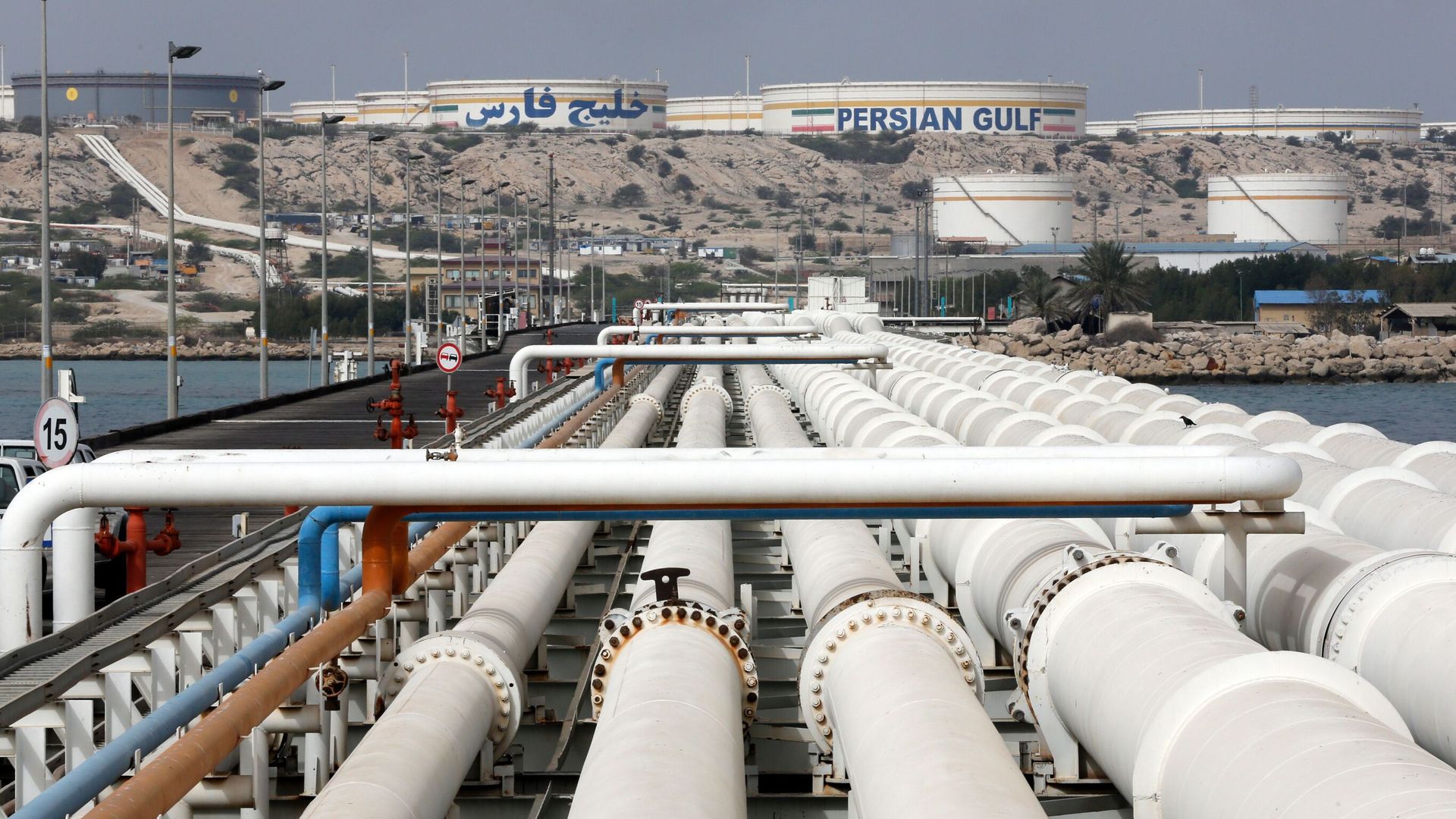
To understand why a postponed attack feels like a tectonic shift, one must look at the targets that were allegedly on the table. We aren't talking about remote desert outposts or vacant barracks. We are talking about the nervous system of a nation. Energy infrastructure is the literal power that keeps a hospital’s lights on and the figurative power that keeps a government's bank accounts from hitting zero.
Imagine a grid. Not just a grid of wires and pipes, but a grid of human lives. When a transformer is hit, the consequence isn't just "darkness." It is the failure of the refrigeration unit holding a month's supply of insulin. It is the silence of a water pump in a village already struggling with a decade-long drought.
When Donald Trump signaled a retreat from the immediate brink of striking these facilities, the relief felt in the streets of Tehran wasn't ideological. It was a reprieve from the brink of a humanitarian catastrophe that few in the West truly visualize. The "energy attacks" described in briefing rooms are, in reality, attacks on the basic mechanics of survival.
The Psychology of the Back-Down
The Iranian response—asserting that the United States flinched—is a masterclass in the optics of survival. By framing the postponement as a retreat, Tehran attempts to flip the script of the bully and the victim. In their telling, the colossal weight of the American military machine was brought to bear, only to be turned aside by the sheer willpower of the Islamic Republic.
Is it true?
History suggests a more tangled motivation. National leaders rarely "back down" out of a sudden onset of pacifism. They pause because the cost-benefit analysis has shifted. Perhaps the back-channel whispers grew too loud to ignore. Perhaps the intelligence suggested that a strike on Iranian oil would send global gas prices into a vertical climb, punishing the American voter at the pump just as much as the Iranian worker in the field.
The friction between these two powers is often described as a game of chess. This is a tired, inaccurate metaphor. Chess has rules. Chess has a clear board. This is more like a game of poker played in a room filled with gasoline, where both players are holding lighters and trying to convince the other that they are crazy enough to drop them.
Life in the Shadow of the Drone
Consider a hypothetical woman named Samira. She teaches chemistry in a secondary school in Isfahan. For Samira, the "postponement" of an attack isn't a headline; it’s a change in the way she packs her bag in the morning. For weeks, she has kept her important documents—passports, deeds, birth certificates—in a waterproof folder by the door.
She is not a politician. She is not a soldier. She is a woman who knows that when giants argue, it is the grass that gets trampled.
The Iranian government’s claim that Trump backed down provides Samira with a momentary sense of pride, perhaps, but it doesn't remove the folder from its place by the door. The threat hasn't vanished; it has merely been rescheduled. This is the psychological toll of modern warfare. It is the "forever-war" of nerves, where the violence is often more potent in its anticipation than in its execution.
The rhetoric from the White House shifted subtly in the hours following the postponement. The talk of "decisive action" was replaced by "monitoring the situation." This linguistic softening is the grease that keeps the wheels of diplomacy turning, even when the engine is overheating.
The Invisible Stakes of Energy
Why energy? Why not military bases or command centers?
Energy is the ultimate leverage. Iran sits atop one of the world's largest reserves of natural gas and oil. It is their shield and their target. If the United States were to dismantle the refineries at Abadan or the terminals at Kharg Island, the Iranian economy would not just stumble; it would liquefy.
The ripple effect would be global. The Strait of Hormuz, that narrow neck of water through which twenty percent of the world's oil flows, would become a graveyard of tankers. The postponement of an attack on these sites is a recognition that the global economy is a spiderweb. You cannot pull on one strand without vibrating the entire structure.
The Iranian leadership knows this. Their "victory" lap is a recognition of their own geographical luck. They are holding the world's thermostat, and for now, the hand that was reaching to turn it off has hesitated.
The Weight of the Word
"Postponed" is a heavy word.
It does not mean "cancelled." It does not mean "peace." It is a placeholder. It is the comma in a sentence that everyone is afraid will end in a period.
In the corridors of power in Tehran, the mood is one of wary triumph. They have survived another cycle. They have stared into the sun and, for a fleeting moment, the sun blinked. They will use this time to fortify, to smuggle, to negotiate, and to spin the narrative of the "Great Satan" being held at bay by the righteous.
But in the homes of the people, the "backing down" of a superpower is viewed through a much narrower lens. It is seen in the price of bread, which remains stubbornly high. It is seen in the faces of the elderly, who remember the last time the sirens wailed. It is seen in the quiet, desperate hope that this postponement is the first step toward a different kind of future—one where the news doesn't require a waterproof folder by the door.
The sirens are silent for now. The jets remain on their carriers. The missiles stay in their silos.
The world moves on to the next headline, the next crisis, the next cycle of outrage. But for those living on the fault line between these two stubborn powers, the silence isn't a sign of peace. It is the sound of the fuse still burning, just a little further away than it was yesterday.
A man stands on his balcony in Tehran, looking out at the sprawling, chaotic beauty of a city that refuses to stop breathing. He reads the news on his phone. He hears the government's boast of victory. He looks at the mountains in the distance, ancient and indifferent to the squabbles of men. He sighs, puts his phone in his pocket, and goes inside to help his daughter with her homework.
For today, the world is still here.
That is the only victory that matters.