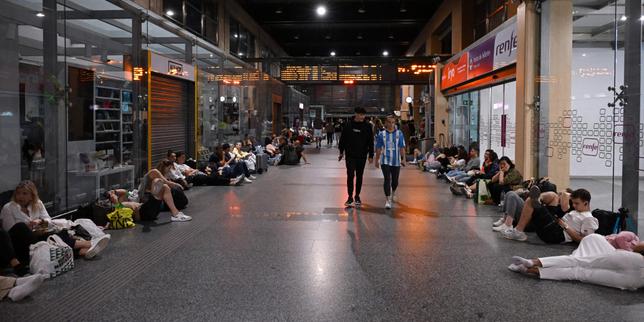
The post-mortem on the recent Spanish grid collapse is a masterclass in intellectual laziness. You’ve seen the headlines: "The Perfect Storm," "A Fragile System," "Cascading Failures." The narrative suggests that a series of unfortunate events nearly sent Spain back to the Stone Age because our infrastructure is a house of cards.
That narrative is wrong. It isn't just slightly off; it is fundamentally backwards. If you liked this article, you should look at: this related article.
What the mainstream analysts call a "failure" was actually the intentional, surgical execution of a defense-in-depth strategy. If the grid hadn't "failed" the way it did, the physical damage to the Iberian Peninsula’s power assets would have taken months, not hours, to repair. We need to stop talking about grid stability as the absence of outages and start talking about it as the presence of controlled shedding.
The Lie of the "Perfect Storm"
The term "perfect storm" is a rhetorical shield used by utility executives and regulators to avoid accountability for poor planning. It implies that the variables were so unique and so extreme that no one could have seen them coming. For another look on this development, see the recent update from CNET.
In the Spanish case, they point to a spike in demand, a sudden drop in wind generation, and a localized frequency deviation. Here is the reality: those three things happen simultaneously all the time. If your grid cannot handle a 15% variance in renewable input during a peak thermal window, you don’t have a "perfect storm." You have a baseline management requirement that you’ve failed to automate.
The "cascade" wasn't an accident. It was the system’s immune response.
When frequency drops below the critical threshold—usually $49.0$ Hz in the European Synchronous Area—the system is designed to amputate its own limbs to save the heart. This is known as Under-Frequency Load Shedding (UFLS). The media treats a blackout in Seville or Madrid as a sign of weakness. In reality, that blackout was the circuit breaker that prevented the entire European Interconnection from dragging France, Portugal, and Morocco into a dark-start scenario.
The Renewable Scapegoat
The favorite pastime of contrarians (the wrong kind) is to blame the "intermittency" of renewables. They claim that Spain’s heavy reliance on solar and wind created the "void" that caused the collapse.
This is a surface-level observation that ignores how inertia actually works.
Traditionally, we relied on the rotational inertia of massive steam turbines in coal and nuclear plants. These spinning masses provided a physical buffer; if frequency dipped, the momentum of these multi-ton rotors bought the system seconds to react. As we move to inverter-based resources (solar and wind), we lose that physical flywheel.
But here is the nuance the "stability experts" miss: The problem isn't the renewables. The problem is our refusal to mandate synthetic inertia at the software level.
We have the technology to make wind turbines and battery arrays mimic the behavior of spinning mass. We choose not to do it because it’s expensive and the regulatory frameworks are stuck in 1994. I have consulted for firms that could have stabilized that frequency dip in milliseconds using grid-forming inverters, but they weren't allowed to because the grid code didn't have a box to check for it.
The Interconnection Paradox
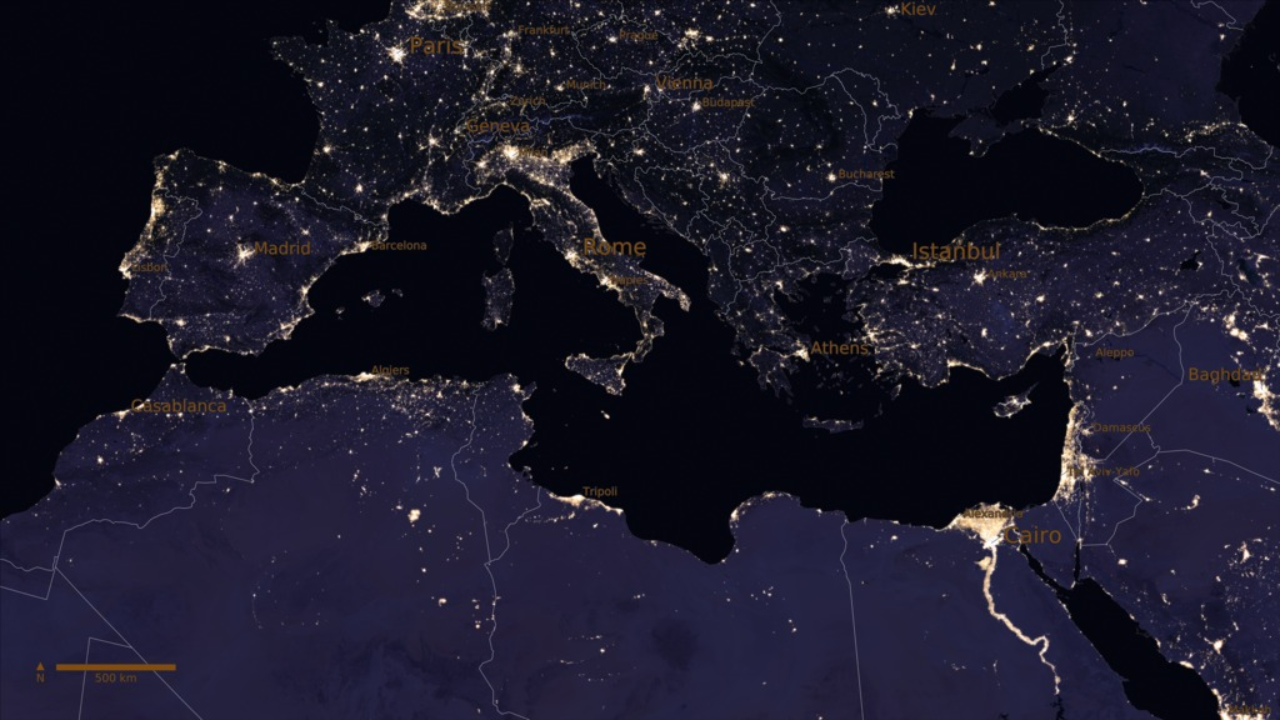
Spain is often described as an "electrical island" because of its limited capacity to trade power across the Pyrenees. The common wisdom says: "If only we had more cables to France, this wouldn't have happened."
This is a dangerous half-truth.
More interconnection equals more stability—until it doesn't. When you are tightly coupled with a massive neighbor, you don't just import their power; you import their problems. A fault in a French substation can, under the right (or wrong) conditions, pull the Spanish frequency down faster than any local failure could.
We saw this in the 2006 European blackout and again in the 2021 split of the Continental European synchronous area. Interconnection is a two-edged sword. It provides a larger pool of frequency, but it also creates a larger "splash zone" for errors. Spain’s relative isolation actually acted as a firebreak. If the peninsula had been more "integrated," the frequency swing could have resonated across the border, potentially triggering a wider European synchronization failure.
Stop Asking "Why Did It Fail?"
If you’re asking why the power went out, you’re asking the wrong question. The right question is: "Why was the recovery so slow?"
In the industry, we talk about Resilience vs. Reliability.
- Reliability is the ability to keep the lights on.
- Resilience is the ability to get them back on after the inevitable happens.
Spain’s grid is incredibly reliable. It is not, however, particularly resilient in the face of modern, decentralized energy patterns. We are still using a "Top-Down" recovery model. We wait for the big thermal plants to sync, then we slowly bring the distribution networks back online.
This is the equivalent of trying to reboot a modern supercomputer by rubbing two sticks together to start a fire.
We need to move toward Micro-grid Islanding. In a truly modern system, a neighborhood in Valencia should be able to decouple from the national grid during a crisis, run on its own local solar and battery storage, and then re-sync once the national frequency stabilizes. The reason this doesn't happen isn't technical. It's because the big utilities lose their monopoly on the "on" switch the moment you allow communities to power themselves.
The Cost of 100% Uptime
Everyone screams when the power goes out for four hours. No one wants to pay the bill for the infrastructure required to ensure it never happens.
To prevent a "cascade" like the one in Spain through brute force alone, you would need to over-provision the grid by roughly 40%. That means thousands of miles of redundant high-voltage lines and gigawatts of "spinning reserve" (plants that are burning fuel but not sending power to the grid, just waiting for a dip).
Your electricity bill would triple.
I’ve seen the internal spreadsheets at major TSOs (Transmission System Operators). They know exactly where the weak points are. They also know that it is cheaper to let a million people sit in the dark for three hours once every five years than it is to build the "unbreakable" grid the public thinks it wants.
The "failure" in Spain was an economic success. The system shed the load, protected the multi-billion dollar transformers from melting, and restored service without a total system collapse. By every engineering metric that matters, the system performed exactly as it was programmed to do.
The Brutal Truth About the Next One
The next blackout won't be caused by a "cocktail" of wind and demand. It will be caused by our inability to manage the complexity of the millions of new devices hitting the grid.
Every electric vehicle (EV) charger, every smart thermostat, and every residential solar inverter is a potential point of failure—or a potential solution. Currently, they are treated as "dumb" loads. During the Spanish outage, if the grid had the authority to slightly dim every smart LED bulb in the country or delay every EV charging session by twenty minutes, the frequency would have stabilized instantly. No one would have even noticed.
But we don't do that because of "privacy" and "consumer choice."
So instead, we let the grid "fail." We let the suburbs go dark. We let the factories stop. We choose the blunt instrument of a blackout over the precision of automated demand response.
The Spanish outage wasn't a warning that the grid is broken. It was a warning that our management of it is archaic. We are trying to fly a jet engine with the controls of a horse and buggy.
Don't fix the grid. Change the way we interact with it. Stop expecting the "big battery in the sky" to always be there and start demanding a system that can break intelligently. A blackout is not a disaster; it is a feature of a system that knows its own limits.
If you want a grid that never fails, prepare to be broke. If you want a grid that works, learn to appreciate the "cascade." It's the only thing standing between a temporary inconvenience and a permanent catastrophe.
Log off your "smart" home apps and look at the power lines. They didn't fail you. They saved themselves from you.