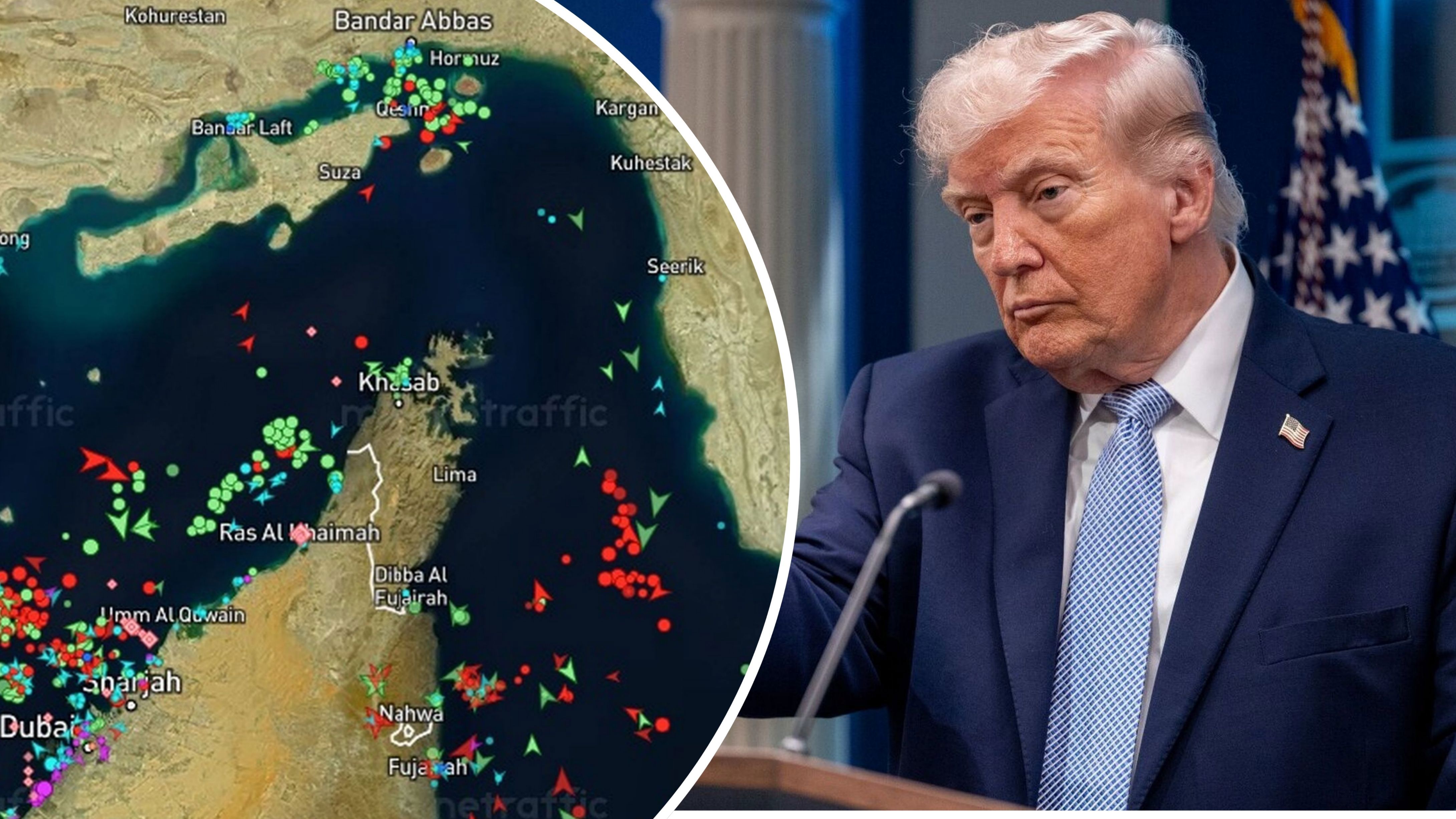
The headlines are screaming about sea mines and "alternative routes" as if the Strait of Hormuz is suddenly a giant game of Minesweeper. Iran issues a warning, the shipping industry clutches its collective pearls, and insurance premiums skyrocket. It’s a predictable script. It’s also largely a theatrical performance designed to manipulate global markets without dropping a single explosive into the water.
If you’re diverting a tanker based on these warnings, you aren’t practicing "risk management." You’re falling for a cheap psychological operation.
The Logistics of a Ghost Blockade
Most analysts treat the Strait of Hormuz like a narrow hallway where you can just toss a few marbles to trip up a giant. They cite the 21-mile width at its narrowest point as proof of its vulnerability. This is the first "lazy consensus" that needs to die.
While the total width is 21 miles, the actual Traffic Separation Scheme (TSS) consists of two-mile-wide inbound and outbound lanes, separated by a two-mile buffer zone. To truly "block" this, you don't just drop a dozen mines. You need a massive, sustained effort to seed thousands of square miles of deep water with sophisticated hardware.
Iran knows this. They also know that the moment they actually deploy a live minefield, they lose their only real weapon: the threat of doing it. A threat is free. A minefield is a declaration of war that results in the immediate, violent end of the Iranian Navy.
Why Sea Mines are the Worst Choice for Tehran
The conventional wisdom suggests that mines are the "perfect asymmetric weapon." Cheap, stealthy, and effective. In reality, they are a logistical nightmare for a nation that relies on the same water for its own survival.
- Self-Strangulation: Iran is not a self-sufficient island. It depends on the Persian Gulf for its own imports and what's left of its oil exports. A live minefield is indifferent to the flag on the hull. You cannot "gate" a minefield for your friends while keeping it active for your enemies without sophisticated, networked sensors that Iran simply cannot maintain under the pressure of an active conflict.
- The Bathymetry Problem: Much of the Strait is deep. Moored mines—the kind that stay put—require heavy cables and anchors. In high-current environments like Hormuz, these mines "dip" or "walk." They move. They become unpredictable. If Iran seeds the Strait, they risk their own coastal traffic and their own desalination plants.
- The Response Trigger: History tells us exactly what happens when Iran messes with shipping. During the "Tanker War" of the 1980s, the U.S. launched Operation Praying Mantis. In a single day, the U.S. Navy destroyed half of Iran's operational fleet. Tehran remembers this, even if the "insiders" writing today's frantic op-eds don't.
The Insurance Premium Grift
When Iran "warns" of mines, the first people to celebrate aren't the IRGC generals. It’s the underwriters in London.
I have watched shipping companies burn millions in "War Risk" surcharges based on nothing more than a press release from Tehran. We are seeing a massive transfer of wealth from energy consumers to insurance syndicates, fueled by the illusion of imminent danger.
If there were actual mines in the water, you wouldn't see a "warning." You would see a hull breach. Iran’s goal isn’t to sink a VLCC (Very Large Crude Carrier); it’s to make it expensive to operate one. Every time a CEO orders a ship to take the long way around the Cape of Good Hope, Iran wins a battle in the economic war without firing a shot.
Breaking the Premise: The "Alternative Route" Lie
The competitor article suggests taking "alternative routes." This is a fundamental misunderstanding of global geography.
There is no "alternative route" for 20% of the world’s petroleum and nearly a third of its liquefied natural gas. You can’t just drive the tanker over a mountain. Pipelines like the Habshan–Fujairah line in the UAE or Saudi Arabia’s East-West Pipeline exist, but their combined capacity is a drop in the bucket compared to the 20 million barrels that move through the Strait daily.
Telling ships to "seek alternatives" is like telling a heart patient to "seek an alternative to blood." It’s an empty suggestion that reveals a total lack of technical depth.
The Reality of Iranian "Mining" Capabilities
Let's talk about the hardware. Iran possesses a mix of old Soviet-era contact mines (like the EM-52) and domestically produced "smart" mines.
- Contact Mines: These are 19th-century tech. They require a ship to physically hit a spike. They are easily spotted by modern sonar and even easier to clear with unmanned underwater vehicles (UUVs).
- Influence Mines: These trigger based on magnetic, acoustic, or pressure signatures. They are more dangerous, but they are also incredibly temperamental.
The U.S. 5th Fleet, based in nearby Bahrain, operates some of the most advanced mine-countermeasure (MCM) suites on the planet. This includes the MH-53E Sea Dragon helicopters and the Avenger-class ships, plus an increasing array of autonomous "Sea Fox" drones.
In a scenario where Iran actually began a mining campaign, the "clearing" process would be a clinical, one-sided affair. The Iranian navy would be forced to stay in port or face immediate destruction, while Western MCM forces systematically neutralized the field.
The "Invisible" Threat is the Only One That Works
The true danger isn't the mine you hit; it's the mine that isn't there.
By issuing "warnings," Iran creates a perceptual minefield. They don't have to spend a rial on explosives. They just need a spokesperson and a Twitter account.
- They trigger the "Risk-Off" sentiment in global markets.
- They force the U.S. to expend resources on patrols.
- They project power to their domestic audience.
It’s a masterclass in asymmetric psychological warfare. And the media is their primary delivery system. Every time an outlet prints a headline about "Iran Warning of Mines," they are acting as an unpaid PR firm for the Revolutionary Guard.
The Technical Fallacy of "Closing the Strait"
You will often hear that Iran could "close" the Strait. This is mathematically and militarily illiterate.
To "close" a body of water that wide, you must maintain sea denial. You need to be able to sink anything that tries to enter. Mines are a passive tool; they don't hold territory. To keep the Strait closed, Iran would need to suppress the U.S. Air Force, the U.S. Navy, and the combined forces of the GCC.
They cannot do this. They cannot even come close.
What they can do is engage in "harassment." They can seize a tanker (as they have done repeatedly) or launch a drone. But these are localized, tactical irritants, not strategic blockades. By conflating "harassment" with "closing the Strait," analysts are doing Iran’s work for them.
Stop Reading the Headlines, Start Reading the Bathymetry
If you want to know if the Strait is actually being mined, don't look at the news. Look at the "Notice to Mariners" (NOTAMs) and the movement of the MCM squadrons in Bahrain.
If the mine-hunters aren't scrambling, there are no mines.
The current "warning" is a diplomatic gambit. It’s a response to sanctions, a piece of leverage in a larger geopolitical poker game. It has nothing to do with naval reality.
The "lazy consensus" says we are on the brink of a maritime catastrophe. The logic of the ground (and the water) says we are watching a well-rehearsed play.
The Cost of Cowardice
The biggest risk in the Strait of Hormuz isn't a piece of rusted iron filled with TNT. It’s the cowardice of global markets that react to shadows.
When you treat a verbal warning from a cornered regime as a tactical reality, you create the very instability they want. You reward the behavior. You make the "alternative route" the only route, effectively handing control of the Strait to Iran without them having to load a single minelaying ship.
The Strait is open. It will stay open. Not because Iran is "allowing" it, but because they lack the physical and strategic capacity to stop it without committing national suicide.
Ignore the "warnings." Buy the dip. Sail the ship.
Everything else is just noise.