The United States military has spent the last three decades preparing to win a war that no longer exists, and the current paralysis in the Strait of Hormuz is the receipt. While the Pentagon’s "Operation Epic Fury" succeeded in decapitating the Iranian leadership and dismantling its conventional fleet, the victory has proven to be a strategic mirage.
As of late March 2026, the world’s most vital energy artery remains functionally dead. It turns out that you can sink every Iranian frigate and still lose control of the sea. By focusing on high-tech "decapitation" strikes and carrier-group dominance, Washington overlooked a fundamental reality of modern asymmetric warfare: it is much easier to break a global supply chain than it is to mend one.
The Illusion of Naval Supremacy
For years, war games in Washington focused on "Project 2025" style scenarios—heavy-handed aerial campaigns designed to wipe out Iran’s nuclear infrastructure and command centers. They succeeded. On February 28, 2026, joint U.S. and Israeli strikes eliminated Supreme Leader Ali Khamenei and neutralized the bulk of the Islamic Revolutionary Guard Corps (IRGC) surface navy. By any traditional metric, the U.S. won.
But traditional metrics are useless when 20% of the world’s daily oil supply and nearly a quarter of its liquefied natural gas (LNG) are held hostage not by a fleet, but by a ghost. Iran’s "anti-navy"—a decentralized web of mobile missile launchers, drone swarms, and primitive sea mines—has achieved what the Soviet Navy never could. They have imposed an "insurance blockade."
Tehran does not need to win a naval battle; it only needs to make the cost of transit high enough that no commercial underwriter will touch a vessel entering the Persian Gulf. In early March, insurance premiums for the Strait spiked 400% in a single week. When the tanker Skylight was struck by a projectile near Oman, the global shipping industry didn't wait for a formal blockade. It simply stopped.
The Mine Gap and the Decommissioning Disaster
The most damning evidence of America’s strategic rot is the "Mine Gap." While the U.S. Navy invested billions into the Gerald R. Ford-class aircraft carriers and stealth destroyers, it systematically gutted its mine countermeasures (MCM) capabilities.
In an irony that historians will likely find painful, the last four Avenger-class mine-sweepers stationed in the Middle East—the USS Devastator, Dextrous, Gladiator, and Sentry—were decommissioned in Bahrain in late 2025. They arrived at a scrap yard in Philadelphia just as reports surfaced that the IRGC had seeded the Strait with "smart" and "dumb" mines.
The U.S. is now trying to clear one of the world's most congested waterways using a handful of aging MH-53E Sea Dragon helicopters and experimental unmanned underwater vehicles (UUVs) that were never designed for a contested, high-threat environment. Clearing a "Q-route"—a safe channel for merchant ships—is a slow, agonizing process. Even a single unconfirmed mine report can reset the clock, keeping $120-a-barrel oil trapped behind a wall of water.
The Economic Aftershocks
The failure is not just military; it is a failure of economic foresight. The Trump administration’s gamble was that a quick, decisive strike would force a new "Geneva-style" agreement. Instead, it triggered the largest energy disruption since the 1970s.
- Brent Crude: Surged past $120 per barrel, with physical "spot" prices in Asia hitting even higher premiums.
- Global Food Security: The Gulf states import roughly 80% of their calories through this waterway. By mid-March, a "grocery emergency" gripped the region, with food prices inflating by 120% in some markets.
- The European LNG Crisis: Unlike oil, which can occasionally be rerouted via pipelines across Saudi Arabia, Qatar’s LNG has no alternative path. Europe, already precarious after years of energy pivots, is facing a technical recession as industrial hubs in Germany and Italy lose access to Qatari gas.
A New Legal Regime
Tehran’s remnant leadership is playing its remaining cards with chilling precision. They have announced a "selective passage" regime. While U.S.-aligned tankers are targeted or deterred, Iran has signaled it will allow Chinese-flagged vessels to pass unmolested.
This creates a perverse incentive for the global shipping fleet. We are already seeing Liberian and Panamanian-flagged tankers broadcasting "CHINA OWNER" on their AIS (Automatic Identification System) transponders in a desperate bid to avoid being targeted by shore-based Iranian drone teams.
The U.S. strategy assumed that the world would rally behind an "Operation Prosperity Guardian" style coalition to reopen the Strait. But the reality is far messier. Allies like France and Japan are hesitant to provide naval escorts that might draw them into a wider ground war, especially as Washington mocks the very alliances it now needs to secure the seas.
The Geography of Defeat
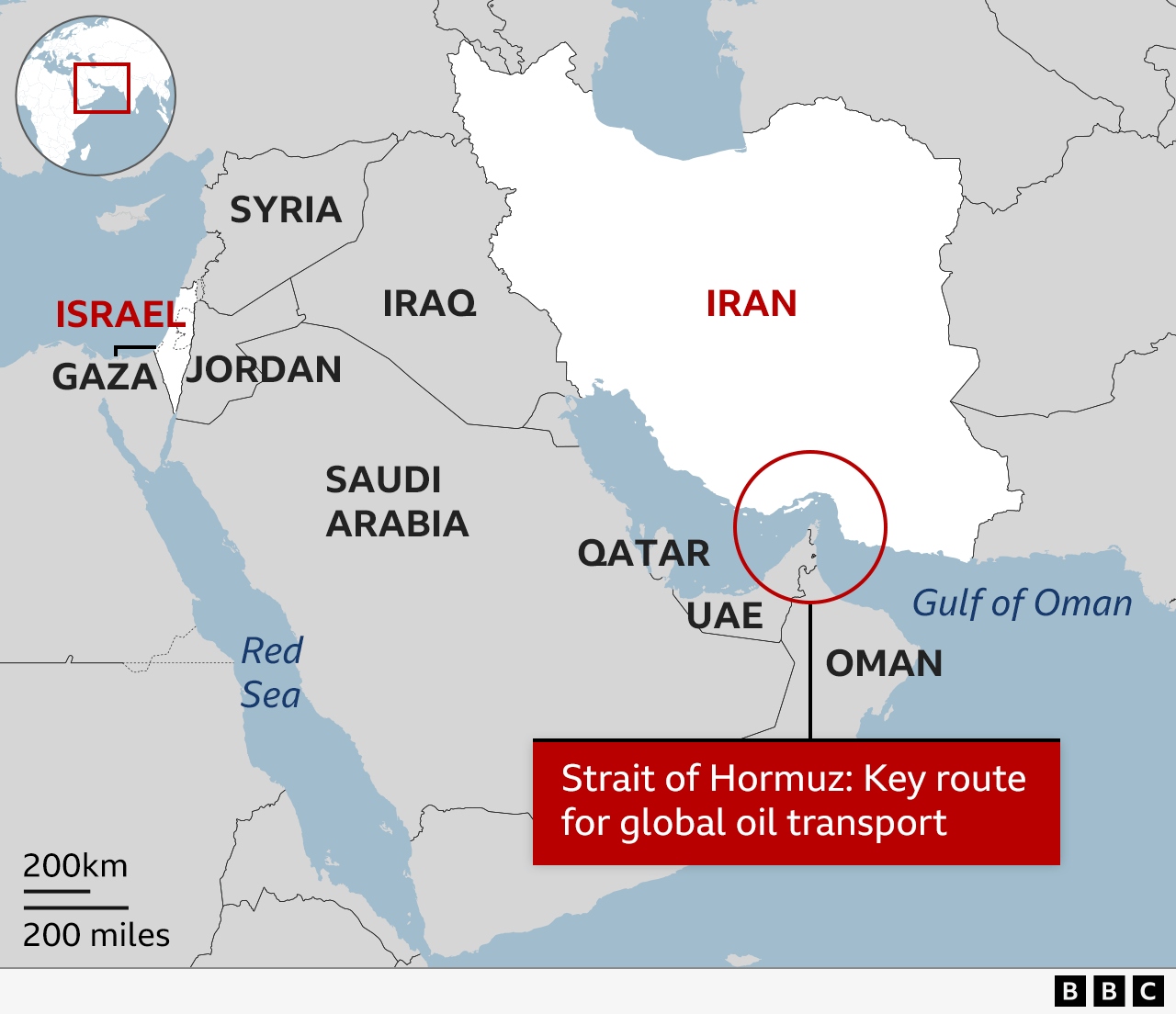
The geography of the Strait of Hormuz favors the defender. It is only 21 miles wide at its narrowest point. From the jagged cliffs of the Musandam Peninsula to the Iranian coast, there is nowhere to hide.
Modern American naval doctrine relies on "stand-off" distances. But you cannot stand off when you are escorting a 300,000-ton supertanker through a narrow corridor lined with mobile, truck-mounted anti-ship cruise missiles. These launchers are hidden in "ground clutter"—the caves and mountainous terrain of the Iranian coastline—making them nearly impossible to eliminate entirely through air power alone.
The Pentagon is now facing the "strategic dilemma" it tried to avoid for decades: a requirement for a massive, open-ended naval presence and potentially a ground mission to seize the coastal heights. This would mean deploying thousands of Marines into a meat-grinder, just as the American public’s appetite for Middle Eastern intervention has hit an all-time low ahead of the November elections.
The flaw in the strategy was the belief that technology could override geography. We built a military that can kill any leader on earth, but we forgot how to protect a 21-mile stretch of water. Until the U.S. can solve the "Mine Gap" and suppress the "anti-navy" without starting a thirty-year war, the Strait of Hormuz will remain exactly what it is today: a graveyard for the idea of American omnipotence.
Would you like me to analyze the specific technical limitations of the U.S. Navy's current unmanned mine-clearing systems?