The concrete in Kathmandu doesn’t just hold up buildings. It holds a history of dust, broken promises, and the suffocating weight of a status quo that hasn’t shifted in thirty years. When a structural engineer named Balendra Shah decided to trade his blueprints for a ballot box, most of the old guard laughed. They saw a kid in dark sunglasses. They heard a rapper with a penchant for aggressive syllables. They missed the fact that he had spent years calculating exactly how much pressure a foundation can take before it cracks.
Politics in Nepal has long been a game played by men who remember the revolution but forgot the people it was for. The streets of the capital are a chaotic map of ancient shrines and modern neglect. To understand why a man who spent his nights in recording studios is now the Mayor of Kathmandu, you have to look past the headlines and into the lyrics that acted as a silent manifesto long before the first vote was cast.
The Mathematics of Anger
Imagine a young man standing on a half-finished construction site. He looks at the rebar and the cement, but his mind is on the drainage systems that fail every monsoon. He’s thinking about the heritage sites being choked by illegal encroachments. This was Balen Shah’s day job. But at night, the frustrations of the day transformed into "Nep-Hop."
His music wasn’t the escapist pop of the radio. It was a rhythmic audit of a failing state. In songs like "Balidan," he didn't just complain about corruption; he deconstructed it. He spoke to a generation that felt invisible—the youth who were told to wait their turn while the city crumbled around them.
The power of his music lay in its specificity. While traditional politicians spoke in grand, sweeping metaphors about democracy and sovereignty, Balen rapped about the price of onions, the smell of the Bagmati River, and the indignity of the "brain drain" forcing Nepal's brightest minds to work in the heat of the Gulf. He wasn't just a singer. He was a witness.
A Campaign Without a Stage
The 2022 local elections didn't start with a bang. They started with a realization: the tools used to build a building are the same tools needed to rebuild a city. Logic. Transparency. Structural integrity.
Balen’s campaign was a masterclass in organic connection. He didn't need the massive, state-funded rallies that his competitors relied on. He had the internet, and more importantly, he had the ears of every person who had ever felt a surge of pride while listening to his track "Gorkhali." He campaigned as an independent, a move that in many ways was his most punk-rock gesture yet. In a country where party loyalty is often a blood oath, he stood alone.
It was terrifying for the establishment. They tried to dismiss him as a "celebrity candidate," a flash in the pan. But they didn't account for the emotional resonance of his work. When you've spent a decade being the voice of the voiceless in their headphones, you don't need a loudspeaker on a truck to tell them who you are. They already know your heart.
The Weight of the Sunglasses
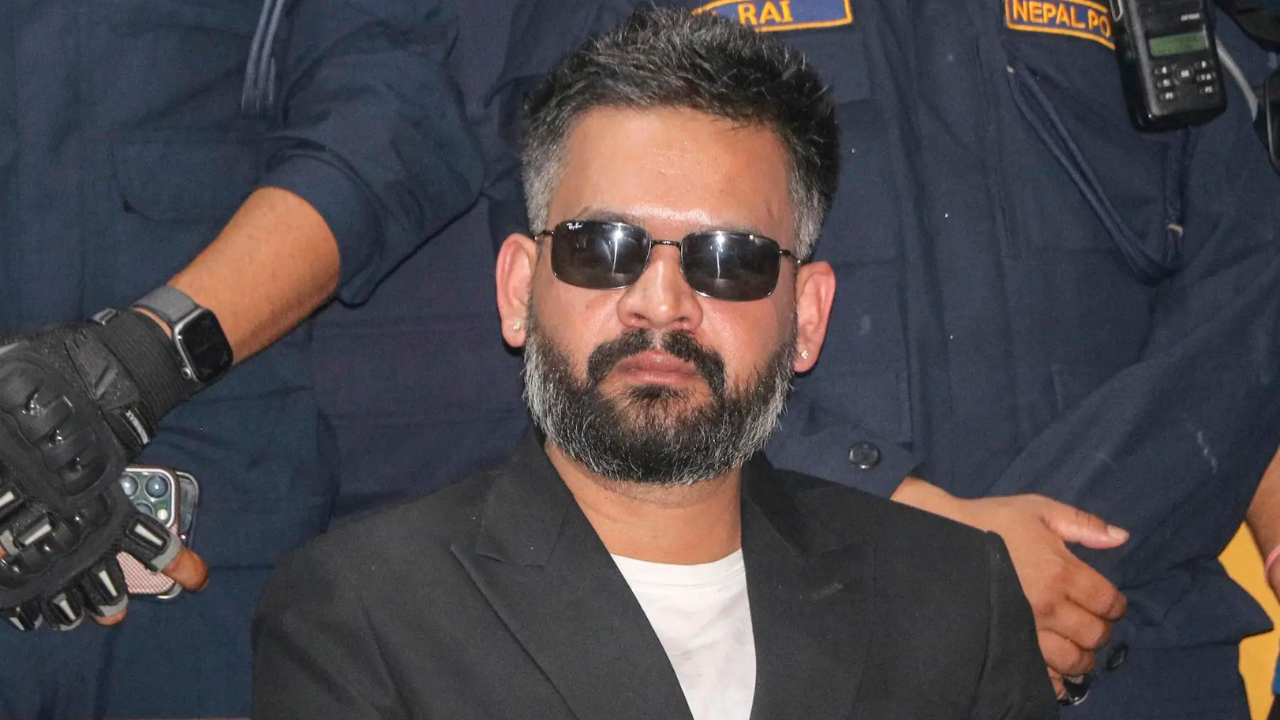
There is a specific image of Balen Shah that has become iconic: the black suit, the beard, and the impenetrable sunglasses. It’s a uniform that bridges the gap between the hip-hop star and the serious administrator. But behind those glasses is a man facing the reality that it is much easier to rap about tearing down a corrupt system than it is to pick up the pieces and build something better.
His transition from the studio to the City Hall wasn't just a career change. It was a collision of worlds. Suddenly, the man who criticized the "system" was the head of the system.
Consider the "Garbage War." For years, Kathmandu’s waste management has been a political football, with landfill sites becoming battlegrounds of local protest and administrative failure. Balen didn't approach this with a speech. He approached it as an engineer. He went to the sites. He talked to the villagers. He looked at the logistics of waste segregation.
But the human element is messier than math. When his administration began a crackdown on illegal structures—the very things he used to study in his engineering days—the cheers of the public were met with the cries of small business owners caught in the crossfire. This is the invisible stake of leadership. Every decision to enforce a law has a human face. Every "cleanup" operation displaces a life.
The Rhythm of the Daily Grind
The shift in Kathmandu is palpable. It isn’t just about the new pavement or the removal of tangled overhead wires. It’s a shift in the collective psyche. For the first time in a generation, there is a sense that the person in charge is actually listening to the frequency of the city.
The "Old Guard" politicians are still there, hovering in the wings, waiting for him to stumble. They watch his every move on social media, hoping the "rapper" will make a mistake that the "engineer" can't fix. They don't realize that his music gave him a thick skin. In the world of battle rap, you are analyzed, critiqued, and insulted to your face. A few cynical op-eds in the national broadsheets are nothing compared to a lyrical takedown in a crowded club.
Balen’s rise has forced a question upon every citizen: What do we want our leaders to be? Do we want them to be distant figures on a podium, or do we want them to be people who have felt the same dust in their throats that we do?
The Unfinished Verse
There is no "happily ever after" in urban planning. There are only better problems to solve.
The city is still crowded. The air is still thick with the exhaust of a thousand micro-buses. But there is a different energy in the tea shops of Patan and the alleyways of Thamel. When a song by Balen Shah plays now, it isn't just a protest anthem. It’s a reminder of a promise.
He proved that you don't have to choose between being a dreamer and a builder. You can be both. You can use a rhyme to highlight a crack in the wall, and then use a level to fix it. The music hasn't stopped; it has just changed its tempo. It moved from the frenetic energy of the stage to the steady, rhythmic pulse of a city trying to find its feet.
The real test isn't whether he can keep winning elections. The test is whether he can maintain the soul of the rapper while wielding the power of the mayor. It is a tightrope walk over a valley of bureaucracy and ancient grudges. But as any structural engineer will tell you, the most beautiful bridges are the ones that endure the most tension.
He stands on the balcony of his office, looking out over the valley he once mapped out in verses. The sunglasses stay on. The work continues. The beat goes on, but now, the whole city is forced to dance to it.
Somewhere in a dark room in a suburb of Kathmandu, a teenager is writing their first lyric. They aren't writing about love or fame. They are writing about the streetlights that finally turned on last week. They are writing about the possibility that their voice might actually matter. That is the true legacy of the man who decided that the best way to fix a broken song was to rewrite the entire score.
The concrete is still there. But for the first time, it feels like it might actually hold.