The resumption of human lunar exploration is not a nostalgic exercise in flags and footprints but a high-stakes stress test of a fragmented, public-private logistics chain. NASA’s return to the lunar surface operates on a fundamentally different cost-plus and fixed-price hybrid model than the Apollo era, shifting the primary objective from geopolitical signaling to the establishment of a permanent orbital and surface infrastructure. Success depends on the synchronization of three distinct technical pillars: the Space Launch System (SLS) heavy-lift capability, the reliability of the Orion crew module's thermal protection systems, and the unproven orbital refueling requirements of the Human Landing System (HLS).
The Propulsion Bottleneck and the Physics of Heavy Lift
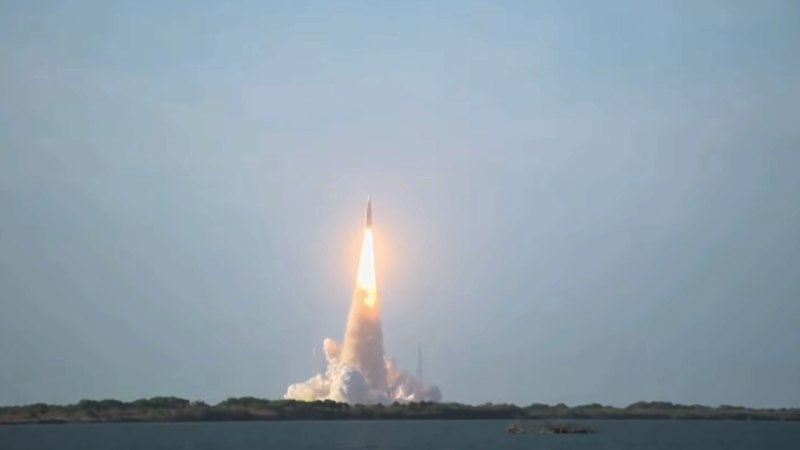
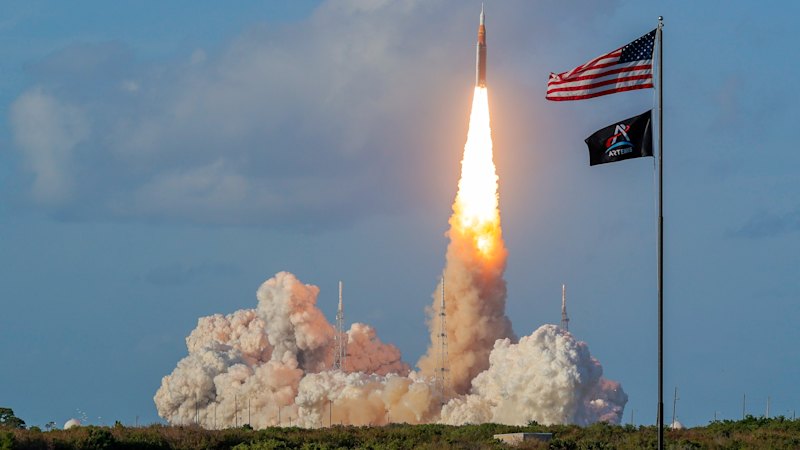
Modern lunar missions are governed by the rocket equation’s relentless tax on mass. To place a human-rated vehicle in the vicinity of the Moon, the SLS must generate $39.1$ MN of thrust at liftoff. This brute-force requirement stems from the need to escape Earth's gravity well while carrying enough propellant for the Trans-Lunar Injection (TLI) maneuver.
The SLS architecture relies on a core stage powered by four RS-25 engines—heritage hardware from the Space Shuttle program—augmented by two five-segment Solid Rocket Boosters. While using flight-proven hardware mitigates some development risk, it introduces a rigid cost floor. Unlike reusable commercial alternatives, every SLS launch represents a total loss of the primary flight hardware. This creates a high-cost, low-cadence flight schedule that limits the mission’s resilience to hardware failures or weather delays.
Orbital Mechanics and the Near-Rectilinear Halo Orbit
The strategic shift in current lunar planning is the utilization of the Near-Rectilinear Halo Orbit (NRHO). Unlike the low lunar orbits used in the 1960s, the NRHO is a highly elliptical path that balances the gravitational pulls of the Earth and the Moon.
The NRHO provides several operational advantages:
- Constant Line-of-Sight Communication: The orbit ensures that a spacecraft at the Gateway station is almost never occluded by the Moon, allowing for uninterrupted data transmission to Earth.
- Thermal Stability: The spacecraft spends minimal time in the Moon's shadow, reducing the battery weight required to survive long lunar nights.
- Accessible Delta-v: Entering and exiting this orbit requires less fuel than descending directly to the lunar surface, making it an ideal staging point for reusable landers.
The trade-off for these benefits is a complex rendezvous sequence. The crew must transition from the Orion capsule to a landing craft while maintaining precise station-keeping in a gravitationally unstable region.
The Cryogenic Fluid Management Challenge
The most significant technical hurdle for sustained lunar presence is not the launch itself, but the storage and transfer of propellants in deep space. The current landing strategy requires a commercial tanker to dock with a landing craft in Earth orbit or near the Moon to provide the necessary fuel for descent.
Liquid oxygen and liquid hydrogen must be kept at extremely low temperatures to remain in a liquid state. In the vacuum of space, solar radiation causes "boil-off," where the fuel reverts to gas and is vented to prevent tank rupture. Managing this thermal leakage requires advanced multi-layer insulation and active cooling systems that have never been tested at this scale.
The dependency on orbital refueling introduces a "concurrency risk." If the tanker fleet experiences a delay, the primary mission is grounded, regardless of the SLS's readiness. This creates a fragile supply chain where the failure of a secondary commercial partner can derail the primary national objective.
Surface Operations and the Regolith Problem
The lunar South Pole is the designated landing site due to the presence of water ice in Permanently Shadowed Regions (PSRs). Accessing this ice is the linchpin of the "In-Situ Resource Utilization" (ISRU) strategy, which aims to convert lunar ice into oxygen for breathing and hydrogen for rocket fuel.
However, the lunar environment is hostile to mechanical systems in ways Earth-based testing struggle to replicate.
- Abrasive Regolith: Lunar dust is composed of sharp, glass-like shards formed by billions of years of micrometeoroid impacts. Without wind or water to erode these edges, the dust acts as an industrial-grade abrasive, destroying seals on spacesuits and clogging mechanical joints.
- Radiation Exposure: Outside Earth's Van Allen belts, crews are exposed to solar energetic particles and galactic cosmic rays. The Orion spacecraft’s shielding is designed for short-duration transits, but long-term surface habitats will require meters of regolith coverage to provide adequate biological protection.
- Extreme Thermal Cycling: Temperatures at the South Pole can swing from $120$°C in sunlight to $-230$°C in shadow. These gradients cause rapid thermal expansion and contraction, leading to material fatigue in structural components.
The Economic Moat of Deep Space Logistics
The transition from a government-led program to a commercial-led service model is intended to drive down costs through competition. By awarding fixed-price contracts for landing services, NASA shifts the burden of cost overruns to the private sector.
This creates a new economic reality: the company that masters the logistics of the NRHO and surface delivery will effectively own the "railroad" to the Moon. This moat is not built on patents alone, but on the accumulated flight data and operational experience of navigating the lunar gravity well.
The primary risk to this model is the "monopsony" problem. Currently, NASA is the only buyer for deep-space transport services. Without the emergence of a secondary market—such as lunar mining or private research—commercial partners may find the high capital expenditure (CAPEX) of deep-space hardware unsustainable.
Strategic Forecast: The Pivot to Mars
The current lunar architecture is a prototype for the Mars mission. The decision to use the Moon as a "proving ground" is a strategic choice to test deep-space life support systems within a three-day return window.
The next five years will be defined by the success or failure of the integrated flight tests. If the refueling architecture proves viable, the cost per kilogram to the lunar surface will drop by an order of magnitude, enabling the construction of permanent habitats. If the cryogenic boil-off problem remains unsolved, the program will likely undergo a significant redesign, moving away from high-energy hydrogen fuels toward more stable, albeit less efficient, hypergolic propellants.
The definitive metric for success is not the first landing, but the turnaround time between missions. A sustainable presence requires a cadence of at least two missions per year to maintain hardware integrity and personnel proficiency. Any slower, and the program risks becoming a series of disconnected, high-cost events rather than a continuous expansion of human reach.