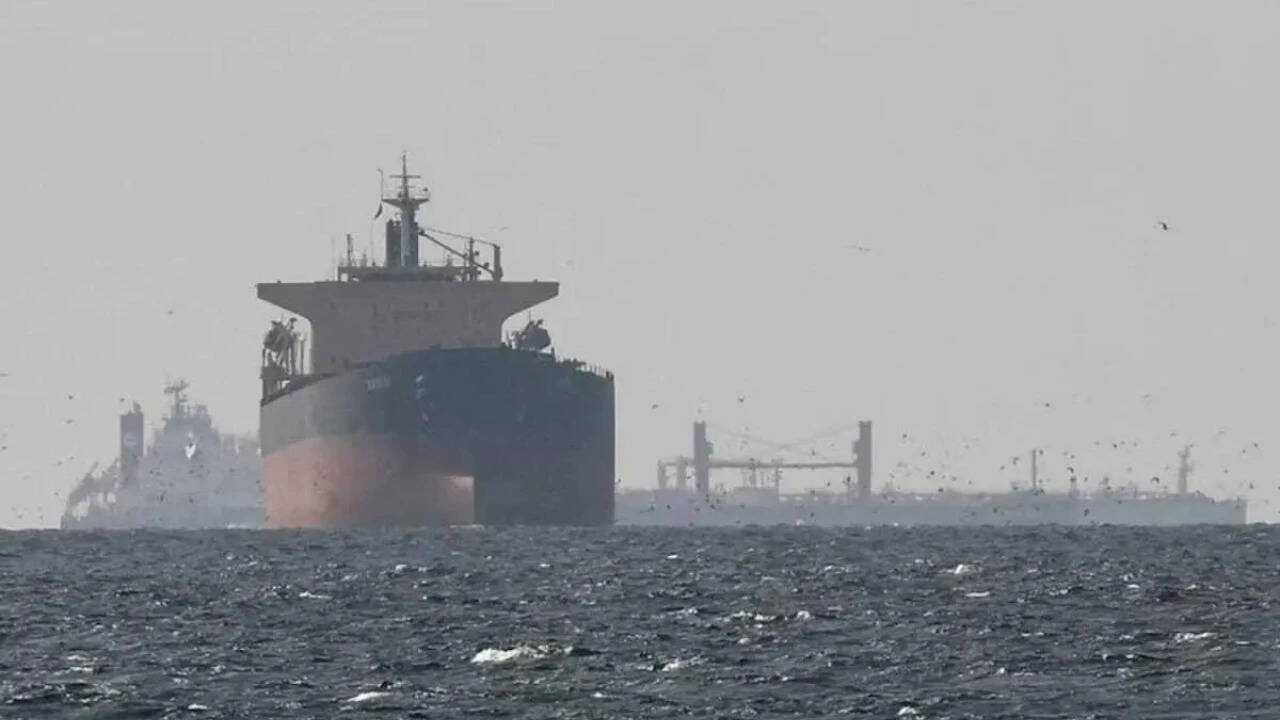
The water in the Strait of Hormuz does not look like a geopolitical flashpoint. To a merchant sailor leaning over the rail of a Suezmax tanker, it looks like a shimmering, oil-slicked expanse of turquoise, narrow enough that you can almost feel the weight of the land pressing in from both sides. To your left, the jagged, sun-bleached cliffs of Oman. To your right, the looming presence of Iran. Between them lies a strip of water barely twenty-one miles wide.
Through this throat, the world breathes.
One-fifth of the planet’s liquid energy moves through this gap. It is the jugular vein of the global economy. If it constricts, lights go out in Tokyo, factories stall in Berlin, and gas prices at a pump in Ohio begin a slow, sickening climb. For decades, the rule of the sea was simple: the water was a highway, and the highway was free. But a new whispers from Tehran suggest that the era of the free ride is ending. A group of Iranian lawmakers is now drafting a proposal to turn the strait into a toll road.
It is a move that would change the chemistry of global trade.
The Captain’s Calculation
Consider a hypothetical master of a vessel named the Aegean Star. He is carrying two million barrels of crude oil. His mission is a math problem involving narrow margins, insurance premiums, and hull integrity. Until now, his biggest fear in the strait was a mechanical failure or a stray mine. Now, he may have to factor in a line item that has never existed before: a transit fee.
The logic coming out of the Iranian Parliament is grounded in a specific interpretation of international law. Mohammad-Reza Sabbaghian, an Iranian lawmaker, recently voiced what many in his circle have been thinking. Why should the world’s navies and merchant fleets use Iran’s "territorial waters" to generate billions in profit while Iran shoulders the cost of security and environmental monitoring?
From a purely transactional perspective, it sounds like common sense. We pay tolls for bridges. We pay for the Suez Canal. We pay for Panama. Why should Hormuz be different?
The answer lies in the United Nations Convention on the Law of the Sea (UNCLOS). It protects the right of "transit passage." This is the legal bedrock that allows ships to move through international straits even if those straits fall within the territorial waters of a coastal state. Iran has signed the convention but never ratified it. In the eyes of Tehran’s legal hawks, that means the rules are negotiable.
The Invisible Tax on Everything
When a government proposes a fee on a ship, they aren't just taxing a corporation. They are taxing the person buying a plastic toy in London or the farmer in India waiting for a shipment of fertilizer.
If Iran follows through, the immediate effect is a "security premium." Insurance companies, which are the silent ghost-partners of every voyage, hate uncertainty. The moment a sovereign power begins demanding fees for passage in a contested waterway, the risk profile of every ship in the Persian Gulf spikes.
We often think of global conflict as a series of explosions. In reality, it is often a series of invoices. A five percent increase in shipping costs here, a ten percent jump in insurance there. These costs ripple outward. They are invisible, but they are heavy. They represent the "Hormuz Tax"—a burden shared by everyone who relies on a global supply chain that, for the last eighty years, has operated on the assumption of open seas.
The Geography of Leverage
Iran’s geography is its greatest natural resource, more so than its oil. By sitting at the gates of the Persian Gulf, it holds a leash on the global economy. In the past, that leash was held with the threat of military closure—the "oil weapon." But closing the strait is a blunt instrument. It invites immediate, overwhelming military retaliation. It is a suicide pact.
A transit fee is different. It is subtle. It is bureaucratic. It is harder to justify a war over a toll booth than it is over a blockade.
By framing this as a "service fee" for environmental protection or maritime security, Iran is testing the resolve of the international community. It is a slow-motion chess move. If the world pays, Iran gains a massive new revenue stream to bypass sanctions. If the world refuses, Iran has a new pretext for detaining ships that "refuse to comply with local regulations."
The Ghost of 1988
To understand why this feels so precarious, you have to look back at the "Tanker War" of the 1980s. During the Iran-Iraq conflict, both sides began targeting merchant vessels. The sea was on fire. US destroyers had to escort tankers in massive convoys. It was a period of visceral, metallic terror for the men working those decks.
The current proposal for transit fees is a modern, sterilized version of that same struggle for control. It is an assertion of ownership over a space that the rest of the world considers a global common.
The lawmakers in Tehran are not just looking for money. They are looking for recognition. They want the world to acknowledge that the water belongs to them. They want the Aegean Star and its captain to know that they are only passing through because Tehran allows it.
A World of Walled Gardens
The tragedy of the Hormuz toll is that it signals the death of a specific kind of optimism. For a long time, we believed the oceans were getting smaller, more connected, and more open. We believed that trade would eventually make borders irrelevant.
Instead, we are seeing the "territorialization" of the sea.
If the Strait of Hormuz becomes a toll zone, what stops other nations from doing the same? Could Yemen demand a fee for the Bab el-Mandeb? Could Indonesia tax the Malacca Strait? We are moving toward a world of walled gardens and private roads, where the "freedom of the seas" is replaced by a series of gates, each with its own price tag and its own set of political demands.
The Weight of the Anchor
Imagine the captain again. He is approaching the northern tip of the Musandam Peninsula. He looks at the radar. He sees the Iranian patrol boats weaving through the tankers like wolves among sheep.
In his cabin, he has a folder of papers. Usually, it contains customs declarations and manifests. Soon, it may contain a receipt.
That receipt represents more than just a few thousand dollars in transit fees. It represents a shift in the balance of power. It is a small piece of paper that proves the rules have changed. The water is no longer a highway. It is a backyard. And the owner is standing at the gate, hand outstretched, waiting for payment.
The world watches the Strait of Hormuz for signs of smoke and fire. We should be watching for the pens. The most significant changes to our world rarely happen with a bang. They happen when someone sits in a quiet room, drafts a law, and decides that what was once free now has a price.
The cost of the journey is going up. And we are all, in one way or another, on that ship.
Would you like me to analyze the specific legal precedents Iran is citing for these maritime fees?