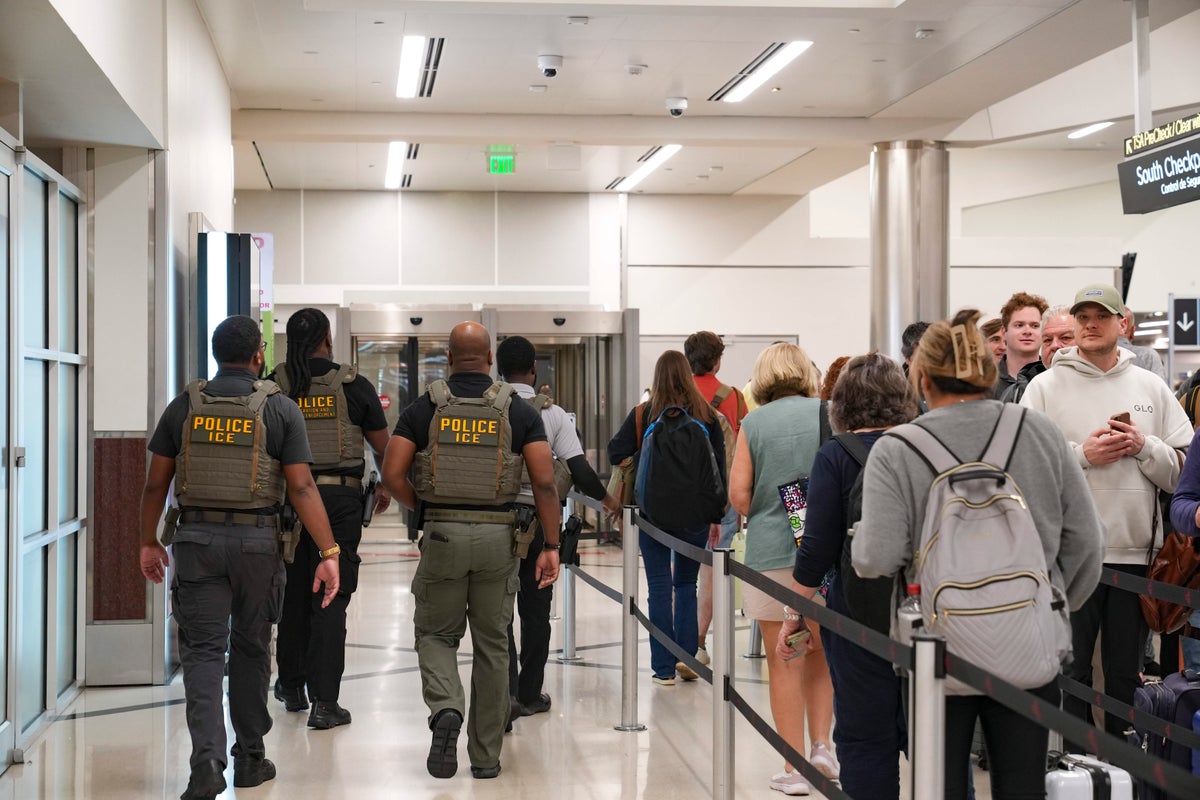
The primary constraint of modern commercial aviation is not the velocity of the aircraft, but the throughput of the terminal. For the average traveler, a two-hour flight actually represents a five-hour commitment once security, boarding, and taxiing are factored in. This systemic friction is a byproduct of the centralized security model employed by the Transportation Security Administration (TSA). In contrast, the emerging "Non-TSA" or Part 135 aviation model—encompassing private charters and semi-private shuttle services—operates on a decentralized security protocol that reduces the ground-to-air transition from hours to minutes. This disparity is not a result of "shorter lines"; it is the result of a fundamental shift in the risk-management architecture and the physics of passenger flow.
The Triad of Terminal Friction
To understand why traditional airports fail to scale efficiency, one must examine the three pillars of terminal friction: Processing Density, Security Latency, and Spatial Displacement. Recently making headlines lately: The Jalisco Blackout and the Fragile Illusion of Mexican Tourism Safety.
- Processing Density: A Tier-1 hub airport may process 50,000 passengers daily through a few centralized checkpoints. This creates a "funnel effect" where the system's speed is limited by the slowest individual in the queue.
- Security Latency: TSA protocols are designed for high-volume, anonymous populations. This necessitates a "lowest common denominator" approach to screening—standardized, intrusive, and time-intensive—to mitigate risks across a diverse and unknown traveler base.
- Spatial Displacement: Large airports require massive footprints. The distance from the parking garage to the gate can exceed two miles. Non-TSA terminals, or Fixed-Base Operators (FBOs), are typically optimized for "curbside-to-cockpit" transitions, often measuring the distance in feet rather than miles.
The Part 135 Operational Advantage
The regulatory distinction between Part 121 (Major Airlines) and Part 135 (On-demand/Commuter) is the pivot point for time savings. Part 121 carriers are mandated to use TSA-staffed checkpoints. Many Part 135 operators, particularly those using aircraft with 30 seats or fewer and operating out of private terminals, utilize an alternative security program.
Identity-Based Security vs. Object-Based Screening
Traditional airport security is largely object-based. The system searches for prohibited items among a mass of anonymous individuals. This is reactive and slow. More insights regarding the matter are detailed by Condé Nast Traveler.
Non-TSA environments often lean toward identity-based security. Because the passenger manifest is smaller and often vetted in advance via background checks or membership profiles, the "unknown" factor is reduced. At an FBO, security often consists of verifying government-issued IDs against a manifest and a visual inspection by the pilot or flight crew, who bear direct legal responsibility for the aircraft’s safety. This shifts the security burden from a massive government apparatus to the operators themselves, who have a high-stakes incentive to maintain a secure environment without the bureaucratic bloat.
The Cost Function of the "Free" TSA Line
Travelers often perceive TSA wait times as a minor inconvenience, but when quantified through the lens of Opportunity Cost of Time (OCT), the inefficiency is staggering.
If a professional's time is valued at $200 per hour, a three-hour terminal residency (arrival to take-off) costs $600 in lost productivity or utility. For a round trip, this is $1,200. When added to the ticket price, a "cheap" $400 commercial flight actually costs $1,600.
A semi-private or non-TSA flight might cost $1,000. However, with a 15-minute arrival-to-take-off window, the OCT drops to $50. The total economic cost is $1,050. In this framework, the "expensive" flight is $550 cheaper than the "budget" option. The market is currently undergoing a correction as more travelers realize that the airline ticket price is a misleading metric of total travel expenditure.
Throughput Physics and the Inverse Square Law of Congestion
Congestion in a centralized system does not grow linearly; it grows exponentially as the system nears capacity.
$C \approx \frac{\rho^2}{1 - \rho}$
In this simplified queueing theory model, where $\rho$ represents the utilization rate (arrival rate divided by service rate), as the airport terminal approaches 90% capacity, the wait time ($C$) spikes. Commercial airports frequently operate at or near 90-95% capacity during peak hours.
Non-TSA terminals operate at a fraction of their theoretical capacity. Because flights are staggered and passenger volumes are low, the arrival rate rarely exceeds the service rate. This ensures that the wait time remains near zero, regardless of the time of day. The decentralized nature of FBOs—distributed across thousands of secondary airports like Teterboro (TEB) or Van Nuys (VNY)—prevents the systemic bottlenecks inherent in centralized hubs like JFK or LAX.
The Logistic of "Last-Mile" Aviation
The efficiency of non-TSA airports is further amplified by their geographic distribution. The United States has approximately 500 airports with commercial service, but over 5,000 public-use airports accessible to non-TSA Part 135 operators.
The "Last-Mile" problem in aviation refers to the transit time between the airport and the traveler’s actual destination. Large hubs are usually located far from business districts due to noise ordinances and land requirements. Secondary airports are often closer to corporate centers and residential hubs.
- Case Study: San Francisco to Los Angeles
- Commercial Path: SFO to LAX. Total door-to-door time: ~5.5 hours (including 2 hours pre-flight, 1.5 hours flight, 1 hour deplaning/Uber, 1 hour traffic).
- Non-TSA Path: San Carlos (SQL) to Santa Monica (SMO). Total door-to-door time: ~2.5 hours (including 15 mins pre-flight, 1.5 hours flight, 45 mins ground transit).
The delta is 3 hours of saved time, achieved not by flying faster, but by optimizing the ground nodes of the journey.
Structural Risks and Scaling Limitations
While the non-TSA model is superior for time-efficiency, it faces three primary scaling headwinds:
- Air Traffic Control (ATC) Bottlenecks: Even if a passenger boards in five minutes, the aircraft must still enter the same national airspace system as commercial jets. At high-traffic FBOs, departure "creep" can erode the time savings gained on the ground.
- Regulatory Volatility: If the TSA perceives a security gap in the Part 135 model, it could mandate increased screening protocols, effectively turning FBOs into "mini-hubs" and destroying their primary value proposition.
- Infrastructure Constraints: Many secondary airports lack the hangar space or fuel capacity to handle a massive influx of passengers if the "semi-private" market moves from niche to mass-market.
The Strategic Shift Toward Fractional Friction
The future of high-value travel lies in Fractional Friction. We are seeing the rise of "Advanced Air Mobility" (AAM) and electric Vertical Take-Off and Landing (eVTOL) aircraft, which aim to bypass even the secondary airports by landing on "vertiports" atop parking garages or office buildings.
These systems will inherently avoid the TSA model, opting instead for digital identity verification and biometrics to maintain a zero-friction environment. The competitive advantage will shift toward companies that own the "soil"—the physical landing rights and the digital identity layer—rather than those that simply own the aircraft.
To capitalize on this, corporate travel departments must stop auditing "ticket price" and begin auditing "Total Trip Duration." Shifting the 20% of highest-value employees to non-TSA corridors will yield a measurable increase in billable hours and a reduction in "travel fatigue," a metric that currently has no line item on a P&L but deeply affects executive performance and retention.
Investment should flow toward operators who control their own terminals or have long-term leases on FBO space, as the bottleneck of the next decade will not be the plane in the sky, but the pavement on the ground.
Would you like me to conduct a cost-benefit analysis of specific Part 135 operators versus commercial first-class for your specific regional routes?